 Orcas Island
 Building on San Juan County's Marine Climate
Homes around San Juan Island and the rest of San Juan County sit in one of the more demanding exterior environments in Washington. It's not a dramatic climate — no hurricanes, no extreme heat — but it is a relentless one. Salt-laden marine air moves off the water almost constantly, driving rain comes in sideways during fall and winter storms, and a long stretch of overcast, damp weather each year gives moss, algae, and mildew months to work on anything that holds moisture. Add in the practical realities of island life — everything from crews to materials to dump runs moves by ferry — and exterior work here needs to be planned differently than a mainland job.
We work throughout San Juan County, including San Juan Island, and we've built our whole business around materials and methods that hold up to this specific combination of salt, rain, and moss rather than a generic "coastal Washington" spec. That distinction matters more than most homeowners realize until they've watched a product that performed fine in Seattle start failing on the islands within a few years.
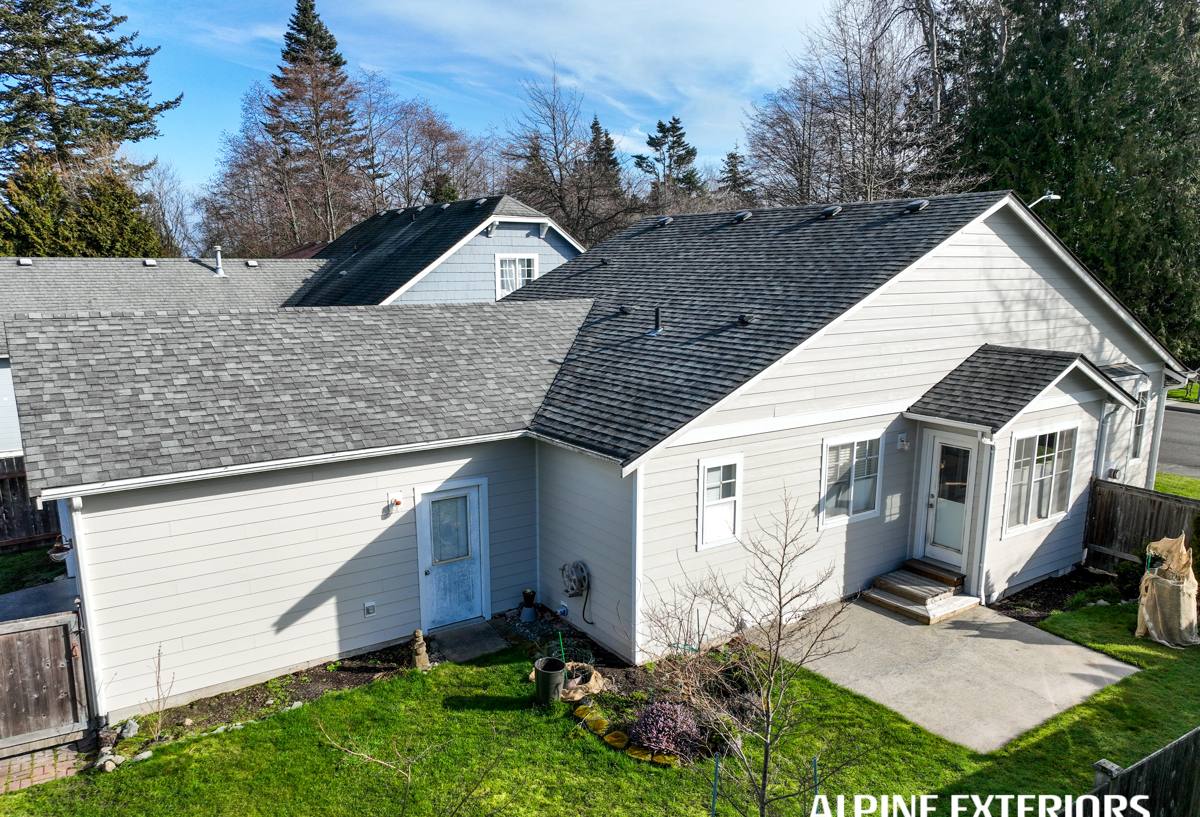
What Salt Air and Driving Rain Actually Do to Siding
Salt air isn't just "humid air." Airborne salt is mildly corrosive and hygroscopic, meaning it pulls moisture out of the air and holds it against whatever surface it lands on. Over years, that constant low-level moisture exposure does a few predictable things to exterior materials:
- Fasteners and metal trim corrode faster than they would inland, especially if non-marine-grade hardware was used.
- Paint and caulk break down sooner, because the film is being asked to block salt-moisture cycling in addition to normal weathering.
- Wood-based and wood-fiber products swell, check, and delaminate faster once any coating starts to fail, because the underlying material itself absorbs water.
- Driving rain — rain pushed sideways by wind off the water — finds every gap in flashing, trim, and siding laps that vertical rain would never reach.
None of this means exterior materials can't work here. It means the margin for error is smaller. A siding product and installation detail that's "good enough" in a drier, calmer climate can be genuinely inadequate on San Juan Island, where wind-driven rain and salt exposure are working against the building envelope most of the year.
Why Moss Season Runs Long
San Juan County's wet season stretches long, and tree cover plus marine humidity means many homes stay shaded and damp well after a rain event has passed. Moss and algae need exactly that: shade, moisture, and time. Once spores take hold on a porous or textured surface, they hold moisture against it, which accelerates whatever decay process is already underway underneath. Materials that resist moisture absorption in the first place — and that hold a factory finish well — simply give moss less to grab onto and less damage to cause even when it does grow.
Why We Standardized on James Hardie Fiber Cement
We install James Hardie fiber cement siding exclusively. We don't install vinyl, LP SmartSide, Cemplank, Allura, or primed wood species like spruce or cedar as siding, and we're upfront about why: in a salt-air, high-moisture climate like this one, the material itself has to be the first line of defense, not just the paint or caulk on top of it.
Fiber cement is made from cellulose fiber, sand, and cement — it doesn't have the wood content that lets moisture in and swell the material, and it doesn't have the thermal expansion behavior that stresses vinyl seams and fasteners over years of temperature swings. James Hardie's ColorPlus finish is baked on at the factory under controlled conditions, which gives it better adhesion and UV/moisture resistance than field-applied paint typically achieves — that matters directly here, where repainting a large home on an island adds real cost and logistics on top of the labor itself.
That said, we're not going to pretend other products are without merit — vinyl is inexpensive and low-maintenance in mild climates, engineered wood siding can look great fresh off installation, and cedar has real aesthetic appeal. The trade-offs we weigh against those points are moisture behavior over a 20-30 year horizon, how the material performs specifically under salt and wind-driven rain exposure, and what a warranty is actually worth if a manufacturer's coverage is thin on the exact failure modes this climate produces. For island homes, that calculation consistently points to fiber cement.
How the Products Compare in This Climate
| Material | Moisture behavior | Salt-air durability | Maintenance |
|---|---|---|---|
| James Hardie fiber cement | Doesn't swell or rot; cement-based core | Strong; factory finish holds up well | Occasional wash; repaint interval is long |
| Vinyl siding | Doesn't absorb water, but seams and fasteners can loosen with expansion/contraction | Can chalk, fade, and become brittle faster under UV and salt cycling | Low, but limited repair options once damaged |
| Engineered wood (LP SmartSide) | Wood-based core is moisture-sensitive at cut edges and joints | Requires diligent caulking and paint upkeep to prevent moisture entry | Moderate to high; edge sealing is critical |
| Cedar / primed spruce | Natural wood; absorbs and releases moisture, prone to checking | Needs consistent refinishing to resist rot and moss | High; refinishing every few years |
What Correct Installation Looks Like Here
Fiber cement only performs the way it's supposed to when it's installed to spec, and in a wind-driven-rain climate the installation details matter as much as the material choice. On every project we pay particular attention to:
- Proper rain-screen or drainage-gap detailing behind the siding, so incidental moisture that gets past the surface has somewhere to go.
- Correct flashing at every window, door, and roofline intersection — the places wind-driven rain actually finds a way in.
- Manufacturer-specified fastener type, spacing, and clearance, including corrosion-resistant hardware appropriate for a marine environment.
- Proper caulking and joint treatment at butt joints and trim, since a poorly sealed joint undermines an otherwise good installation.
- Adequate ground and roofline clearance so the bottom edge of the siding isn't sitting in standing moisture or splashback.
This is also where a lot of "why did my siding fail early" problems actually originate — not from the material, but from shortcuts in flashing or fastening that only show themselves after a few wet seasons.
Roofing, Windows, and Decks: The Rest of the Envelope
Siding doesn't work in isolation — it's one piece of a building envelope that has to work together against the same salt air and rain. We also handle roofing, window replacement, and deck construction, and we approach each with the same climate logic:
Roofing
A roof system that's shedding wind-driven rain properly, with sound flashing at every penetration and valley, protects the siding and structure below it. Roof and siding problems on island homes are frequently connected — a slow roof leak often shows up first as a stain or soft spot on the siding or trim below it.
Windows
Window flashing and sealing is one of the most common failure points in coastal homes. We integrate window replacement with the siding work so flashing and water management are continuous around each opening, rather than patched together by two different trades at two different times.
Decks
Decks take the most direct exposure to rain and moisture of anything on the house, plus foot traffic and UV. Material choice, proper fastening, and drainage underneath the deck surface all affect how long a deck holds up in this climate.
Working with a Local Crew on an Island Job
Island projects run on a different logistics model than a mainland job, and that shapes how we plan and staff a project. Materials, crews, and equipment typically move by ferry, which means scheduling has to account for sailing times and reservations rather than just drive time. A crew that regularly works in San Juan County plans around that reality from the start — staging material deliveries efficiently, sequencing work to minimize trips, and building in the kind of weather buffer that a marine climate with fast-changing conditions demands.
There's also a practical trust factor to hiring locally: a crew that works this county regularly has a reputation to protect with neighbors, has already worked through the county's permitting process, and isn't going to disappear mid-project once travel logistics get inconvenient.
A Homeowner's Maintenance Checklist for This Climate
Even the right materials benefit from basic upkeep. For homes in a salt-air, high-moisture environment, we recommend:
- Rinsing siding and decking periodically to remove salt residue and organic buildup before it holds moisture against the surface.
- Checking caulking at trim, windows, and joints annually, since sealant is typically the first thing to age out.
- Clearing gutters and downspouts before the wet season so water is directed away from siding and foundation lines rather than overflowing onto them.
- Trimming back vegetation and tree cover near the house to reduce the shade and dampness that feed moss growth.
- Watching for early moss or algae growth on north-facing or shaded walls and addressing it before it spreads or holds moisture long-term.
What Affects the Cost of an Island Exterior Project
| Factor | Why it matters here |
|---|---|
| Ferry logistics | Material delivery and crew scheduling need to account for sailing times and reservations |
| Home size and layout | More linear footage, corners, and window/door openings mean more flashing detail and labor |
| Existing condition | Rot or moisture damage found during tear-off adds repair scope before new material goes on |
| Access | Waterfront or steep-lot homes may need extra staging, scaffolding, or protective measures |
| Scope combined | Bundling siding with roofing, window, or deck work can reduce redundant setup and staging trips |
We give straightforward, honest estimates based on the actual condition and scope of your home rather than a generic per-square-foot number — island logistics and existing damage can shift a project's cost more than they would on a comparable mainland home.
If you're weighing a siding, roofing, window, or deck project on San Juan Island or elsewhere in San Juan County, we're happy to take a look and talk through what your home actually needs. Reach out for a free, no-pressure estimate using the form below.