 Orcas Island
 Deer Harbor sits on the western side of Orcas Island, tucked around one of the quieter marinas in San Juan County. It's a place people choose precisely because it isn't crowded — but that same waterfront exposure and rural remoteness put real demands on a home's exterior. Salt-laden air off the water, long stretches of driving rain through the fall and winter, and a moss season that never fully ends all work on siding, trim, roofing, and decking year after year. Homes here need materials and installation details that hold up to that combination, not just something that looks good on install day.
We work across Orcas Island, including Deer Harbor, Eastsound, West Sound, and the more remote stretches of the island, so we've seen firsthand how differently a west-facing waterfront wall ages compared to a sheltered inland one just a few miles away. That difference shapes how we spec and install every job.
What Deer Harbor's Climate Does to a Home's Exterior
Deer Harbor's location on the water means near-constant exposure to salt air, which is corrosive to unprotected metal fasteners, trim, and lower-grade siding materials over time. Add in the San Juan Islands' marine humidity and the extended damp season typical of the Pacific Northwest, and you get an environment where anything that traps moisture against a wall — poor flashing, absorbent siding, failed caulk joints — becomes a slow-motion problem rather than a one-time repair.
Salt Air and Corrosion
Airborne salt doesn't just affect boats and railings. It accelerates corrosion on exposed fasteners, hinges, and any metal flashing that isn't properly rated or protected. On siding specifically, this means fastener choice and flashing details matter more here than they would on an inland property twenty miles away.
Driving Rain and Wind-Driven Moisture
Storms off the water don't just fall straight down — wind pushes rain sideways into wall assemblies, seams, and window openings. A siding system that isn't built and installed with proper water-resistive barriers, flashing, and drainage gaps behind it will eventually let that moisture in, even if the surface looks fine.
Moss, Algae, and the Long Damp Season
San Juan County's mild, wet winters and shaded pockets around tree-lined properties create ideal conditions for moss and algae growth on north-facing walls, rooflines, and anywhere organic debris collects. Materials that absorb moisture stay damp longer, which feeds that growth and, over years, contributes to rot in wood-based products.
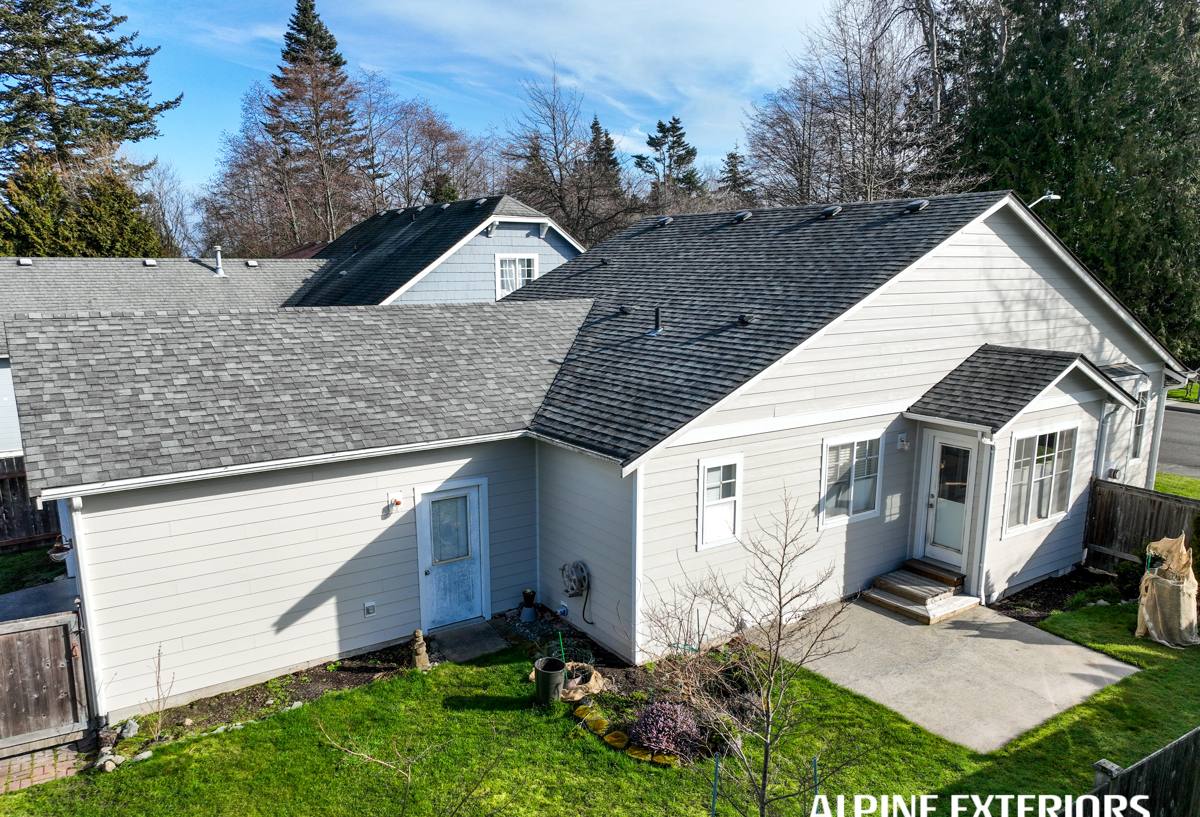
Why We Install Only James Hardie Fiber Cement
We standardized on James Hardie fiber cement siding for every home we side, including here in Deer Harbor, and we don't install vinyl, LP SmartSide, cedar, primed spruce, Cemplank, or Allura. That's not a marketing position — it's a decision based on how those materials perform against exactly the conditions Deer Harbor throws at a house.
- Non-combustible core: Hardie's fiber cement composition doesn't feed a fire the way wood-based or engineered-wood products can — a meaningful factor for island properties where fire response times can be longer.
- Engineered for moisture, not just painted against it: Hardie's HZ5 product line is formulated for wetter, harsher climates, resisting moisture absorption better than wood-composite siding.
- Factory-applied ColorPlus finish: baked-on, UV-cured color that resists fading and holds up to salt air and repeated wet-dry cycles far better than field-applied paint on cedar or primed wood.
- Won't rot or delaminate the way engineered wood can: fiber cement doesn't have the wood fiber that gives moisture something to break down over time.
- Backed by a strong transferable warranty: which matters on a vacation or investment property that may change hands.
We're not saying every alternative product is unusable everywhere — we're saying that for the specific combination of salt exposure, driving rain, and moss-friendly humidity found around Deer Harbor, the trade-offs of cheaper or wood-based materials (more maintenance, more moisture sensitivity, shorter realistic service life) aren't ones we're willing to put our name behind. Hardie is what we install because it's what we've seen actually hold up here.
Siding, Roofing, Windows, and Decks — One Crew, One Standard
Most exterior problems on Deer Harbor homes don't stay isolated to one component. A failing roof valley can rot the sheathing behind adjoining siding. A window without proper flashing can send water down into a wall cavity long before you see a stain. Because we handle siding, roofing, windows, and decks, we look at the whole exterior envelope as one connected system rather than quoting a single product in isolation.
Siding Installation and Replacement
Full or partial siding replacement using James Hardie fiber cement, installed with correct fastener spacing, rain-screen or drainage gap detailing where appropriate, and flashing at every penetration — the details that matter most in a marine environment.
Roofing
Roof condition directly affects how well siding performs underneath it. We check flashing, valleys, and moss buildup as part of any exterior evaluation, since a roof leak is one of the most common hidden causes of siding and trim damage.
Windows
Window replacement and re-flashing done in coordination with siding work, so the water management around each opening is continuous rather than patched together by separate trades on separate schedules.
Decks
Decks on waterfront and near-waterfront Deer Harbor properties take similar punishment from salt air and moisture — we build and repair them with that same durability mindset.
Why a Local, San Juan County-Based Crew Matters
Working on Orcas Island isn't the same as working on the mainland. Materials, crews, and equipment have to be barged or ferried in, which means scheduling and logistics take real planning — a contractor unfamiliar with island logistics can turn a straightforward project into a scheduling headache. We plan material deliveries and crew time around the ferry schedule and island access, so a Deer Harbor project doesn't stall waiting on a part that should have arrived on the last run.
Local experience also means we already understand which walls on an island property take the worst weathering — typically west- and southwest-facing exposures catching wind off the water — and we plan installation sequencing and product specification accordingly instead of treating every elevation the same.
What a Deer Harbor Siding Project Typically Involves
| Stage | What Happens | Why It Matters Here |
|---|---|---|
| Exterior evaluation | Inspect existing siding, trim, flashing, and roof edges for moisture damage or rot | Salt air and moss-season dampness often cause hidden damage before it's visible on the surface |
| Material and logistics planning | Confirm Hardie product line (typically HZ5), color, and schedule material delivery via ferry/barge | Island access requires more lead time than mainland jobs |
| Removal and sheathing check | Remove old siding, inspect sheathing for rot before re-siding | Wind-driven rain can hide moisture intrusion for years |
| Water-resistive barrier and flashing | Install or verify house wrap and flashing at every window, door, and penetration | This is the layer that actually stops driving rain, not the siding surface itself |
| Hardie installation | Install fiber cement siding per manufacturer spec, correct fasteners for coastal exposure | Improper fastening is one of the most common causes of premature siding failure near saltwater |
| Trim, caulking, and final detailing | Seal and finish all joints and transitions | Prevents the small gaps where moisture and salt air do the most long-term damage |
Signs a Deer Harbor Home May Need Exterior Work Soon
- Moss or dark streaking building up on north- or shade-facing siding and rooflines
- Soft, spongy, or bubbling spots on wood-based or composite siding
- Visible rust staining running down from fasteners or metal trim
- Paint that's peeling, chalking, or fading unevenly, especially on water-facing walls
- Gaps opening up at caulked joints, window trim, or corner boards
- Warped, cupped, or separating deck boards near the waterline or in shaded areas
- Musty smell or visible staining on interior walls that back up to exterior siding
Maintenance That Actually Helps in This Environment
Even durable siding benefits from basic upkeep in a salt-air, high-moisture environment. Rinsing salt residue and debris off siding periodically, keeping gutters and downspouts clear so water isn't dumping against walls, trimming back vegetation that keeps walls shaded and damp, and addressing small caulk or trim gaps before they widen all extend the life of any exterior — and they matter more on a marine-exposed Deer Harbor property than they would further inland.
If your Deer Harbor home is due for new siding, a roof check, window updates, or deck work, we're happy to take a look and give you a straightforward, no-pressure estimate — no obligation, just an honest read on where things stand.