 Orcas Island
 Siding Built for Rosario's Waterfront Climate
Rosario sits on the east side of Orcas Island, close to the water and exposed to the weather patterns that move through Rosario Strait and the surrounding San Juan Islands. Homes here deal with a specific combination of stressors: salt-laden air off the water, driving rain that comes in sideways during winter storms, and a long, damp moss season that can stretch from fall through spring. Any exterior material installed in this pocket of Orcas Island needs to hold up to all three at once, year after year, without constant upkeep from the homeowner.
We're a local crew that works across Orcas Island and San Juan County, and Rosario is part of our regular service area. That matters more than it sounds — a contractor who only shows up for one job doesn't know how a particular property drains, which walls take the worst weather, or how ferry scheduling and island logistics affect a project timeline. We do.
Why We Only Install James Hardie Fiber Cement
We've made a deliberate decision as a company: we install James Hardie fiber cement siding, and nothing else. Not vinyl, not LP SmartSide, not Cemplank or Allura, not primed spruce or cedar. That's not a marketing angle — it's a standard we hold because of what we've seen these materials do (and fail to do) in this exact climate over time.
What Salt Air and Moisture Do to Siding
Coastal and near-coastal properties like the ones in Rosario put extra demand on exterior materials in a few specific ways:
- Salt air accelerates corrosion on fasteners and metal trim, and it degrades some paint and coating systems faster than inland exposure
- Constant moisture cycling — wet, then dry, then wet again — is hard on wood-based products, which can swell, delaminate at the edges, or take on rot if any water gets behind the surface
- Persistent shade and dampness (common under the tree cover typical of this part of the island) feeds moss and algae growth on siding, roofing, and trim
- Wind-driven rain finds every gap in flashing, caulking, and butt joints, so the quality of the install matters as much as the product itself
Fiber cement is fundamentally a different material than wood-based siding: it's cement, sand, and cellulose fiber, which means it doesn't rot, doesn't feed insects, and doesn't absorb water the way wood products can. James Hardie's factory-applied ColorPlus finish is also baked and cured under controlled conditions, which gives it better resistance to fading and moisture intrusion than field-applied paint on wood or composite siding. For a property exposed to salt air and long wet seasons, that difference shows up in how the siding looks and performs ten and twenty years out, not just in the first two.
Where Other Materials Fall Short Here
We're not going to tell you vinyl or LP SmartSide are junk products — they're not, and they work fine in a lot of climates and applications. But we've standardized on Hardie because of specific trade-offs that matter in a place like Rosario:
| Material | Trade-off in this climate |
|---|---|
| Vinyl siding | Can warp or become brittle with temperature swings; seams and panel edges give wind-driven rain a path in; doesn't offer the same fire resistance |
| LP SmartSide (engineered wood) | Wood-based core is more sensitive to sustained moisture exposure; cut edges and joints require careful sealing to prevent swelling over time |
| Cedar / primed spruce | Beautiful material, but needs ongoing maintenance — refinishing, caulking, moisture checks — to hold up against salt air and constant damp; the upkeep burden is real |
| Cemplank / Allura (other fiber cement) | Similar base material to Hardie, but we've standardized on one manufacturer for consistency in warranty terms, color-match availability, and product engineering specific to our climate zone |
| James Hardie fiber cement | Non-combustible, engineered HZ5 product line for this region, factory-cured ColorPlus finish, strong transferable warranty |
The honest version of this is: any of these materials can be installed correctly and any can be installed poorly. What we've decided is that we'd rather stand behind one system we know inside and out — with a warranty structure and product engineering built for climates like ours — than spread ourselves across several products with different maintenance profiles and failure modes.
James Hardie Product Lines for Island Homes
James Hardie makes climate-specific product lines, and for the Pacific Northwest — including the marine-influenced conditions around Orcas Island — that generally means their HZ5 engineered products, built to handle higher moisture exposure than their products for drier regions. Depending on the look you want, we typically work with:
- HardiePlank lap siding — the classic horizontal look, available in a range of textures from smooth to a more traditional cedar grain
- HardiePanel vertical siding — often used for a board-and-batten look or as an accent alongside lap siding
- HardieShingle — for a shingle-style look on gables or full elevations, without the maintenance burden of real wood shingles
- HardieTrim — matching trim boards so the whole exterior system, not just the field siding, is fiber cement
ColorPlus finishes come pre-baked onto the board in a range of colors designed to hold up to UV and moisture exposure, which cuts down on how often you'll need to think about repainting — a real consideration for a property that isn't always easy to get a paint crew out to.
What Correct Installation Looks Like
Fiber cement is only as good as the install behind it. This is where a lot of the real performance difference between a good exterior and a problem exterior actually comes from — not the brand of siding on the wall, but whether the water management behind it was done right.
Details We Don't Skip
- Proper weather-resistant barrier installed and lapped correctly before any siding goes up
- Flashing at every window, door, and roof-to-wall transition, sized and installed to shed water outward
- Correct fastener spacing and type, matched to Hardie's published installation specs — this is also what keeps the manufacturer warranty valid
- Proper clearance between siding and grade, decks, and roof lines to keep the bottom edge of the siding out of standing water and constant splash-back
- Caulking and sealing only where Hardie's install guide calls for it — over-caulking can trap moisture just as easily as under-caulking lets it in
Skipping any of these doesn't usually show up as a problem in year one. It shows up in year five or ten, as staining, soft spots, or paint failure at the joints — and by then it's a much bigger repair than it would have been to do right the first time.
Roofing, Windows, and Decks — The Rest of the Envelope
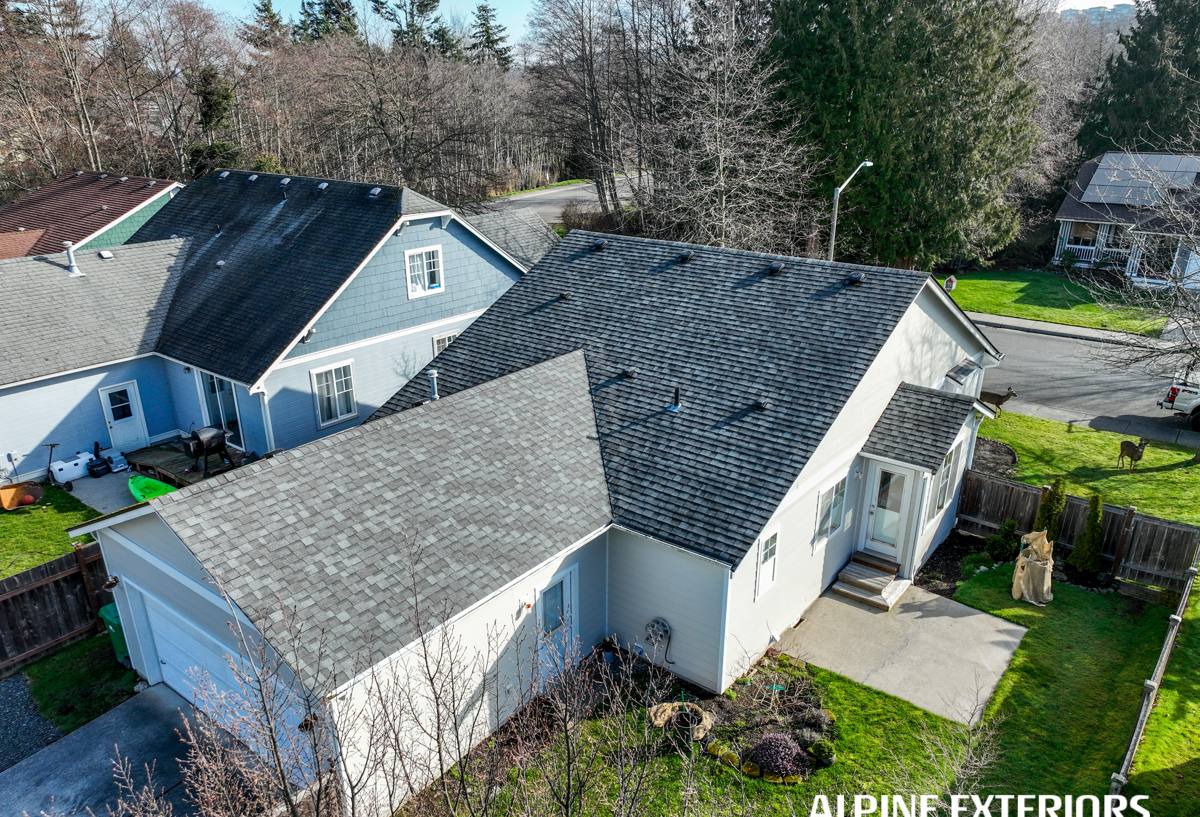
Siding doesn't work in isolation. On a property exposed to the wind and rain patterns around Rosario, the roof, windows, and any exterior decking all interact with the siding system — a roof that's shedding water onto a wall, or a window that isn't flashed correctly, can undermine even a perfect siding install. Because we handle siding, roofing, windows, and decks, we look at the whole exterior envelope on a property, not just one component in isolation. That's especially useful on an older island home where the roof, trim, and siding may all be due for attention around the same time, and it lets us sequence work so water management is handled correctly at every transition point.
What a Project Timeline Looks Like
Every property is different, but a typical siding project for a home in Rosario follows a similar shape:
- On-site assessment — we look at the existing siding, trim, flashing, and any moisture or moss issues before quoting anything
- Scope and estimate — a clear breakdown of what's being removed, what's being replaced, and what product lines and colors are being used
- Material staging — because of island logistics, materials are ordered and staged ahead of the crew's arrival so the job isn't waiting on a ferry
- Tear-off and prep — removal of old siding, inspection and repair of sheathing underneath if needed, new weather barrier
- Installation — siding, trim, and flashing installed to Hardie spec
- Final walkthrough — checking joints, fastener lines, and finish before calling the job done
Island scheduling does mean lead times can run longer than a mainland job, particularly for material delivery. We plan for that up front rather than letting it surprise a homeowner mid-project.
A Local Crew, Not a Seasonal One
San Juan County sees plenty of contractors come over for a single job and never come back. We're not that. Working Orcas Island regularly means we understand how the ferry schedule affects material delivery and crew timing, how moss and moisture patterns differ from one side of the island to the other, and what it actually takes to keep an exterior looking good through a Rosario winter. If something needs a warranty follow-up years down the road, we're still going to be here.
Signs Your Rosario Home's Siding May Need Attention
- Visible moss or algae buildup that keeps coming back after cleaning
- Soft spots, bubbling, or delamination, especially near the bottom edge or around windows
- Paint that's peeling or chalking faster than expected
- Visible gaps or separation at seams and trim joints
- Staining that tracks down from the roofline or gutters
If you're seeing any of these on a home in Rosario, it's worth having someone look at it before winter storms make it worse. We're happy to come take a look, tell you honestly what we see, and put together a free, no-pressure estimate — no obligation either way.