 Orcas Island
 Exterior Work in West Beach: Building for an Island Waterfront Climate
West Beach sits on the northwest side of Orcas Island, with homes and cabins facing open water and taking weather straight off the strait. That exposure shapes what a house needs out here more than almost anything else. Wind off the water carries salt onto every exterior surface, storms roll through with rain driven sideways instead of falling straight down, and the shaded, damp stretches of the year keep moss and mildew active on roofs and north-facing walls for months at a time. It's a tougher environment than a sheltered inland lot on the same island, and it's exactly the kind of exposure that separates exterior work built to last decades from work that starts failing in a handful of wet winters.
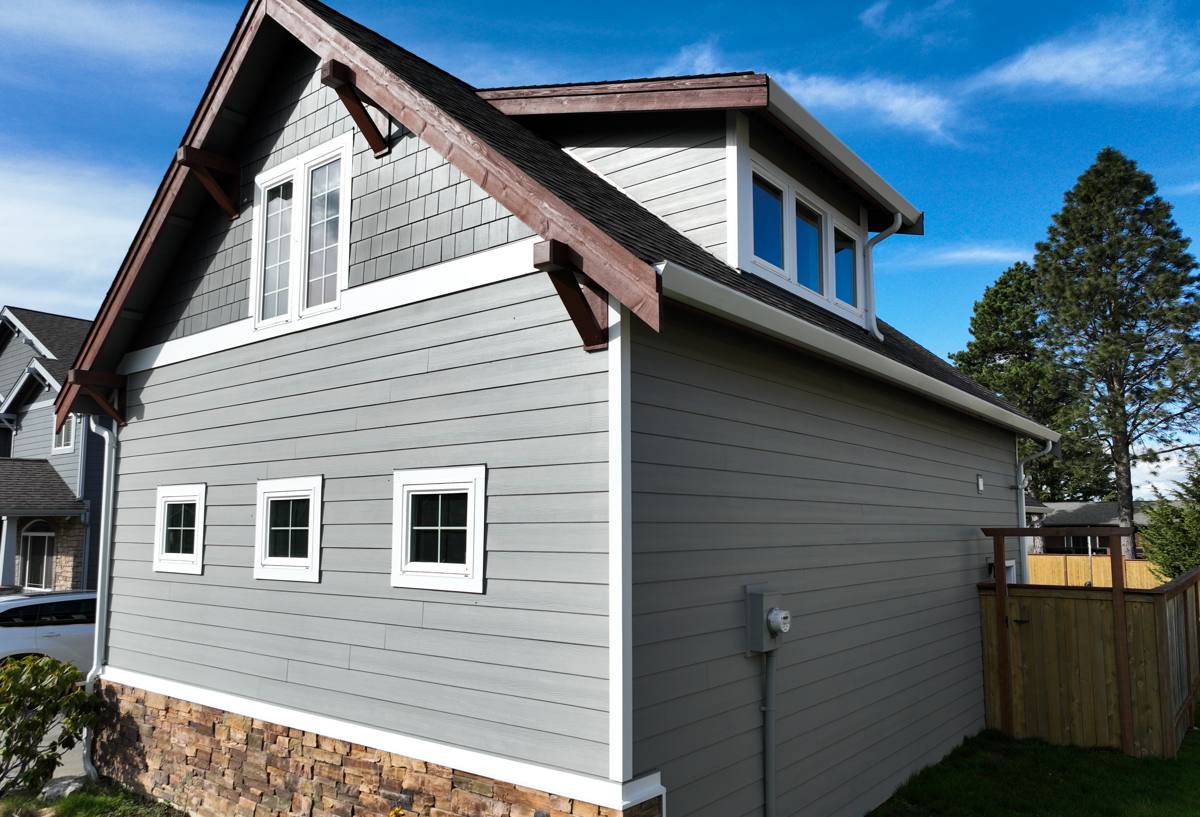
We handle siding, roofing, windows, and decks for homes around West Beach and the rest of Orcas Island, and we treat those four systems as one connected building envelope rather than four separate trades. On siding, we install James Hardie fiber cement exclusively. That's not a sales angle — it's a standard we settled on after years of installing, inspecting, and repairing exterior systems in San Juan County's specific mix of salt air, moisture, and moss.
What This Climate Does to a House
Salt Air and Open-Water Exposure
A west-facing shoreline lot takes on more direct salt exposure than homes tucked into the island's interior. Salt in the air accelerates corrosion of fasteners, flashing, and any exposed metal trim, and it can break down a weak paint finish faster than a drier, more sheltered site would. Every material and every piece of hardware on a West Beach exterior needs to be chosen with that corrosion risk in mind from the start, not picked on looks alone.
Driving Rain and Wind Load
Open water exposure also means more wind, and wind-driven rain doesn't behave like a straight-down shower — it gets pushed sideways into siding laps, window flashing, and roof-to-wall transitions. That sideways load is a heavier test on a wall assembly than annual rainfall totals suggest. A siding product or installation detail that performs fine on a calm, sheltered lot can fail here specifically because water is finding its way in from the side, not the top.
A Long Moss and Mildew Season
Mild temperatures, shade from evergreens, and near-constant dampness add up to a moss and mildew season that runs a large part of the year across San Juan County. Roofs and shaded siding walls are usually the first places it shows up, and any material that's even slightly porous or that holds moisture against the substrate becomes a growth surface over time. On most West Beach properties, the shaded and north-facing sides of a house will need more attention than the sun-exposed walls.
Island Logistics Add Their Own Pressure
Everything that goes into a West Beach exterior — material, equipment, crew — comes across on the ferry, and weather windows for exterior work can be tighter here than on the mainland. That reality rewards a crew that plans well and doesn't cut corners to make a boat schedule. It's also part of why we lean on one siding system we know well rather than juggling multiple product lines and their differing lead times.
Why We Only Install James Hardie Siding
We used to install a wider range of siding products. We don't anymore. That change came out of what we kept seeing on service calls and tear-offs in this kind of marine, high-moisture environment — not from a supplier relationship or a marketing decision.
- Non-combustible core: Fiber cement doesn't feed a fire the way wood-based siding can, which matters for both safety and, in many cases, insurance considerations.
- Factory-applied ColorPlus finish: The color is baked on under controlled factory conditions rather than brushed on in the field, holding up longer against fading and chalking than site-applied paint does in salt air.
- Climate-engineered HZ product lines: Hardie's HZ5 formulation is built for regions with heavy moisture exposure and freeze-thaw cycling, which describes coastal San Juan County well.
- Dimensional stability: Fiber cement doesn't swell, cup, or warp the way engineered wood products can after repeated wet seasons.
- Strong transferable warranty: Hardie backs its product with one of the more robust warranty structures in the industry, provided the installation follows spec.
We won't install LP SmartSide, vinyl siding, Cemplank, Allura, primed spruce, or cedar. Each has a legitimate place in the market, and plenty of homeowners are satisfied with them in other settings. But on an open-water exposure like West Beach, we've made a professional call that we'd rather stand fully behind one system than offer a cheaper option that shifts long-term maintenance risk onto the homeowner.
What Correct Hardie Installation Looks Like
Fiber cement only performs the way it's designed to when it's installed to Hardie's published specifications. That means the correct fastener type and spacing, proper clearance from grade and roof lines, rain-screen or drainage detailing behind the panels where it's called for, and factory-mitered or properly caulked joints. A Hardie product installed loosely will still develop moisture problems in a climate like this one — the material is only as good as the installation behind it.
Roofing for West Beach Homes
Roofing takes the most direct hit from this climate — wind, driving rain, and moss all land on the roof plane before anything else does. A roof system needs proper underlayment, correctly lapped flashing at every penetration and wall transition, and ventilation that lets the attic and roof deck dry out between storms rather than trapping moisture inside. We install and repair roofing with those fundamentals as the baseline, not as an add-on, because a roof that cuts corners on flashing or ventilation shows it within a few wet winters, not decades.
Signs a West Beach Roof Needs Attention
- Moss buildup in valleys or on shaded, north-facing slopes that returns quickly after cleaning
- Granule loss showing up in gutters or downspouts
- Soft spots, sagging, or visible daylight in the attic near roof-to-wall transitions
- Water staining on interior ceilings near exterior walls after a windy storm
- Flashing that's visibly lifted, rusted, or missing sealant around chimneys and vents
Windows That Hold Up to Wind-Driven Rain
Window performance on an open-water lot like West Beach comes down to flashing and installation as much as the window unit itself. A well-built window installed with poor flashing integration will still leak under sustained wind-driven rain, while a mid-grade window installed correctly will often outperform it. We pay close attention to how new window flashing ties into the surrounding wall assembly and siding, because that transition point is one of the most common places water gets into a wall system on exposed island properties.
Decks: Built for Salt Air and UV Exposure
Decks facing the water at West Beach deal with a combination that a sheltered inland deck doesn't: near-constant salt exposure, strong UV off the open water, and repeated wetting and drying cycles. That combination is hard on fasteners, structural connectors, and lower-grade decking materials alike. We use hardware rated for corrosive exposure and walk homeowners through the real maintenance differences between wood and composite decking for this specific setting, rather than pushing one option across the board.
Comparing Common Exterior Materials in This Climate
| Material | Moisture Behavior | Maintenance in Salt Air | Typical Longevity Here |
|---|---|---|---|
| James Hardie fiber cement | Dimensionally stable, resists swelling | Low; factory finish resists fading and chalking | 30+ years with correct install |
| Vinyl siding | Can warp or distort with heat and settle over time | Low upfront, but seams and fasteners are exposure points | Variable; shorter on exposed, windy shoreline lots |
| LP SmartSide / engineered wood | Wood-based core is moisture-sensitive at cut edges and joints | Moderate; edge sealing and caulk upkeep matter | Depends heavily on installation quality and upkeep |
| Cedar / primed wood | Absorbs and releases moisture readily | High; regular refinishing needed in salt air and damp shade | Shorter without consistent maintenance |
Cost Factors Worth Understanding Upfront
- Removal and disposal of existing siding, especially if it's covering hidden moisture damage
- Any sheathing or framing repair found once old siding comes off
- Trim complexity, window and door count, and how much detail work the elevations require
- Access and staging on the property, which can matter more on a wooded or waterfront lot
- Material and crew scheduling around ferry logistics, which can affect timeline more than mainland jobs
Why a Local Island Crew Matters
A contractor who works Orcas Island regularly already knows how salt air, open-water wind, and a long moss season behave differently here than they do on a sheltered inland lot just a few miles away, or on the mainland. That familiarity shows up in the details — how flashing gets lapped, which fastener grade gets used, where extra drainage detailing gets added — and those details are what determines whether an exterior system lasts one wet season or several decades. It also means fewer surprises around scheduling, since island logistics are already part of how the work gets planned.
A Simple Checklist Before Hiring for Exterior Work in West Beach
- Ask what siding material they install and why, and whether they stand behind it with a written warranty
- Confirm they carry current Washington contractor licensing and insurance for exterior work
- Ask how they detail flashing at windows, doors, and roof-to-wall transitions for wind-driven rain specifically
- Ask about fastener and hardware corrosion resistance, particularly for decks and roofing near open water
- Ask how they plan material delivery and crew scheduling around the ferry, and get a clear written scope before signing
Our Process
We start with an on-site assessment of the existing exterior — siding, roofing, windows, or decking, depending on what's being addressed — and look specifically at how the current system has handled moisture and salt exposure over time. From there we put together a clear, written scope and timeline before any work begins, accounting for the realities of scheduling material and crew time on an island job. Throughout the project we treat flashing, drainage, and fastener details as standard practice for this climate, not optional upgrades.
If you're weighing options for siding, roofing, windows, or a deck on a West Beach property, we're happy to walk the exterior with you and give an honest read on what it actually needs. Reach out below for a free, no-pressure estimate.