 Orcas Island
 Siding Repair Built for a San Juan Island Address
San Juan Island sits in the same marine weather system as the rest of the archipelago, but repair calls out here have their own rhythm. Homes are often seasonal or lightly occupied for stretches, which means a cracked panel, a soft spot at a corner post, or a failed caulk joint can go unnoticed for months before someone walks the exterior and finds it. By the time it's spotted, water has usually had a long, uninterrupted run at the sheathing behind it. Our crew works San Juan Island regularly, so we're not learning the ferry schedule or guessing at the island's exposure patterns on your dime — we already know which elevations take the worst of the weather and where to look first.
This page is about one thing: repairing existing siding on San Juan Island homes correctly, not just patching the visible damage and moving on.
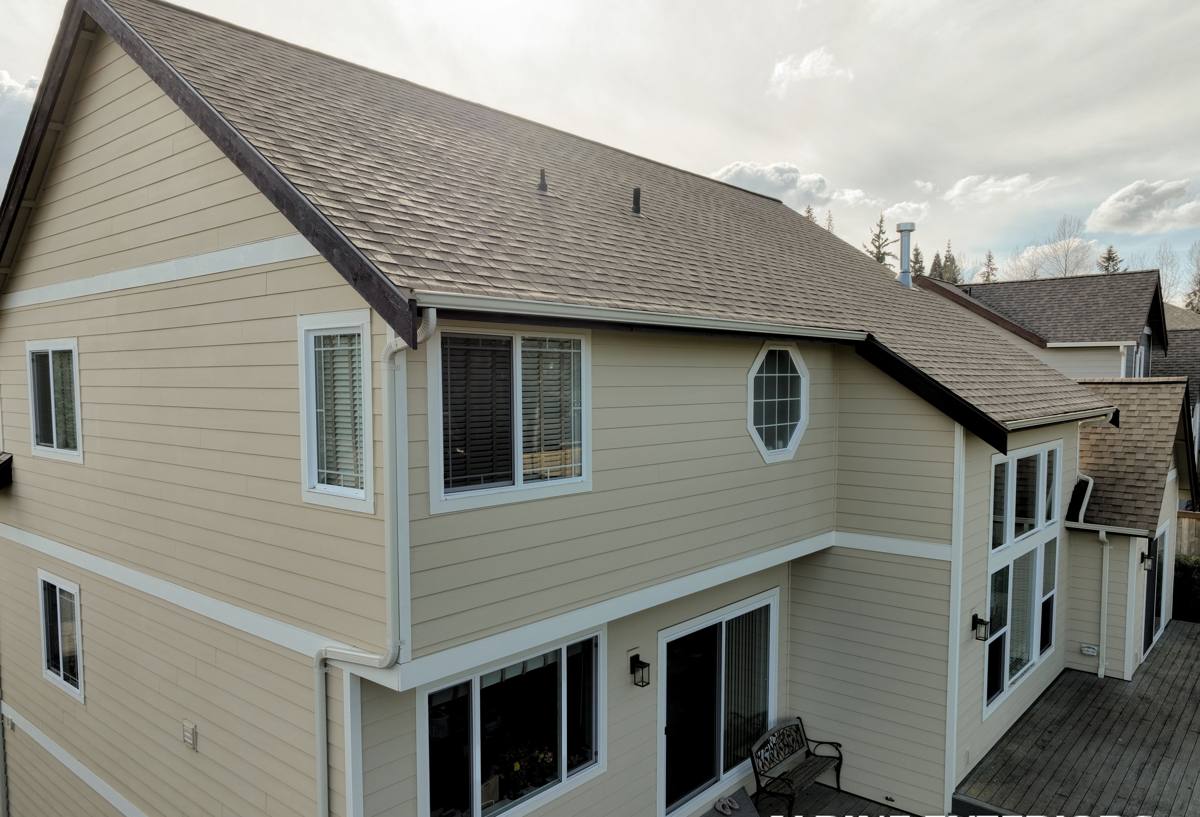
Why Island Weather Is Harder on Siding Than It Looks
San Juan County's climate feels mild compared to the wet side of the Cascades, but it stacks a few specific stresses on exterior walls that add up over the years.
Salt Air and Metal Fasteners
Homes with any real exposure to the water pick up salt-laden air, and that air finds every piece of exposed or under-driven metal on the wall — nail heads, flashing edges, trim fasteners. Corrosion there is often the real starting point of a siding failure that looks, at first glance, like ordinary weathering.
Driving Rain, Not Just Rain
Wind off the water pushes rain sideways into walls instead of letting it run straight down and off. That matters for repair because it means water gets forced into laps, seams, and butt joints that would stay dry in a calmer climate. A repair that doesn't restore proper lap and flashing detail will fail again in the next big blow.
A Long Moss and Mildew Season
Shaded, north-facing walls and anything tucked under tree cover stay damp for long stretches of the year. Moss and mildew hold moisture against the siding surface far longer than open, sun-exposed walls, which accelerates rot in wood-based products and finish breakdown in general.
Wide Seasonal Temperature Swings at the Coast
Island homes see real freeze-thaw cycling in winter alongside warm, dry stretches in summer. Materials that absorb moisture expand and contract with that cycle, which is exactly how small cracks turn into open gaps over a few seasons.
What a Correct Siding Repair Actually Involves
A repair that only replaces the damaged board is a cosmetic fix. A repair that holds up on San Juan Island addresses the whole assembly:
- Pulling back enough surrounding siding to inspect the water-resistive barrier and sheathing underneath, not just the panel that's visibly damaged
- Checking for soft or delaminated sheathing at the repair area and around any corner posts, window trim, or penetrations nearby
- Replacing or re-lapping housewrap and flashing correctly — repairs fail fastest when the wrap gets taped over instead of properly lapped
- Matching fastener type and spacing to manufacturer spec, especially in salt-exposed areas where corrosion-resistant fasteners matter more than usual
- Re-caulking joints with a product rated for the exposure, not whatever's on the truck
- Color-matching or panel-matching so the repair doesn't stand out as a patch
Skipping the inspection step is the most common shortcut in siding repair, and it's the one that costs homeowners the most in the long run — a new piece of siding over rotted sheathing is a repair that's already failing.
Our Process for San Juan Island Repair Calls
1. On-Site Assessment
We walk the exterior, identify every affected area (not just the one you called about), and check adjacent zones that see similar exposure. Islands hide damage well — a problem on one elevation often has a smaller, earlier-stage twin on the elevation next to it.
2. Scope and Estimate
You get a written scope that separates true repair work from anything that's crossed the line into replacement territory. We'll tell you plainly if a section has degraded past the point where patching makes sense.
3. Scheduling Around Island Logistics
Material runs to San Juan Island take planning — ferry schedules and weather windows both factor in. We batch material orders and plan repair visits so you're not waiting on a return trip for a part that should have been on the truck the first time.
4. The Repair Itself
Removal, inspection of what's underneath, sheathing repair if needed, correct flashing and wrap detail, then new siding installed to match. We clean up and haul debris off-site — we don't leave island job sites for someone else to deal with.
5. Follow-Up
For repairs tied to a wider issue (an aging siding system nearing the end of its service life, for example), we'll say so directly and give you an honest read on whether more repairs are coming or whether it's time to start planning a fuller re-side.
Repair vs. Replace: How We Help You Decide
| Situation | Repair usually makes sense | Replacement should be on the table |
|---|---|---|
| Damage extent | Isolated to one or two areas, sheathing intact | Damage recurring across multiple elevations |
| Underlying sheathing | Dry, solid when probed | Soft, delaminated, or showing rot |
| Siding age | Well within expected service life | Already near or past its expected lifespan |
| Water intrusion history | First occurrence, clear single cause | Repeat calls to the same wall assembly |
| Material match | Discontinued but close matches available | No reasonable match, patch will visibly stand out |
We'll always walk you through where your home falls on that table before we recommend a direction. A repair that's really a stopgap on a failing system isn't a favor to the homeowner — it's a delayed conversation.
Why We Only Work With James Hardie Fiber Cement
When a repair does turn into a partial or full re-side, we install James Hardie fiber cement exclusively. It's not the only siding product on the market, but it's the one we're willing to put our name behind for this climate specifically.
Fiber cement doesn't absorb moisture and swell the way engineered wood products can, which matters directly for a place with a long moss and mildew season and driving, wind-pushed rain. It's non-combustible, which is a real consideration during dry summer stretches when wildfire smoke and regional fire risk are part of the seasonal picture even out here on the water. And its factory-applied ColorPlus finish is baked to withstand UV and weather cycling in a way field-applied paint struggles to match over time — which means fewer repaint cycles and fewer opportunities for a failed finish to let water in at the surface.
We don't install vinyl, LP SmartSide, or primed wood siding products. Each has legitimate uses in the right setting, but none of them hold up to San Juan Island's combination of salt exposure, moisture, and temperature swing as consistently as fiber cement does, in our experience doing this work here. When a repair area needs new material, Hardie is what goes on the wall — panel-matched to your home's existing siding whenever the product line allows it.
Signs You Should Get a Repair Assessment
- Soft or spongy spots when you press on the siding, especially near the ground or under windows
- Visible cracking or splitting at panel edges or corners
- Peeling or bubbling paint that keeps coming back in the same spot
- Persistent moss or dark staining on one wall that doesn't clear with cleaning
- Gaps opening up at seams, trim, or window and door casings
- Any interior sign of a leak — a stain, musty smell, or soft drywall on an exterior wall
What Repair Work Typically Costs
Every siding repair is different depending on how much of the wall assembly is affected, so we won't quote a number sight unseen. In general, cost is driven by three things: how much siding needs to come off to properly inspect and access the damage, whether the sheathing underneath needs repair, and how easily the existing material can be matched. A small, isolated repair with sound sheathing underneath is a modest job. A repair that uncovers water damage behind the siding — which happens more often on island homes that have gone a while between inspections — is a bigger scope, and we'll tell you that as soon as we see it, before any work proceeds past the point you've approved.
Get a No-Pressure Estimate
If you're seeing signs of trouble on a San Juan Island home, or you just want an honest opinion on whether a spot needs a patch or points to something bigger, we're glad to take a look. Fill out the form below for a free estimate — no pressure, and no upsell to a full re-side unless that's genuinely what the wall needs.