 Orcas Island
 Siding Built for San Juan Island's Marine Climate
San Juan Island sits in one of the more demanding exterior environments in San Juan County. Homes here take a steady diet of salt-laden air off the surrounding waters, wind-driven rain that finds every gap in a poorly flashed wall, and a long, damp shoulder season that lets moss and algae take hold on anything that stays wet too long. Add the UV exposure of open, unshaded lots common on the island, and you have a combination that punishes cheap or poorly installed siding faster than almost anywhere else in Western Washington.
We install James Hardie fiber cement siding exclusively, and on San Juan Island that isn't a marketing preference — it's the product category that actually holds up to this specific mix of salt, moisture, and biological growth pressure over decades, not just years.
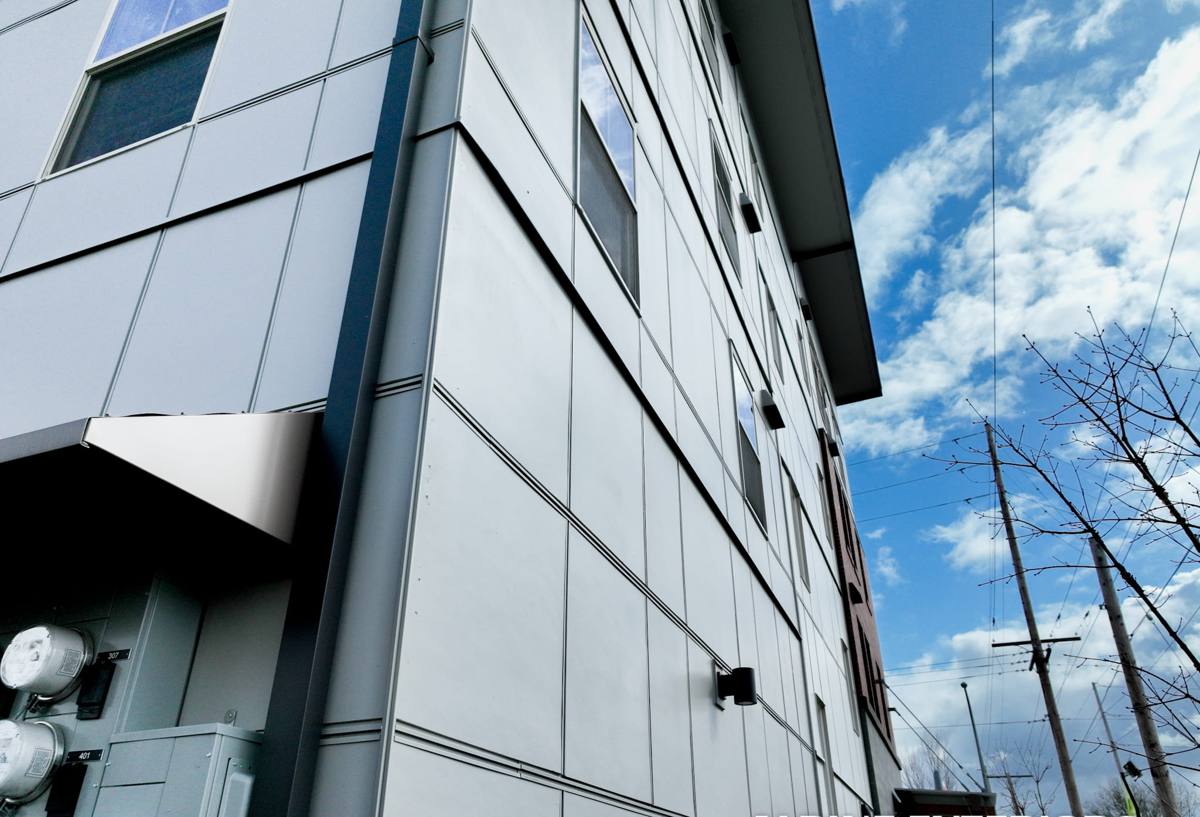
What Salt Air and Driving Rain Actually Do to a Wall
It helps to understand the failure mode before talking about the fix. Salt air is corrosive to exposed metal fasteners, flashing, and trim hardware. It also leaves a fine mineral film on siding surfaces that holds moisture longer than clean rainwater would on its own. Combine that with wind-driven rain — rain that hits a wall at an angle instead of falling straight down — and water gets pushed up under laps, around window and door casings, and into any seam that wasn't properly lapped or sealed during the original build.
On an island property, this isn't a once-a-year event. It's a recurring seasonal pattern, which means any weakness in the water-management details of a wall assembly gets tested over and over. Siding that's marginal on day one becomes a moisture problem within a few winters.
Why Moss Season Is Its Own Category of Wear
San Juan County's long wet season, combined with tree cover and shaded north- and east-facing walls common on the island, creates ideal conditions for moss and algae growth on exterior surfaces. This isn't just cosmetic. Moss holds moisture against the siding surface, which accelerates rot in wood-based products and can stain or degrade lower-quality paint finishes over time. A siding product's surface chemistry and finish quality matter as much as its core material when moss pressure is this consistent.
Why We Standardized on James Hardie for This Environment
We don't install LP SmartSide, vinyl, Cemplank, Allura, primed spruce, or cedar. That's a deliberate standard, not an oversight, and it comes down to how each of those categories tends to perform under sustained coastal exposure:
- Wood-based and engineered wood products (cedar, primed spruce, LP SmartSide) rely on an intact factory coating or field-applied paint to keep moisture out. Once that surface layer is compromised — by a scratch, a nail pop, or years of moss holding water against it — the wood substrate underneath is vulnerable to rot.
- Vinyl siding is low-maintenance in mild climates but becomes brittle and prone to cracking in sustained wind exposure, and it has no real fire resistance — a consideration for island properties that may be farther from fire department response.
- Other fiber cement brands (Cemplank, Allura) use similar core chemistry to James Hardie but don't carry the same factory-applied ColorPlus finish system or the same track record of climate-specific product engineering for the Pacific Northwest.
James Hardie's fiber cement core is non-combustible and dimensionally stable — it doesn't expand and contract with moisture the way wood does, which matters enormously in a climate where the material is wet more often than it's dry. The ColorPlus factory finish is baked on under controlled conditions, giving it far better adhesion and UV resistance than field-applied paint, and it's specifically formulated to resist the kind of fading and staining that salt air and moss growth cause over time.
The HZ5 Engineering Detail That Matters Here
James Hardie engineers its siding by climate zone, and Western Washington — including San Juan County — falls into the HZ5 category, engineered for regions with high moisture exposure and freeze-thaw cycling. That's not a marketing label; it affects the actual formulation of the product, giving it better moisture and impact resistance than a version engineered for a drier climate. Installing a climate-matched product is one of the simpler but most overlooked ways to get better long-term performance out of a siding job.
What Correct Installation Involves
Fiber cement siding's reputation depends almost entirely on installation quality. A well-built wall assembly and a poorly built one can use the identical Hardie product and perform completely differently ten years out. On a site with this much moisture pressure, the details below aren't optional extras — they're the difference between a wall that sheds water and one that traps it.
- Weather-resistive barrier, installed correctly. A properly lapped and sealed water-resistive barrier behind the siding is the wall's real first line of defense — the siding is the second.
- Rainscreen gap. A ventilated air gap between the siding and the wall assembly lets any moisture that does get behind the panels dry out instead of sitting against sheathing. This matters more on San Juan Island than in drier parts of the state.
- Correct fastener spacing and type. Hardie specifies fastener type, spacing, and embedment depth precisely. Corrosion-resistant fasteners matter directly because of the salt air exposure.
- Proper flashing at every penetration. Windows, doors, hose bibs, light fixtures, and vents are the most common failure points on any siding job — flashed correctly, they shed water; flashed carelessly, they funnel it straight into the wall.
- Correct joint and butt-seam treatment. Hardie panel and lap seams need to be caulked, flashed, or backed per manufacturer spec depending on the product line — skipping this is one of the most common corner-cuts we see on prior installations.
- Manufacturer-specified clearances. Siding needs proper clearance from grade, roofing, and decking so water doesn't wick up from below.
Comparing Siding Options for San Juan Island Conditions
| Factor | James Hardie Fiber Cement | Wood / Engineered Wood | Vinyl |
|---|---|---|---|
| Salt air resistance | Strong — inert core, factory finish | Moderate — depends on coating integrity | Moderate — can chalk and pit over time |
| Moisture/rot risk | Low — non-organic core | Higher — organic substrate can rot if breached | Low rot risk, but seams can trap moisture |
| Moss/algae resistance | Good with proper finish; cleans well | Coating can fail under sustained moss contact | Surface resists staining but growth can lodge in laps |
| Wind/impact durability | High — dense fiber cement core | Moderate | Lower — can crack or blow off in high wind |
| Fire resistance | Non-combustible | Combustible | Melts/deforms; limited fire resistance |
| Typical repaint/refinish need | Rare with ColorPlus finish | Every 5-10 years | Doesn't repaint well if faded |
Our Process for San Juan Island Projects
Working on an island property adds logistics that mainland jobs don't have — ferry scheduling, material staging, and weather windows that can shift a project timeline. We plan around that from the start rather than treating it as a surprise mid-job.
- On-site assessment of the existing wall assembly, moisture damage, and any moss or algae staining pattern that points to a chronic wet spot
- Material and crew logistics planned around ferry schedules and weather windows, so the job isn't stalled mid-tear-off
- Full removal of failing siding and inspection of sheathing before any new water-resistive barrier goes on
- Installation to Hardie's HZ5 specifications, including rainscreen detailing appropriate to the site's exposure
- Careful flashing and sealing at every window, door, and penetration — the points most likely to leak on this island's wind-driven rain
- Final walkthrough covering care and cleaning guidance specific to a salt-air, moss-prone environment
Maintaining Hardie Siding in This Climate
One of the practical advantages of fiber cement here is how little upkeep it needs compared to wood. That said, a couple of habits go a long way on San Juan Island specifically:
- Rinse siding periodically to remove salt film and organic buildup, especially on shaded or tree-covered elevations prone to moss
- Keep gutters clear so overflow doesn't run down the wall face and create a chronic wet stripe
- Trim back vegetation and tree cover that keeps a wall section shaded and damp longer than the rest of the house
- Have caulking at trim and penetrations checked periodically — it's the first thing to age, and it's cheap to renew before it fails
Why Local Experience on the Island Matters
A crew that already works San Juan Island understands the logistics — ferry timing, material delivery windows, and the specific microclimates that vary from a waterfront-exposed lot to a tree-sheltered inland one. More importantly, they've seen how siding actually fails here over time: the walls that stayed dry, the ones that didn't, and why. That pattern recognition is worth more than a generic installation crew unfamiliar with San Juan County's particular mix of salt, wind, and moss.
If you're weighing a siding project on San Juan Island, we're happy to walk the property, look at what's there now, and give you a straightforward, no-pressure estimate on what a correctly installed James Hardie system would look like for your home. Use the form below to get started.