 Orcas Island
 Siding Built for Orcas Island's Marine Climate
Orcas Island sits out in the San Juan Islands' marine weather pattern, and that pattern is tough on exterior building materials. Homes here deal with salt-laden air off the water, long stretches of driving rain in the fall and winter, and a moss and algae season that can run most of the year in shaded, north-facing spots. Add in the wind exposure that comes with waterfront and bluff-top lots around the island, and you have a climate that rewards materials chosen carefully and installed correctly — and punishes shortcuts.
We install siding, roofing, windows, and decks for homeowners throughout San Juan County, and on Orcas specifically we've built our approach around one material: James Hardie fiber cement siding. This page explains why, what the local climate actually does to a home's exterior, and what to expect if you're planning a siding project on the island.
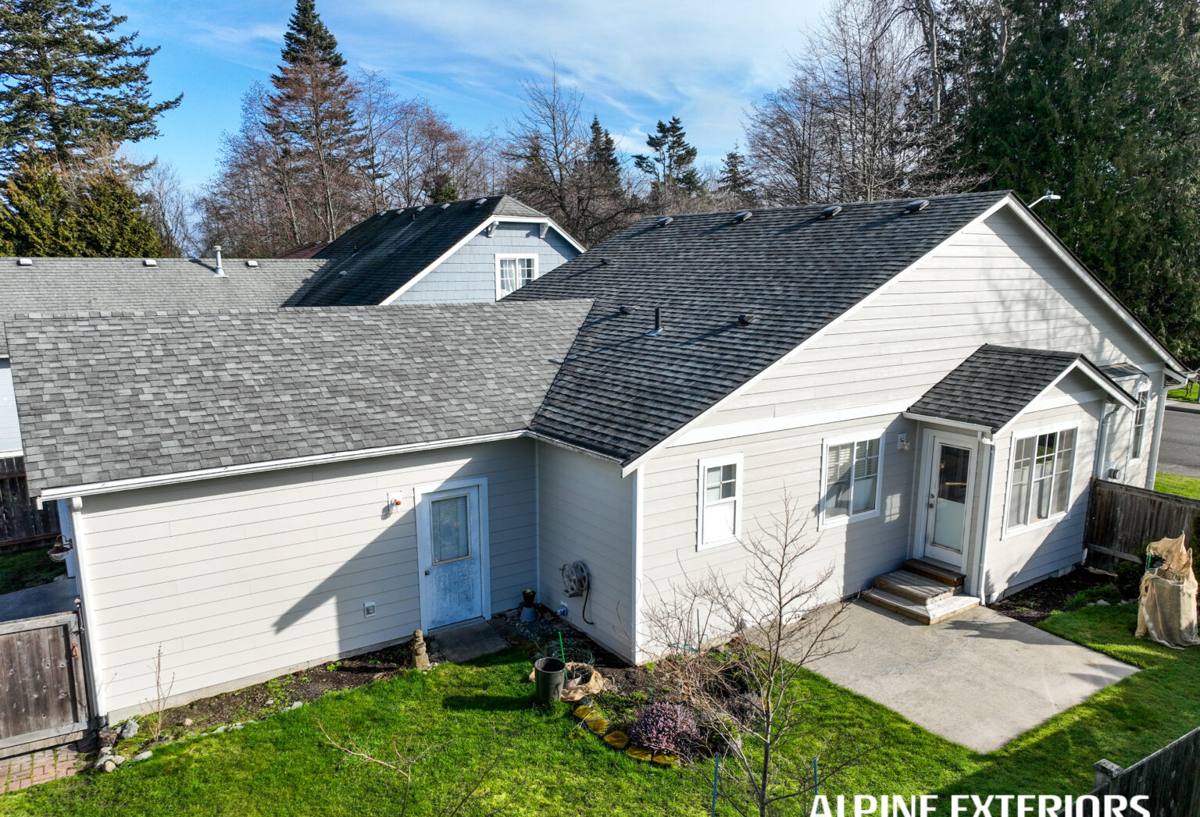
Why We Install Only James Hardie Fiber Cement Siding
We don't install vinyl siding, LP SmartSide, Cemplank, Allura, primed spruce, or cedar. That's not a marketing line — it's a standard we hold because of what we've seen these products do (and not do) in coastal Pacific Northwest conditions over time.
Each of those alternatives has legitimate strengths. Vinyl is inexpensive and easy to install. Engineered wood products like LP SmartSide are lighter and faster to hang than fiber cement. Cedar is a beautiful, traditional Northwest material. But in a marine environment with sustained moisture exposure, each carries trade-offs that matter more here than they would somewhere drier:
- Vinyl expands and contracts with temperature swings, can warp or crack in wind-driven impacts, and isn't a moisture-managed system in the same way fiber cement is — it relies almost entirely on what's behind it.
- Engineered wood siding (LP SmartSide and similar) uses wood strand substrates that are more sensitive to sustained moisture at cut edges and butt joints than fiber cement, which means field-cut edges need consistent sealing discipline to hold up over decades of wet exposure.
- Cedar is a real wood product that needs ongoing refinishing, is combustible, and is a known food source for the same moss and algae that already thrive in this climate.
James Hardie fiber cement is non-combustible, dimensionally stable in wet-dry cycling, and comes factory-finished with ColorPlus technology — a baked-on finish that resists the fading and moisture intrusion that plague field-painted materials. It's also backed by a strong transferable warranty when installed to Hardie's specifications, which matters on an island where homes often change hands and buyers want documented exterior condition. That combination is why it's the only siding we put on homes.
What Salt Air, Rain, and Moss Actually Do to Siding
Salt air accelerates corrosion of fasteners and metal flashing, and it can degrade lesser paint systems faster than inland exposure would. Driving rain — especially wind-driven rain hitting a wall assembly at an angle — tests every seam, joint, and piece of flashing on a house; water doesn't need much of a gap to work its way behind siding and into sheathing. And moss and algae growth, common on shaded north and east-facing elevations and under tree canopy (which covers a lot of Orcas Island), holds moisture against a wall surface for long periods, which is exactly the condition that causes rot in wood-based products and can stain and degrade weaker finishes.
None of this means every material fails here. It means the margin for error is smaller, and the material and the installation both need to account for it.
James Hardie Product Lines We Use
Hardie makes several siding profiles and formulates its boards for different climate zones. We spec HZ5 (or the appropriate zone formulation for this region) for Orcas Island projects, which is engineered for wetter, more humid climates rather than the hot-dry HZ10 formulation used in the Southwest.
| Product | Look | Common Use |
|---|---|---|
| HardiePlank lap siding | Traditional horizontal lap, several reveal widths | Whole-house siding, most common choice |
| HardiePanel vertical siding | Vertical panel, often with battens | Accent walls, gables, contemporary designs |
| HardieShingle siding | Staggered or straight-edge shingle profile | Cottage and craftsman-style homes |
| HardieTrim boards | Smooth or woodgrain trim | Corners, window and door surrounds, fascia |
Color is applied through ColorPlus factory finishing in most cases, which gives a more consistent, longer-lasting finish than job-site painting and reduces the maintenance burden significantly compared to field-finished materials.
The Installation Details That Matter Here
Fiber cement siding performs well over decades, but that performance depends on installation details that are easy to shortcut and hard to inspect after the fact. On a house exposed to sustained wet weather, we pay particular attention to:
- Proper rainscreen or drainage gap behind the siding so incidental moisture can drain and the wall assembly can dry
- Correct flashing at windows, doors, and any roof-to-wall transitions — the most common failure points on any home
- Manufacturer-specified fastener patterns and clearances, including gaps at butt joints and inside corners to allow for material movement
- Sealing and caulking only where Hardie's specifications call for it — over-caulking can trap moisture instead of shedding it
- Minimum clearance between siding and grade, decks, roof lines, and other surfaces where standing water or splash-back can occur
These aren't exotic techniques, but they're the difference between siding that performs for its full service life and siding that develops problems at year eight or ten. It's also why installer quality matters as much as material choice.
Beyond Siding: Roofing, Windows, and Decks
A home's exterior is one connected system, and on Orcas Island that's especially true. Roof-to-wall flashing, window integration, and deck ledger connections are all places where a siding-only contractor can create problems for the rest of the house — or where a siding job left in isolation exposes gaps in roofing or window flashing that were already there. We handle roofing, window replacement, and decks alongside siding so these transitions are addressed as one system rather than handed off between separate crews who never coordinate.
This matters most at points like roof eaves meeting wall siding, deck ledgers penetrating the wall assembly, and window flanges tying into the weather-resistive barrier — all common trouble spots on homes exposed to driving rain.
Working With a Local Crew on an Island
Island logistics are different from mainland work. Material deliveries, crew scheduling, and equipment access all have to account for ferry schedules and limited daily sailings, and a contractor who doesn't plan around that can end up with delays that ripple through a whole project. We plan material orders and crew time with island logistics built in from the start, rather than treating it as an afterthought once a delay has already happened.
There's also value in a crew that knows the specific conditions of San Juan County — which elevations on a typical Orcas lot see the worst wind-driven rain, where moss buildup tends to be worst, and how tree cover and shade patterns affect a home's exterior over time. That local knowledge shapes decisions on flashing details and product selection before the first board goes up.
What Affects the Cost of a Siding Project
Every home is different, and pricing depends on scope, but a few factors consistently drive cost on Orcas Island projects:
| Factor | Why It Matters |
|---|---|
| Existing siding removal | Tear-off, disposal, and any sheathing repair add labor beyond the new install |
| Sheathing and moisture damage found during tear-off | Rot or water damage behind old siding must be repaired before new siding goes on |
| Home size and wall complexity | More corners, dormers, and trim details increase labor time |
| Siding profile selection | Lap, panel, and shingle profiles differ in material and labor cost |
| Site access and logistics | Waterfront or hard-to-access lots can affect staging and delivery time |
We provide a detailed, itemized estimate after an in-person assessment rather than a rough phone quote, since so much of the real cost on older Orcas Island homes depends on what's found once old siding comes off.
Maintenance and Warning Signs to Watch For
Even durable siding benefits from periodic attention, especially in a climate that stays damp for much of the year. A quick seasonal walk-around can catch small issues before they become expensive ones:
- Soft or discolored spots near the base of walls, around windows, or at deck and roof transitions
- Visible moss or algae buildup on north- and east-facing walls or under tree canopy
- Cracked, peeling, or chalky paint on older or field-finished siding
- Gaps or separation at caulked joints, trim boards, or corner details
- Staining or streaking below windows, gutters, or roof edges that suggests water is bypassing flashing
Any of these are worth a professional look before the next wet season, especially on older homes that may still have wood, vinyl, or engineered wood siding installed.
Get a Free, No-Pressure Estimate
If you're weighing a siding project on Orcas Island — or want a second opinion on what your home's exterior actually needs — we're happy to take a look and walk you through your options honestly, including whether siding is even the right priority compared to roofing or window work. Fill out the form below for a free estimate with no pressure to move forward.