 Orcas Island
 North Beach: Built Where the Weather Doesn't Hold Back
North Beach sits on the exposed northern shoreline of Orcas Island, facing open water where wind and weather arrive with little to slow them down. Homes here take a different kind of beating than a house tucked into a sheltered cove on the south side of the island. Salt-laden air moves inland with every breeze, driving rain comes in sideways during fall and winter storms, and the shoulder seasons bring the kind of persistent damp that keeps moss and algae growing on anything that holds moisture. If you own or maintain a home along North Beach, you already know your siding, roof, windows, and deck work harder than they would almost anywhere else in San Juan County.
We work on homes across Orcas Island, and North Beach properties are some of the most demanding we see. That's not a knock on the neighborhood — it's just physics. Exposure, humidity, and salt combine to shorten the life of the wrong materials and installation shortcuts that might get away with it elsewhere simply don't hold up on this stretch of shoreline.
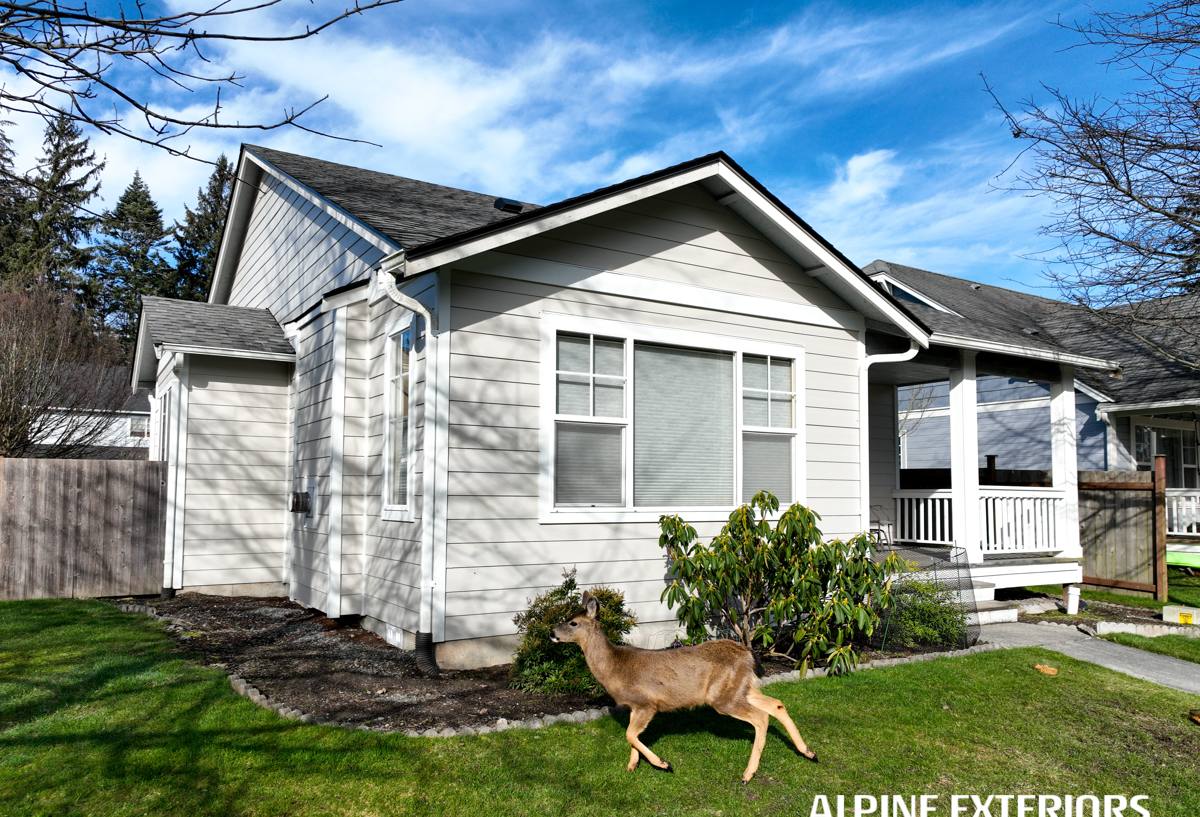
What Salt Air and Driving Rain Actually Do to a House
It helps to understand the mechanics of what's working against your exterior, rather than just hearing "salt air is bad."
Salt Air
Airborne salt is corrosive to fasteners, flashing, and any metal components on the exterior. It also settles into porous or absorbent materials and holds moisture against the surface longer than it would inland. On siding, this accelerates paint failure, promotes swelling in wood-based products, and speeds up corrosion on anything not rated for coastal exposure.
Driving Rain
Wind-driven rain doesn't just fall on a wall — it's pushed into laps, joints, and seams under pressure. A siding system that relies on face-sealing with caulk, or that has marginal overlap at the laps, will eventually let water behind the cladding. Once water gets behind siding on a home exposed the way North Beach properties are, it doesn't dry out quickly, and that's when rot and hidden damage start.
Moss and Algae
San Juan County's long wet season, combined with the shade from mature trees common on Orcas Island lots, creates ideal conditions for moss and algae growth on roofs, siding, and decking. Beyond the cosmetic issue, moss holds moisture against surfaces and, on roofing especially, can work its way under shingles or shakes over time.
Why We Install Only James Hardie Fiber Cement Siding
We made a deliberate decision to install one siding system: James Hardie fiber cement. We don't install vinyl, LP SmartSide, Cemplank, Allura, primed spruce, or cedar, and on a site like North Beach that decision matters more than it would in a milder climate.
Vinyl siding can work loose or become brittle with age and temperature swings, and its face-sealed installation approach gives wind-driven rain more opportunities to find a way behind it over time. Wood-based siding products, including engineered wood and traditional cedar, are more vulnerable to the moisture cycle that salt air and driving rain create — they can absorb water at cut edges and fastener penetrations, and once moisture gets in, ongoing maintenance becomes the difference between a siding job that lasts and one that doesn't. Cedar in particular looks excellent when new but requires a real maintenance commitment — refinishing, sealing, and monitoring for rot — that most homeowners don't want to sign up for on a coastal property.
James Hardie fiber cement is non-combustible, dimensionally stable, and manufactured with a factory-applied ColorPlus finish that's engineered to hold up to UV and moisture exposure without the early fading and touch-up cycle that field-painted siding goes through. Hardie also builds climate-engineered HZ5 product lines specifically for wetter, harsher regions like the Pacific Northwest coast. It's not immune to the elements, but the material and finish are built for exactly the conditions North Beach sees, and it carries a strong transferable warranty when installed to Hardie's specifications — which is the other half of the equation.
Installation Is Where Siding Systems Actually Succeed or Fail
Even the best siding material fails early if it's installed wrong. On an exposed site, we pay close attention to:
- Proper flashing and weather-resistive barrier detailing behind the siding, not just at the surface
- Correct fastener spacing, type, and depth per Hardie's installation requirements
- Adequate clearance at grade, decks, and roof lines so water has somewhere to go
- Sealed and back-primed cut edges at every field cut, not just factory edges
- Proper lap and joint treatment sized for wind-driven rain, not just standard exposure
Beyond Siding: Roofing, Windows, and Decks
Siding is only part of a home's defense against North Beach's weather. We handle the full exterior envelope because these systems depend on each other — a roof leak can damage siding from behind, and a failed window flashing detail can undermine an otherwise well-installed wall.
Roofing
Roofs on Orcas Island's north-facing shoreline deal with the same wind-driven rain and moss pressure as the walls below them, just with more direct exposure. Proper underlayment, flashing at penetrations and valleys, and ventilation all matter more here than on a sheltered inland lot.
Windows
Window flashing and integration with the siding plane is one of the most common failure points we find on older coastal homes. A window that isn't properly flashed and integrated with the water-resistive barrier gives wind-driven rain a direct path into the wall assembly, regardless of how good the siding above it is.
Decks
Decks facing the water take on sun, salt, and moisture simultaneously. Ledger board attachment, proper flashing where the deck meets the house, and material choice all affect how long a deck lasts before it needs major repair.
What Drives Cost on a North Beach Exterior Project
Every home is different, but a few factors consistently affect scope and cost on exposed, north-facing Orcas Island properties:
| Factor | Why It Matters |
|---|---|
| Existing wall condition | Hidden moisture damage behind old siding adds repair scope before new material goes on |
| Site access | Waterfront and hillside lots on Orcas Island often require more staging, material handling, and equipment time |
| Trim and detail complexity | Multiple gables, dormers, and window trim add labor beyond flat wall area |
| Flashing and moisture detailing | Proper coastal-grade flashing takes more time than a minimum-code approach, but it's what makes the system last |
| Scope beyond siding | Bundling roofing, window, or deck work with a siding project can reduce total disruption and sometimes total cost versus separate projects |
Living With Moss Season
You can't eliminate moss pressure on a shaded, wet Orcas Island lot, but the right materials and details reduce how much it affects your home. Fiber cement siding doesn't feed moss growth the way untreated wood can, and proper roof ventilation and gutter maintenance go a long way toward keeping moss from establishing itself on roofing. Regular gutter cleaning and keeping vegetation trimmed back from walls and rooflines are the simplest, most effective things a homeowner can do between professional service visits.
A Simple Seasonal Checklist for North Beach Homes
- Clean gutters and downspouts at least twice a year, more often under mature trees
- Walk the exterior after major fall and winter storms looking for loose trim, damaged flashing, or debris buildup
- Trim back branches and vegetation that shade siding and hold moisture against walls
- Check deck ledger boards and connections annually for signs of moisture intrusion
- Have caulking and sealant joints inspected periodically — these are the first thing to fail under UV and salt exposure
Why a Local Crew Matters Here
San Juan County's island geography means every project involves ferry logistics, material staging, and scheduling around weather windows that a mainland contractor doesn't have to think about. A crew that works Orcas Island regularly understands how to plan around ferry schedules, how exposed a given site really is before work starts, and what detailing actually holds up on this shoreline versus what looks fine on paper. That local knowledge shows up in fewer surprises mid-project and a finished exterior that's actually built for where it sits.
Get a Straightforward Look at Your Project
If you're dealing with aging siding, a roof that's showing its age, drafty windows, or a deck that needs attention on your North Beach property, we're happy to take a look and give you an honest read on what's going on and what it would take to fix it right. Request a free, no-pressure estimate using the form below.