 Orcas Island
 What LP SmartSide Actually Is
LP SmartSide is an engineered wood siding product built from strand-based OSB (oriented strand board) technology, treated with zinc borate for insect and fungal resistance, then coated with a resin-saturated overlay and primed or factory-finished. It's a legitimate step up from the old-school masonite hardboard sidings that gave engineered wood a bad name decades ago. LP has put real engineering into the substrate, and for a lot of markets around the country it performs reasonably well when installed and maintained correctly.
We get asked about it fairly often, usually by homeowners comparing quotes or reading about it online. This page explains our actual reasoning — not a knock on the product in the abstract, but why it isn't what we put on homes here in San Juan County.
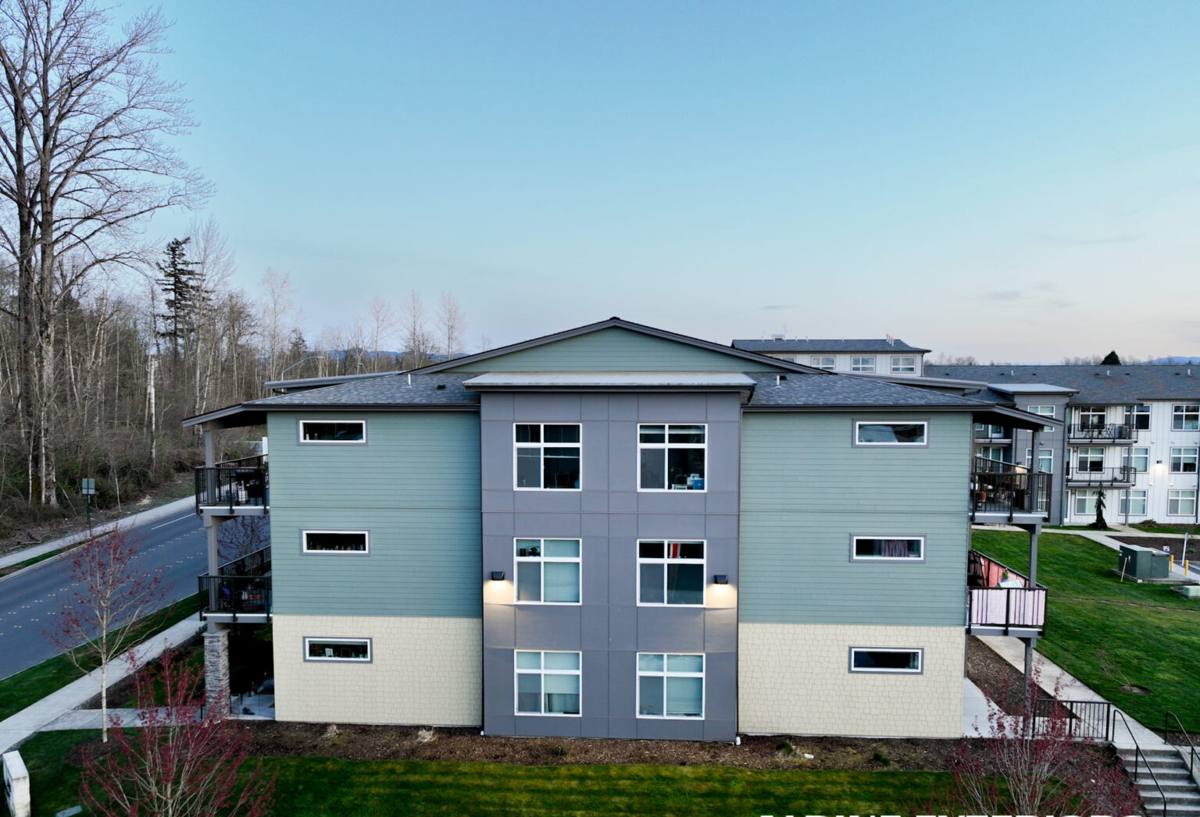
The Core Problem: It's Still Wood at Its Heart
Strip away the resin coating and the zinc borate treatment, and LP SmartSide is still a wood-fiber product. Wood fiber, no matter how it's engineered or treated, swells when it absorbs moisture and shrinks when it dries out. That's a physical property of wood, not a manufacturing defect — but it means the long-term performance of the product depends heavily on keeping water out of the panel edges, seams, and any spot where the factory coating gets compromised.
On Orcas Island, that's a tall order. We get driving rain off the Strait of Juan de Fuca and Rosario Strait that hits siding at an angle, not just straight down. Homes on exposed western and southern elevations take real wind-driven moisture load for months at a stretch. Add in the salt air that comes with living on a marine island, and you have an environment that stresses every seam, cut edge, and fastener penetration in a wood-based product far more than a typical inland installation.
Why Cut Edges and Seams Matter So Much
LP SmartSide comes factory-treated on the face and factory-primed, but every time a panel gets cut on site — around windows, doors, corners, utility penetrations — that cut edge exposes raw, untreated substrate. Manufacturer installation instructions require field-applied sealant or touch-up primer on every single cut, every time, with zero exceptions. Skip one, or apply it thin, and that's the spot where moisture starts working its way into the panel from the inside out, often without any visible sign for years.
We've installed enough siding systems over enough years to know that "zero exceptions" instructions rarely survive real job sites at scale. A crew cutting dozens of panels around a house with multiple windows, dormers, and trim details is relying on perfect discipline, every cut, every day, in variable weather. Fiber cement doesn't carry that same all-or-nothing edge-sealing requirement — it's not immune to water, but it doesn't swell and delaminate the way a wood-fiber substrate does when a seal gets missed.
Moss, Algae, and the Long Wet Season
San Juan County has a moss season that's less a season and more a way of life. Between the tree cover, the humidity, and stretches of overcast, damp weather from fall through spring, north-facing walls and anything under tree canopy stay damp for extended periods. That's a tough environment for any siding, but it's a particularly tough one for a wood-fiber substrate, because sustained moisture contact at the surface — even without penetration — creates the conditions where the factory finish is doing all the work of keeping the wood dry underneath.
Fiber cement is inorganic. It's made from cement, sand, and cellulose fiber processed under pressure and heat, and it simply doesn't feed mold or provide the same substrate for moss and algae growth that wood products do. That matters a lot on a shaded, damp lot on Orcas or Waldron, where a home might not see direct sun on one elevation for most of the winter.
Maintenance Burden: The Real Cost Difference
LP SmartSide's warranty and long-term performance are both explicitly conditioned on ongoing maintenance — caulking inspected and refreshed regularly, touch-up paint on any chip or scratch, gutters and flashing kept in good repair to control water running down the wall plane. That's not unusual for painted wood-based siding, but it's a real, recurring cost and a real, recurring task that falls on the homeowner for the life of the product.
On an island where a lot of our clients are second-home owners who aren't on-site year-round, or full-time residents who don't want another maintenance item competing with everything else that comes with owning property out here, that maintenance dependency is a serious practical drawback — not a hypothetical one.
What Maintenance on LP SmartSide Actually Looks Like
- Annual visual inspection of all caulked joints, panel seams, and trim intersections for cracking or separation
- Re-caulking as joints open up from seasonal expansion and contraction
- Touch-up paint or primer on any nick, scratch, or impact mark within a limited window to prevent moisture entry
- Keeping mulch, soil, and plantings pulled back from the bottom siding course to maintain manufacturer-required ground clearance
- Prompt attention to any gutter overflow, roof leak, or flashing failure that puts sustained water on the wall plane
- Periodic repainting of the full field, typically well before the structural warranty period ends
Warranty Structure: Read the Fine Print
LP's warranty on SmartSide is generally strong on paper, but like most manufactured siding warranties it's prorated after an initial period, and it's conditioned on installation according to LP's exact specifications and on the maintenance schedule above being followed and documented. If a homeowner can't produce evidence of upkeep, or if an installer missed edge sealing in one section, a claim can get denied or reduced years down the road — right when a homeowner actually needs it.
We'd rather not put our name on an installation where the long-term protection depends on a decade of perfect caulk maintenance that we can't control once we've left the job site.
Where LP SmartSide Genuinely Makes Sense
To be fair to the product: LP SmartSide is a reasonable choice in drier climates with less wind-driven rain, for budget-conscious projects where the owner is committed to active maintenance, and in markets where fiber cement isn't as readily available or cost-competitive. It's a real improvement over old hardboard siding, and plenty of homes around the country wear it well. It's just not the right fit for the specific combination of salt air, driving rain, and moss-heavy shade we deal with in the San Juan Islands.
Why We Standardized on James Hardie Instead
After years of siding work in this exact climate, we made a decision to install only James Hardie fiber cement siding. A few concrete reasons:
| Factor | LP SmartSide (engineered wood) | James Hardie (fiber cement) |
|---|---|---|
| Core material | Wood strand / OSB substrate | Cement, sand, cellulose fiber |
| Combustibility | Combustible (wood-based) | Non-combustible |
| Moisture response | Swells/delaminates if seals fail | Dimensionally stable, doesn't rot |
| Cut-edge treatment | Field sealant required on every cut, no exceptions | Less sensitive to unsealed cuts |
| Moss/algae susceptibility | Organic substrate feeds growth if damp | Inorganic, resists growth |
| Finish options | Primed or factory-finished; painting often required | ColorPlus factory-baked finish available, resists fading |
| Regional engineering | General-purpose product line | HZ5 line engineered for wet, freeze-thaw, coastal climates |
| Maintenance load | Regular caulk/paint upkeep required for warranty | Lower ongoing maintenance |
Non-Combustible Matters More Than People Think
Fiber cement doesn't burn. In a region with increasingly active wildfire seasons across the Pacific Northwest, and with insurance carriers paying closer attention to exterior building materials when writing or renewing coverage, a non-combustible siding is a real, practical advantage that has nothing to do with brand preference.
Climate-Engineered Product Lines
James Hardie makes region-specific formulations — the HZ5 line is engineered for the wetter, harsher climate zones that include the Pacific Northwest, as opposed to a single general-purpose formulation sold everywhere. That's an engineering response to exactly the conditions we deal with on Orcas Island: sustained moisture, temperature swings, and salt-air exposure.
ColorPlus and Long-Term Appearance
Hardie's ColorPlus finish is baked on at the factory under controlled conditions, rather than field-applied on site in whatever weather the crew gets that week. It holds color and resists fading, chipping, and cracking far longer than a field-painted finish, and it comes with its own finish warranty separate from the substrate warranty.
Fastener and Corrosion Considerations
Salt air doesn't just affect the siding panel itself — it accelerates corrosion on fasteners, flashing, and trim hardware. We install fiber cement with corrosion-resistant fastener specifications appropriate for marine and coastal exposure, which matters just as much as the siding material choice for a home's long-term performance on the water.
What This Means for Your Project
If you're comparing bids and one includes LP SmartSide at a lower price point, that's worth understanding clearly rather than dismissing — it may genuinely be a fine product for a different climate or a different maintenance commitment. Our position is narrower and more specific: given what we've seen driving rain, salt air, and a long moss season do to wood-based products on this particular island over enough years, we don't think it's the right long-term investment for homes here, and we'd rather turn down that work than install something we don't stand behind fully.
Every home and every lot is a little different — sun exposure, tree cover, elevation, and how exposed a wall is to prevailing weather all factor into a siding recommendation. If you'd like an honest, no-pressure look at your specific home and what we'd actually recommend, we're happy to come take a look and walk through the options with you.