 Orcas Island
 Siding in Doe Bay: Built for a Small, Exposed Corner of Orcas Island
Doe Bay sits on the eastern side of Orcas Island, tucked along the shoreline where the island faces open water and takes weather straight off the Strait. It's a small, quiet community, and that's part of the appeal for the people who live there — but it also means homes in Doe Bay deal with a specific combination of stresses that inland or more sheltered parts of San Juan County don't see as intensely. Salt-laden air, driving rain off the water, deep shade from surrounding conifers, and a moss season that can run most of the year all work on exterior materials at once. We've been doing siding, roofing, window, and deck work around Orcas Island long enough to know that what holds up in Eastsound doesn't always hold up the same way out here, and we approach every Doe Bay project with that in mind.
What the Doe Bay Climate Actually Does to a House
Salt Air and Corrosion
Even a few hundred feet back from the water, salt spray carried on the wind settles on siding, trim, fasteners, and flashing. Over years, that salt film holds moisture against the surface longer than plain rainwater would, accelerates corrosion on unprotected metal, and slowly breaks down paint films and coatings that weren't engineered to handle it. Homes closer to the shoreline see this fastest, but it's a slow, cumulative process everywhere in the Doe Bay area — not something that shows up in year one, but something that shows up eventually if the exterior wasn't built with it in mind.
Driving Rain and Wind-Driven Moisture
Orcas Island gets plenty of rain, but the character of that rain matters as much as the amount. On exposed sections of Doe Bay's shoreline, storms don't just drop water straight down — wind pushes it sideways into wall assemblies, lap joints, window trim, and anywhere a siding system has a weak seam. A product or installation detail that's fine in a calm, sheltered yard can fail on a bluff-facing wall that takes rain horizontally several times a winter.
Shade, Moisture Retention, and Moss
Much of Doe Bay sits under heavy tree cover, and that shade keeps siding, roofing, and decking damp longer after every rain than it would be in full sun. Combine that with the island's long wet season and you get near-continuous conditions for moss, algae, and mildew to establish themselves on any surface that can't dry out or that gives organic growth something to root into. Wood-based and wood-derived siding products are particularly vulnerable here, since moss and moisture together are exactly what causes swelling, delamination, and rot in those materials over time.
Why We Install Only James Hardie Fiber Cement
We don't offer a menu of siding brands and let homeowners pick blind. We standardized on James Hardie fiber cement siding for every home we side, including in Doe Bay, and we did that because of what we've seen hold up — and what doesn't — in exactly these conditions.
Fiber cement is not organic. It doesn't feed mold or moss the way wood, wood composite, or primed spruce products can, and it doesn't swell or delaminate the way those products do when they take on repeated moisture. It's also non-combustible, which matters for a rural island community where distance from fire response is a real consideration. James Hardie's ColorPlus factory-applied finish is baked on under controlled conditions rather than field-painted, which gives it better adhesion and UV stability than site-applied paint — a meaningful advantage in a location that gets a lot of both moisture and, in summer, direct sun exposure on south- and west-facing walls.
Products We Don't Install, and Why
We get asked fairly often about LP SmartSide, vinyl, Cemplank, Allura, and primed cedar or spruce siding. Each of those has legitimate strengths — LP SmartSide is engineered wood with real structural properties, vinyl is inexpensive and low-maintenance in mild climates, cedar has genuine natural beauty. But in a marine, high-moisture environment like Doe Bay:
- Engineered wood products (like LP SmartSide) still rely on wood fiber as their base, meaning cut edges and any breach in the factory coating are vulnerable to moisture intrusion over time.
- Vinyl siding can warp or become brittle under sustained UV and temperature swings, and its seams and panels give wind-driven rain more opportunities to find a path behind the cladding.
- Cemplank and Allura are also fiber cement products and share some of Hardie's core advantages, but we've standardized on Hardie specifically for its HZ5 line engineered for climates like this one, its factory finish warranty, and the consistency we get from installing one system to spec across every job.
- Primed spruce or cedar requires the most ongoing maintenance of any option here — repainting, caulking, and moisture monitoring — which is a hard sell in a location where a contractor visit means a ferry trip.
We're not saying these products are junk. We're saying that after years of siding, repairing, and re-siding homes on Orcas Island, fiber cement — specifically James Hardie — is the one system we're comfortable standing behind for the long haul in this environment.
James Hardie Product Lines for a Doe Bay Home
| Product | Best Use | Why It Fits Doe Bay |
|---|---|---|
| HardiePlank Lap Siding | Primary wall cladding | Most common choice; HZ5 formulation engineered for wet, humid Pacific Northwest climates |
| HardiePanel Vertical Siding | Accent walls, gables, modern designs | Clean lines that pair well with the timber and stone accents common on island homes |
| HardieTrim | Corners, window and door surrounds | Resists the moisture and rot that plague wood trim in shaded, damp locations |
| HardieSoffit | Eaves and overhangs | Vented options help manage moisture buildup under heavy tree canopy |
Roofing, Windows, and Decks: The Rest of the Envelope
Siding is only part of what keeps a Doe Bay home dry. We handle roofing, window replacement, and deck construction because those systems all interact with the same climate stresses, and a weak point in any one of them undermines the others. A roof that holds moss and traps moisture will eventually send water down behind fascia and trim regardless of how good the siding is. Windows with failing seals let wind-driven rain track into wall cavities from the inside out. Decks facing the water take the same salt and moisture exposure as siding, and we build and finish them with that in mind rather than treating them as a separate, lower-stakes project.
Roofing Considerations Specific to This Area
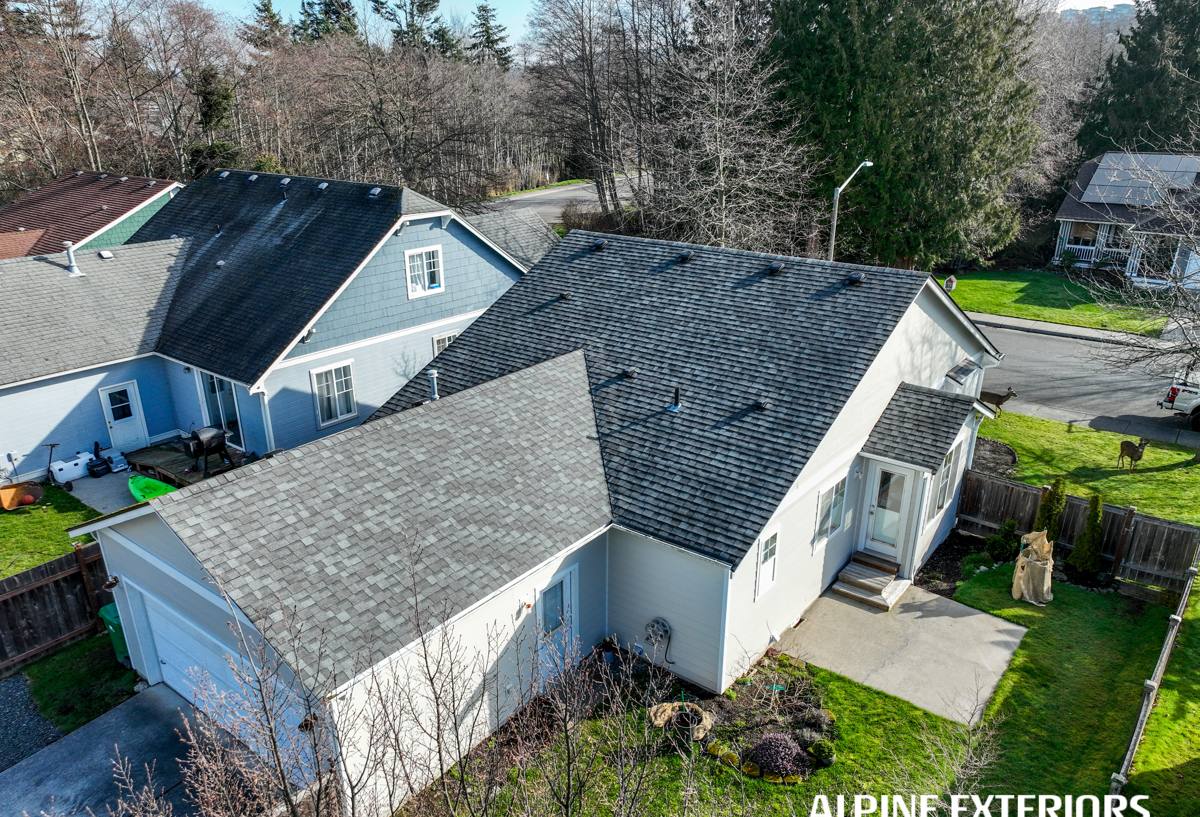
Heavy shade means roofs in Doe Bay hold moisture and moss longer than roofs in open, sunnier parts of the island. Material choice, proper ventilation, and clean flashing details around penetrations matter more here than in drier microclimates, and we factor that into every roofing recommendation we make locally.
Windows and Wind-Driven Rain
On shoreline-facing walls, window flashing and integration with the siding system is where a lot of hidden leaks originate. We pay close attention to how window openings are flashed and how the siding ties into that flashing, since that detail matters more on an exposed Doe Bay lot than it would on a sheltered inland site.
Why a Local Crew Matters Here
Doe Bay isn't a place where a mainland contractor can swing by for a quick fix. Every trip involves ferry scheduling, and materials, equipment, and crew all have to be planned around that reality. We work across Orcas Island regularly, which means we already understand the logistics — we're not learning the ferry schedule or figuring out material delivery timing on your project. That matters for scheduling accuracy up front, and it matters even more years later if a warranty issue or a minor repair comes up. A contractor who treats the island as a routine part of their territory, rather than a special trip, is going to be more responsive when something needs attention.
It also means we've actually seen how James Hardie siding, correctly installed, performs on homes in this specific microclimate over multiple seasons — not just in a manufacturer's climate data, but on roofs and walls a short drive from Doe Bay itself.
What to Expect from an Estimate
A siding estimate for a Doe Bay home typically includes a walk of the exterior to assess current siding or trim condition, an evaluation of sun and shade exposure on each wall (since that affects both product recommendations and future moss risk), a look at flashing and drainage at windows and rooflines, and a straightforward conversation about what James Hardie product mix fits the home's design and budget.
Questions Worth Asking Any Siding Contractor Here
- Is the product you're recommending rated for a marine, high-moisture climate, and which HZ zone is it engineered for?
- How is the siding finished — factory-applied or field-painted — and what does that warranty actually cover?
- How will window, door, and roofline flashing be integrated with the new siding?
- What's your plan for material and crew logistics given the ferry schedule?
- Do you have experience with homes in this specific part of Orcas Island, not just the island generally?
Cost Factors for Doe Bay Siding Projects
| Factor | Why It Affects Cost |
|---|---|
| Home accessibility | Narrow or gravel roads and remote lots can affect material delivery and staging |
| Existing siding removal | Extent of moisture damage or rot behind old siding, common on shaded or water-facing walls |
| Product mix | Lap siding versus panel siding versus trim and soffit work all price differently |
| Wall exposure | Shoreline-facing or high-wind walls may need extra flashing and detailing time |
| Home size and complexity | Number of gables, corners, and window/door openings drives labor hours |
If you're weighing a siding, roofing, window, or deck project for a home in Doe Bay, we're glad to come take a look and talk through what we're seeing on your specific walls and exposure. There's no pressure and no cost to get an honest assessment — just fill out the form below to request a free estimate.