 Orcas Island
 Obstruction Pass sits on the southeastern reach of Orcas Island, where the shoreline and the forest crowd close together and homes tend to sit either tucked into tree cover or perched with a direct look out over the water. That mix is part of what makes the area beautiful, and it's also exactly what makes exterior materials work harder here than they would somewhere flatter and drier. Salt air moving off the water, rain that comes in sideways during a real blow, and a moss season that can run most of the year on shaded walls and roof lines are the three things we plan around on every job in this part of the island. This page is about what that actually means for siding, roofing, windows, and decks if you own a home in or near Obstruction Pass, and how we approach the work here.
What Obstruction Pass Homes Are Up Against
The exposure in this area isn't uniform, and that's the first thing worth understanding. A home with open water views takes wind-driven rain and salt spray more or less head-on, especially on south- and west-facing walls, while a home set back under fir and madrona canopy trades that direct exposure for something arguably tougher on siding over time: shade, dampness that lingers after a storm passes, and the conditions moss and mildew need to get established and spread. Most properties out here deal with some combination of both — a water-facing elevation that takes the brunt of the weather and a shaded back or side wall that never quite dries out between rains.
Add in that Obstruction Pass, like the rest of Orcas Island, is a ferry-dependent community, and the practical stakes go up. A maintenance problem that would be a quick weekend fix on the mainland can sit and get worse out here while you're waiting on a schedule, a materials run, or a crew that has to plan a trip over. That's part of why we think the choice of exterior materials matters more on this island than it does in a lot of places — the margin for "we'll deal with it later" is thinner.
Where We See Problems Show Up First
On the homes we look at in this area, the same handful of spots tend to be where trouble starts: north- and east-facing walls that stay shaded and damp longest, siding and trim low to grade or near a deck where splash-back keeps materials wet, roof valleys and north-facing slopes where moss gets a foothold and holds moisture against the roofing material, and window and door openings where flashing wasn't detailed correctly and driving rain finds its way behind the surface. None of that is unique to Obstruction Pass — it's the pattern across most of the island's shoreline and wooded parcels — but it's worth a homeowner knowing what to actually check for.
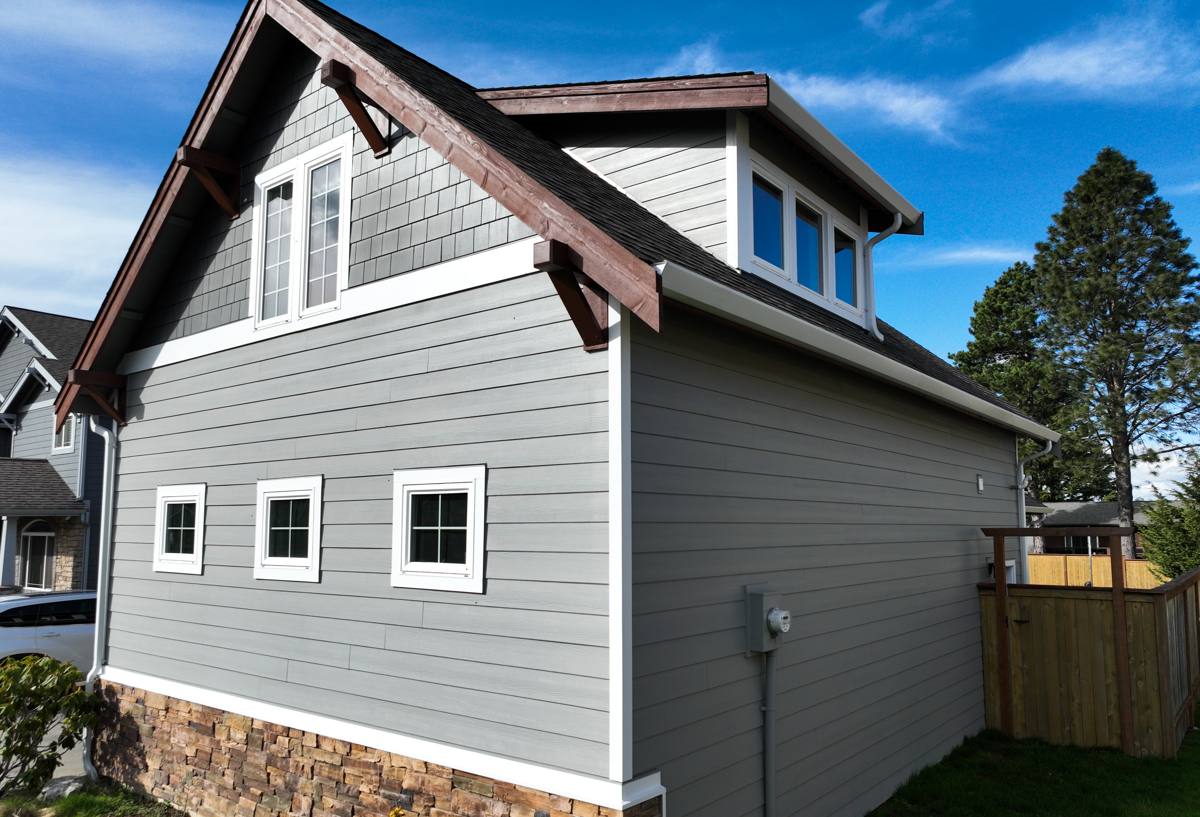
Siding: Why We Only Install James Hardie
We install James Hardie fiber cement siding exclusively — not vinyl, not LP SmartSide, not cedar, not primed spruce, not other fiber cement brands. That's a deliberate standard, not a default. In a marine climate with sustained salt exposure and a long wet season, an organic or moisture-sensitive substrate asks a homeowner to carry a maintenance burden — recoating, caulk renewal, moss treatment, board repair — that we don't think makes sense to build a house around, especially when getting a crew back out means working around a ferry.
James Hardie's fiber cement has no organic core for moisture or moss to work into over time, it's non-combustible, and it comes with a factory-applied ColorPlus finish that's engineered to hold color and resist cracking far longer than a field-applied stain or paint job. Hardie also builds HZ product lines specifically engineered for different climate exposures, which matters in an area where one wall might take direct salt spray and the next sits shaded under trees. Correctly installed — proper clearance from grade, correct flashing at every opening, fasteners rated for the exposure — it's the product we've seen hold up consistently through repeated wet seasons on this island.
What Correct Siding Installation Includes
- Proper clearance between siding and grade, decks, and roof lines to prevent moisture wicking
- Correct flashing at every window, door, and roof-to-wall intersection
- Fasteners rated for salt-air exposure, placed to manufacturer spacing
- A written manufacturer warranty the installer is actually certified to back
- An honest answer about what maintenance the finished product will actually require
Roofing: The Other Half of Weather Protection
Siding and roofing work together, and on a shaded or canopy-covered Obstruction Pass lot, the roof is often where moss problems start before they ever show up on the walls. North-facing slopes and valleys that stay damp longest are where moss gets its start, and once it's established it holds moisture against roofing material and works into seams and fastener penetrations over time. Regular moss treatment, clear gutters, and attention to flashing at chimneys, skylights, and roof-to-wall transitions matter as much here as the roofing material itself. We handle roof installation and repair alongside siding work so flashing details at the roofline and the wall below get treated as one connected system instead of two separate trades that don't talk to each other.
Windows: Where Driving Rain Finds Weak Points
Wind-driven rain off the water doesn't just test the siding field — it tests every seam around every window and door opening, and those openings are consistently where we find water intrusion on older homes in this area. Old or poorly flashed window openings are a common source of hidden moisture damage that doesn't show up until siding or interior finishes are pulled back. When we replace siding on a home with aging windows, we look closely at flashing and integration at every opening, and we'll tell you honestly if a window replacement should happen at the same time rather than being deferred to a separate project later — doing both together, with flashing detailed correctly the first time, is usually more cost-effective than fixing a leak after the fact.
Decks: Built for This Climate, Not Just This Season
A deck facing the water in this area takes constant exposure — sun, salt, and rain in different combinations depending on the season — while a deck tucked under trees deals more with shade, moisture retention, and organic debris that holds dampness against the boards. Either way, deck framing, ledger flashing, and board selection all need to account for a wet climate, not just a dry-season showroom look. We build and repair decks with the same attention to moisture management we bring to siding and roofing work, because a deck that traps water against a house wall creates exactly the kind of hidden problem that's hard to catch early and expensive to fix late.
Cost Factors for Exterior Work in This Area
| Factor | Why it affects cost here |
|---|---|
| Site access | Wooded or waterfront lots can mean longer material staging and setup time |
| Ferry logistics | Scheduling crews and materials around ferry availability affects project timing and coordination |
| Extent of hidden damage | Water intrusion at old window or siding flashing isn't visible until removal begins |
| Scope bundling | Combining siding, roofing, and window work in one project often reduces total disruption and cost versus doing each separately |
| Existing substrate condition | Rot or moisture damage behind old siding adds repair work before new material goes on |
We give real, project-specific numbers after a walk-through — broad ranges without seeing the house tend to be more misleading than helpful, especially once site access and hidden condition issues are factored in.
Why a Local Crew Matters Out Here
A contractor who only occasionally works on Orcas Island can underestimate what the climate and the logistics actually require — how much clearance a wall needs from grade in a wet climate, how often moss actually needs to be addressed on a shaded roof, or how a project schedule needs to build in ferry time rather than assuming same-day access to materials or a callback visit. Working regularly on the island means we're not guessing at any of that, and it means if something needs a follow-up visit, it's not a special trip — it's part of how we already operate here.
What to Ask Before Hiring for Exterior Work
- What products are you certified to install, and why did you choose them for this climate?
- How do you handle flashing at windows, doors, and roof-to-wall transitions?
- What's your plan for follow-up visits or warranty work given the ferry schedule?
- Can you show a written manufacturer warranty you're actually certified to back?
- What maintenance will this material realistically require over the next 10-15 years?
If you own a home in or near Obstruction Pass and want a straight look at how your siding, roof, windows, or deck are holding up against the salt air, rain, and moss this part of Orcas Island deals with, we're glad to come take a look. Reach out for a free, no-pressure estimate.