 Orcas Island
 Shaw Island's Exterior Challenges Are Different From the Mainland
Shaw Island is one of the quieter corners of San Juan County — smaller, less developed, and more rural than its neighbors, with most homes tucked into wooded lots along the shoreline or set back in the trees. That quiet comes with a trade-off: the same isolation that makes Shaw Island appealing also means homeowners here can't just call the first contractor in the phone book and expect someone who understands island building. Ferry-dependent scheduling, limited local trade access, and a marine climate that doesn't forgive cut corners all shape what "good exterior work" actually means on Shaw Island.
Orcas Island Siding works throughout the San Juan Islands, and Shaw Island is part of our regular service area. We plan around the ferry, we bring what we need in one trip, and we build exteriors around the specific conditions this island throws at a house — not generic Pacific Northwest assumptions borrowed from a Seattle suburb.
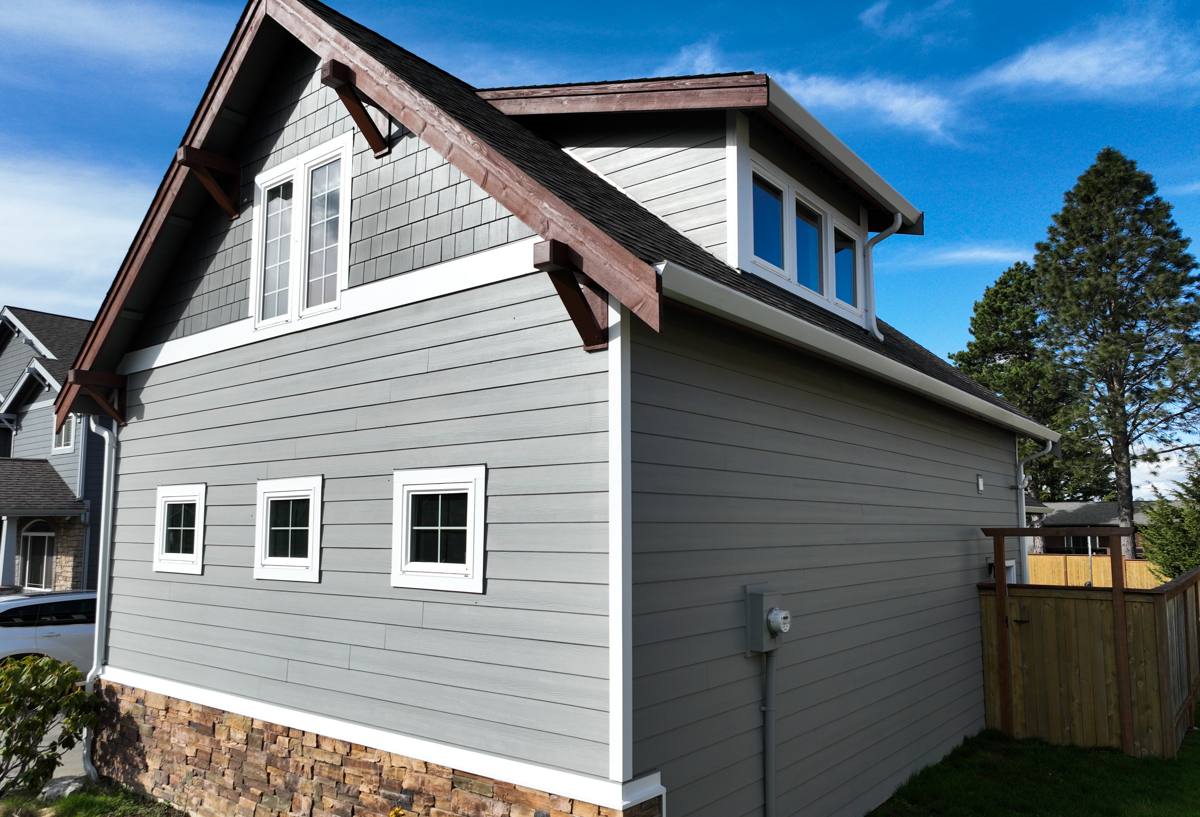
What the Climate Actually Does to Shaw Island Homes
San Juan County sits in a partial rain shadow, so Shaw Island doesn't get hit as hard as the Olympic Peninsula or the Cascade foothills. But "less rain than Seattle" doesn't mean dry, and it doesn't mean gentle. Three conditions do most of the damage to exteriors here over time:
Salt Air
Homes near the water — which describes a large share of Shaw Island properties — take on a steady drift of salt-laden moisture off the water. Salt air accelerates corrosion on fasteners, trim, and hardware, and it works against paint and coatings faster than inland exposure does. Siding materials that rely on a factory finish or a painted surface need to be genuinely built for this, not just rated for "coastal use" on a spec sheet.
Driving Rain
When storms come through the islands, wind-driven rain doesn't fall straight down — it gets pushed sideways into wall assemblies, especially on exposed or south/southwest-facing elevations. Siding systems and flashing details that work fine in a calm rain will still leak under driving rain if the water-resistive barrier, flashing, and siding overlaps aren't installed correctly. This is one of the most common places we find problems on older island homes: not bad siding material, but siding installed without enough attention to how water actually moves in wind.
Moss Season
Shaw Island's tree cover and shaded, moisture-holding microclimates mean moss and algae growth is a near-constant background condition for a good chunk of the year, especially on north-facing walls, roofs, and anything under heavy tree canopy. Moss holds moisture against a surface long after a storm has passed, which is exactly the kind of sustained dampness that rots wood trim, degrades paint, and shortens the life of moisture-sensitive siding.
Why Siding Choice Matters More Here Than It Does Inland
On a dry inland lot, a homeowner can get away with a wider range of siding products and still get a couple of decades out of it with reasonable maintenance. On Shaw Island, the combination of salt exposure, wind-driven rain, and prolonged shaded dampness narrows that margin considerably. We've made the call, as a company, to install only James Hardie fiber cement siding — not vinyl, not LP SmartSide, not Cemplank or Allura fiber cement, not primed spruce or cedar. That's not a marketing position; it's a standard we hold ourselves to because of what we see on island homes over time.
- Fiber cement over wood or wood-composite: cement-based siding doesn't swell, rot, or feed moss growth the way wood and wood-composite products can when they stay damp for extended periods.
- Factory-applied finish over field-painted: James Hardie's ColorPlus finish is baked on at the factory and backed by its own finish warranty, which matters when your painter has to catch a ferry and your house sits two miles from the nearest hardware store.
- Non-combustible material: fiber cement doesn't contribute fuel to a fire, which is a meaningful consideration for wooded island properties with real wildfire exposure and limited fire department response times.
- Engineered for regional climate: Hardie's HZ5 product line is formulated specifically for Pacific Northwest moisture conditions, not a one-size-fits-all national spec.
Our Services on Shaw Island
We handle the full building envelope, not just siding. Most island homeowners end up needing more than one trade over the life of a property, and it's more efficient — and more consistent — to work with one crew that understands the whole exterior system.
| Service | What We Address |
|---|---|
| Siding | James Hardie fiber cement installation, replacement, and repair; trim and soffit work; moisture-damaged wall sections |
| Roofing | Roof replacement and repair, moss-prone roof sections, flashing details around chimneys, dormers, and valleys |
| Windows | Window replacement tied to siding projects, flashing and sealing at window openings to stop the leaks that show up years later |
| Decks | New deck construction and repair for the outdoor living spaces island homes are built around, with materials suited to marine exposure |
Siding, roofing, and window work overlap constantly — a failure at a window flashing detail often shows up as siding damage two feet away, and a roof that isn't shedding water properly can saturate the wall assembly below it. Having one contractor evaluate the whole envelope catches problems that get missed when each trade only looks at their own piece.
What Working With a Local Island Crew Looks Like
Ferry access shapes how exterior projects get planned and run on Shaw Island. A contractor who doesn't build that into their process ends up with delays, missed material, and half-finished work sitting exposed to the weather.
- Material staged in advance: we plan deliveries around ferry schedules so a job isn't stalled waiting on a part that missed the boat.
- Crews that batch their time on-island: once we're on Shaw Island, we schedule work to make full, efficient use of the trip rather than commuting back and forth.
- Weather-aware sequencing: we time siding and roofing tear-off around forecast windows, since an exposed wall or roof deck on an island job site isn't something you can just run out and patch same-day.
- Realistic timelines communicated up front: island logistics take longer than a mainland job of the same size, and we tell homeowners that clearly instead of setting expectations we can't meet.
Signs Your Shaw Island Home's Exterior Needs Attention
Because problems tend to develop slowly under moss and behind trim rather than announcing themselves, it helps to know what to look for during a walk around the property.
- Moss or dark streaking building up on north-facing or shaded wall sections
- Soft or spongy trim boards, especially around window and door casings
- Paint that's peeling, bubbling, or chalking on siding rather than trim alone
- Visible gaps or separation at siding seams and corner boards
- Interior signs — musty smell, discoloration on interior walls near exterior corners
- Roof moss buildup heavier than a light surface film, or granule loss visible in gutters
None of these mean a full replacement is automatically necessary, but they're worth a professional look before the next storm season rather than after.
What Drives Cost on an Island Siding Project
Every property is different, but a few factors consistently move the price on Shaw Island jobs more than they would on a comparable mainland project.
| Factor | Why It Matters on Shaw Island |
|---|---|
| Access and staging | Ferry scheduling and limited on-site staging space can affect crew and material logistics |
| Extent of moisture damage | Hidden rot behind old siding, once opened up, sometimes requires sheathing or framing repair before new siding goes on |
| Home size and wall complexity | Cut-up rooflines, dormers, and multiple gables add labor time regardless of location |
| Scope bundling | Combining siding with roofing, window, or deck work in one mobilization is typically more cost-efficient than separate trips for separate trades |
| Existing material removal | Tear-off and disposal of old vinyl, wood, or damaged siding adds time before new material goes up |
Maintenance That Actually Matters in This Climate
Even a well-installed exterior benefits from a bit of ongoing attention on Shaw Island. The goal isn't constant upkeep — it's catching the small things before moss season and winter storms turn them into bigger ones.
- Walk the exterior once or twice a year, focusing on shaded and north-facing walls where moss takes hold first
- Keep gutters and downspouts clear so water isn't backing up against siding or fascia
- Trim back vegetation and tree cover that keeps wall sections in constant shade and dampness
- Check caulking and sealant at window and door trim, since gaps here are a common entry point for wind-driven rain
- Address peeling paint or soft trim promptly rather than waiting for the next season
If you own a home on Shaw Island and want an honest read on your siding, roofing, windows, or decks — what's holding up, what isn't, and what it would actually take to fix it — we're happy to take a look. Reach out for a free, no-pressure estimate using the form below.