 Orcas Island
 Every siding call we get on Orcas Island starts with some version of the same question: is this a repair, or is it time to replace? It's a fair question, and it's not always an easy one to answer from the driveway. A cracked board near a downspout might be an isolated fix. The same crack on a house that's had three wet winters without maintenance can be the visible edge of a much bigger problem underneath. This guide walks through how to tell the difference, what our climate does to siding over time, and what actually drives the cost on each side of that decision.
Why This Decision Is Harder on Orcas Island Than Most Places
San Juan County sits in a rain shadow, so we don't get the sheer volume of rainfall that Seattle or the Olympic Peninsula sees. But what we do get is a specific combination that's tough on exterior building materials: salt-laden air off the water, driving rain that comes in sideways during winter storms, and a long, damp moss season that can run from October through May on shaded north- and west-facing walls. None of these three things is dramatic on its own. Together, over ten or fifteen years, they're exactly the conditions that separate siding materials that hold up from siding materials that don't.
That's also why a repair-or-replace call here needs a slightly different eye than the same call in a drier inland climate. A homeowner in eastern Washington might get away with patching a section of damaged siding and revisiting it in five years. On a wooded, water-facing lot near Deer Harbor or Doe Bay, that same patch job is fighting moisture pressure the original material was never built for.
Start With What the Siding Is Actually Made Of
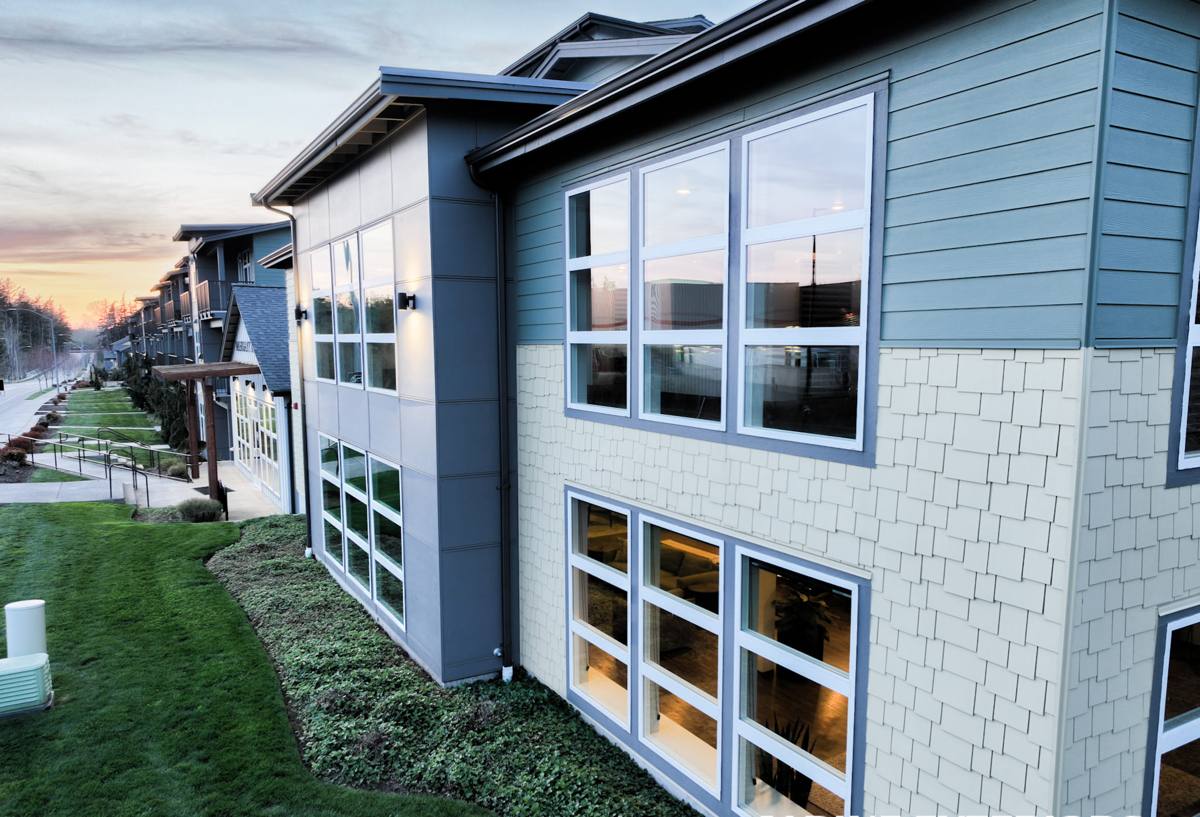
Before you can decide repair or replace, you need to know what's on the house. Older Orcas Island homes commonly have one of a few things: cedar lap or shingle siding, primed wood siding, an aging vinyl product, or in some cases an engineered wood siding installed in the 1990s or 2000s. Each of these behaves differently once it starts to fail, and that behavior matters more than the size of the visible damage.
Cedar and primed wood are honest, attractive materials, but they're organic — they absorb moisture, swell, dry, and shrink with every wet-dry cycle. A few decades of that cycle, especially with salt air accelerating finish breakdown, and the wood starts losing its ability to shed water the way it did when it was new. Engineered wood products from that era had known moisture-related failure issues industry-wide when installation details weren't followed exactly. Vinyl doesn't rot, but it does chalk, fade, and crack with age and UV exposure, and once a panel is broken it's often hard to source an exact color match years later.
Signs You're Probably Looking at a Repair
Not every siding problem means a full re-side. Some issues are genuinely local and fixable if you catch them early:
- A single board or panel cracked from an isolated impact — a ladder, a falling branch, equipment during a remodel
- Caulking that's failed at one or two trim joints while the siding field itself is sound
- Localized moss or algae staining that wipes clean and reveals intact material underneath
- Paint failure on an otherwise structurally sound wood surface, with no soft spots when probed
- A small area of damage near a downspout or hose bib where the cause is obvious and easily corrected
If the problem is contained, the material underneath is still solid when you press on it, and you can point to a specific cause, a targeted repair is a reasonable and honest answer. Anyone telling you every siding problem requires a full replacement isn't being straight with you.
Signs You're Looking at a Replacement, Not a Patch
Widespread softness or delamination
Press a screwdriver handle gently into the siding at several spots around the house, especially low areas, corners, and anywhere gutters have overflowed. If it's soft, spongy, or the layers are separating in more than one location, that's not a one-board problem — it's a sign the material has been absorbing moisture for a while across a broad area.
Recurring paint or finish failure
Siding that needs repainting every three to four years, rather than every seven to ten, is telling you something about its ability to hold a finish. That's usually a material or moisture issue, not a paint quality issue, and repainting again just delays the real conversation.
Moisture damage inside the house
Stains on interior drywall near exterior walls, a musty smell in a closet on an exterior wall, or soft trim around windows can mean water is getting behind the siding, not just sitting on top of it. Repairing the visible siding without addressing what's happening behind it just hides the problem for a season or two.
Age plus visible wear across most elevations
If the siding is original to a home built before the early 2000s and you're seeing wear — fading, cupping, cracking, moss recurrence — on more than one side of the house, you're past the point where isolated repairs make sense. At that stage, every repair is a stopgap, and money spent patching is money that isn't going toward a system that will actually last through the next few decades of San Juan County winters.
What Happens When You Keep Patching a Failing System
We understand the appeal of repair-first thinking — it's less money up front, and it feels less disruptive. But there's a real cost to patching a siding system that's past its functional life. Each repair addresses the symptom you can see while the underlying material keeps absorbing moisture everywhere else. Trim work, paint, and caulking all cost real labor and material, and none of it stops the clock on wood that's already saturating and drying out season after season. Homeowners on the island often tell us they've spent several thousand dollars on siding repairs and repainting over five or six years, only to end up needing full replacement anyway — money that would have gone a long way toward the replacement itself if spent up front.
There's also a practical matching problem. Discontinued cedar profiles, older vinyl colors, and specific engineered wood products can be difficult or impossible to match exactly years later. A repair that looks seamless the week it's done can look like a visible patch a year later once the surrounding siding weathers differently.
Cost Factors: Repair vs. Full Replacement
| Factor | Repair | Full Replacement |
|---|---|---|
| Upfront cost | Lower, scoped to the affected area | Higher, whole-house scope |
| Addresses moisture behind siding | Only if the repair area is opened up and inspected | Yes — house wrap, flashing, and sheathing are all accessible and correctable |
| Color and material matching | Can be difficult on older or discontinued products | Not an issue — everything is new and uniform |
| Long-term cost if underlying material is failing | Recurring, often adds up over several repair cycles | One project, long service life ahead |
| Warranty coverage | Typically limited to the repaired section | Full manufacturer and installation warranty on the whole house |
| Impact on home value / resale | Minimal, may raise buyer questions about remaining siding | Meaningful improvement to curb appeal and inspection outcomes |
Neither column is universally "right." A single, well-diagnosed repair on an otherwise sound house is money well spent. A pattern of repairs on a house with widespread wear is usually money spent postponing the inevitable.
What We Recommend When Replacement Is the Right Call
When we do a thorough inspection and find that full replacement is genuinely the better answer — not just the more profitable one for us, but the one that actually serves the homeowner — our standard is James Hardie fiber cement siding. We don't install vinyl, LP SmartSide, cedar, primed spruce, Cemplank, or Allura, and that's a deliberate professional standard, not an oversight. Fiber cement doesn't feed moss the way wood does, it's non-combustible, it holds a factory-applied ColorPlus finish far longer than field-applied paint, and Hardie's HZ5 product line is engineered specifically for the freeze-thaw and moisture conditions of the Pacific Northwest. It's the material we're comfortable standing behind with a real warranty, on a home that's going to face another thirty winters of salt air and driving rain off the Salish Sea.
That said, this page isn't a sales pitch dressed up as advice. If your siding is sound and the problem is local, we'll tell you it's a repair. Replacement only makes sense when the numbers and the moisture evidence actually point that way.
A Practical Pre-Call Inspection Checklist
Before you call anyone, walk your own house and note what you find. It'll make the conversation with any contractor faster and more useful:
- Press on siding at the base of walls, near downspouts, and at any visible stains — note any soft or spongy spots
- Check for moss or algae buildup on north- and west-facing walls and whether it wipes off or seems embedded
- Look inside the house along exterior walls for staining, bubbling paint, or musty odors
- Note how many years it's been since the last full repaint, and whether paint is failing faster than expected
- Check caulking at trim, window, and door joints for cracking or gaps
- Count how many separate repairs you've paid for on the siding over the last five years
- Note the siding's approximate age and original material if known
Bring that list to any estimate, ours or otherwise. A contractor who won't look past the one board you called about, and who won't check for moisture behind the siding, isn't giving you the full picture.
Timing the Decision Around Our Weather
If you're on the fence, timing matters more here than in a lot of climates. Late spring through early fall is the practical window for siding work on Orcas Island — drier conditions let installers get sheathing, house wrap, and flashing details right without racing incoming weather. If you're seeing signs of trouble in fall or winter, it's still worth getting an inspection scheduled; a diagnosis now means you're not choosing a contractor under pressure once the damage is more visible, and you can plan the actual work for the next dry stretch instead of rushing it.
Deferring a real replacement decision through another wet season on failing siding rarely saves money — it just gives the moisture more time to spread into sheathing and framing, which turns a siding project into a structural repair project.
Getting an Honest Answer
The most useful thing a contractor can do at this stage isn't sell you the bigger job — it's give you an accurate read on what's actually happening behind the siding you can see. If you're weighing repair against replacement on a home anywhere on Orcas Island, we're happy to come take a look, tell you honestly which side of that line your house falls on, and walk you through what a James Hardie replacement would involve if that's the right call. There's no pressure and no cost to get that estimate — just a straight answer so you can make the decision with real information.