 Orcas Island
 Building Decks That Actually Hold Up on San Juan Island
A deck on San Juan Island lives a harder life than the same deck built inland. The combination of salt-laden air off the water, long stretches of driving rain through the fall and winter, and a moss season that seems to start earlier every year means a deck here is being tested constantly, not just during the occasional storm. We build and replace custom decks for homeowners throughout San Juan County, and the decks that last are the ones designed from the start for this specific environment, not decks built to a generic mainland spec and hoped along.
This page covers what a custom deck project on San Juan Island actually involves: the material trade-offs that matter here, how we frame and fasten for our conditions, what maintenance really looks like, and how our process works from first look to final walkthrough.
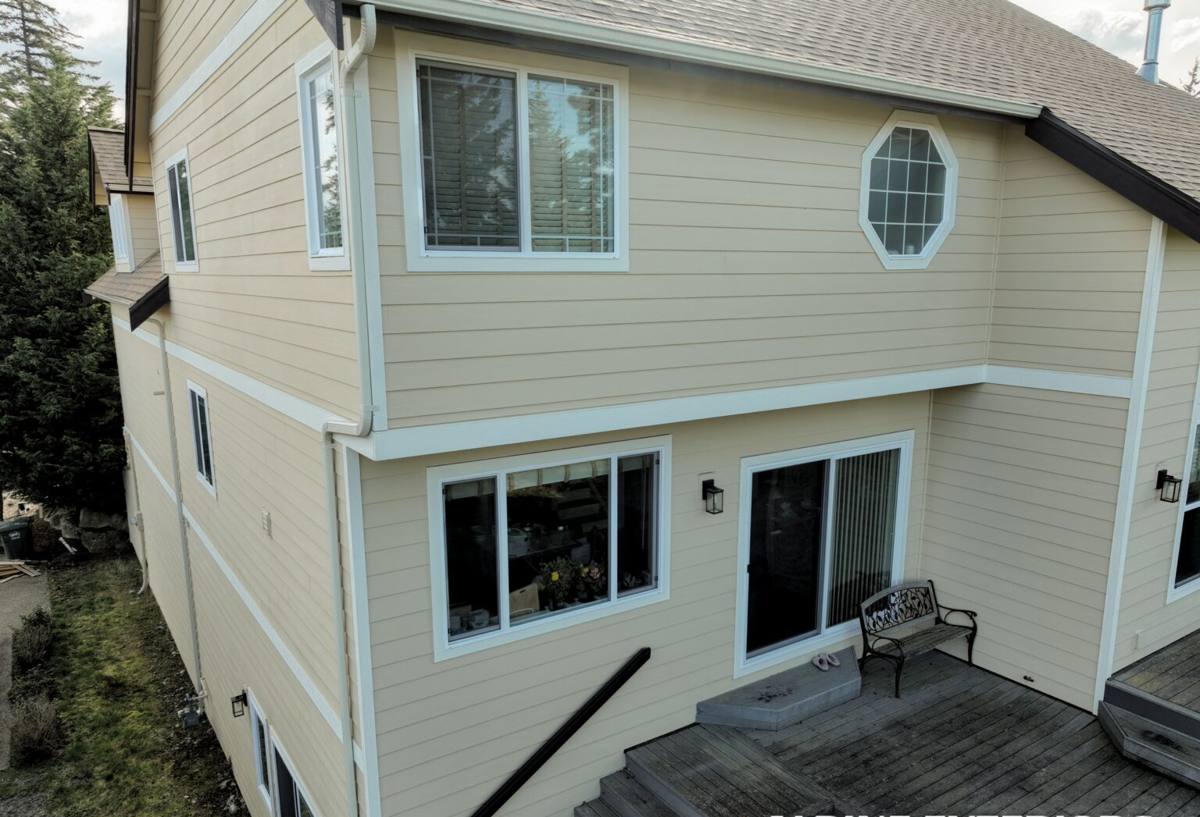
What San Juan Island's Climate Does to a Deck
Three things drive almost every deck problem we see on service calls out here, and a well-built deck is designed around all three from day one.
Salt Air and Metal Fatigue
Airborne salt accelerates corrosion on anything metal — fasteners, joist hangers, railing hardware, post bases. On a lot of decks that were built with standard hot-dip galvanized hardware instead of true coastal-rated stainless or heavy-coat galvanized fasteners, you start to see rust streaking and hardware failure well before the wood itself is done. Once a joist hanger or ledger bolt corrodes, it's not a cosmetic issue — it's a structural one.
Driving Rain and Moisture Intrusion
San Juan County gets its share of wind-driven rain, and a deck's weak points are almost always where water gets trapped rather than where it simply lands. Ledger board connections to the house, end grain on framing members, and any spot where decking boards are laid tight with no drainage path are where rot starts. A deck that sheds water quickly and dries out between storms will outlast one that traps moisture, even if the second one uses "better" wood.
Moss, Algae, and Surface Buildup
Shaded decks under evergreen cover, or decks on the north side of a house, grow moss and algae fast here. Beyond looking unkempt, a mossy deck surface holds moisture against the wood or composite cap, and it turns a normal walking surface into a genuinely slick hazard on damp mornings — which is most mornings for a good chunk of the year.
Decking Material Options for This Environment
There's no single "best" decking material for every home — it depends on budget, sun exposure, and how much upkeep you want to do. Here's how the common options actually perform under San Juan Island conditions.
| Material | How It Handles Salt Air & Rain | Moss/Algae Resistance | Maintenance |
|---|---|---|---|
| Cedar | Naturally rot-resistant, ages gracefully; fasteners must be stainless | Moderate — needs periodic cleaning | Refinish or seal every 2-3 years |
| Pressure-treated fir/hem-fir | Good if properly sealed at cuts and fasteners are coastal-rated | Lower — more prone to green buildup in shade | Annual wash, sealant every 1-2 years |
| Composite decking | Excellent — impervious to rot and doesn't corrode | Better, but still needs washing in shaded spots | Occasional wash, no sealing/staining |
| PVC/capped composite | Best moisture performance of the group | Best — smooth cap sheds algae film more easily | Lowest — soap and water as needed |
We'll walk through these trade-offs honestly for your specific site — a sun-exposed deck near the water has different priorities than a shaded deck tucked into the trees.
Framing and Fasteners: Where a Deck's Lifespan Is Actually Decided
Homeowners understandably focus on the decking boards on top, since that's what you see and walk on. But on San Juan Island, the framing underneath is where we see the most preventable failures. A deck can have beautiful, expensive decking on top and still be failing structurally if the substructure wasn't built for coastal exposure.
- Stainless steel or heavy-duty coated fasteners at every connection — not standard galvanized, which corrodes faster in salt air
- Joist hangers and structural hardware rated for coastal/marine-adjacent exposure
- Proper ledger board flashing where the deck meets the house, so water can't work its way behind the siding
- Post bases set above grade with drainage, not buried in soil where they stay wet
- Consistent gapping between decking boards for airflow and drainage, especially in shaded areas prone to moss
- Joist tape or a moisture barrier on top of framing members to slow end-grain and top-grain water absorption
None of this is visible once the deck is finished, which is exactly why it matters to have it done right the first time — it's not a fix you can make later without tearing the deck apart.
Design Considerations Specific to San Juan Island Properties
Sun and Wind Exposure
Many San Juan Island lots have a mix of open water-view exposure and heavily treed, shaded areas — sometimes on the same property. We design the layout, railing style, and material choice around where your deck actually sits, not a one-size answer.
View Corridors and Railing Choices
If your deck is oriented toward water or island views, railing material matters as much as decking material. Cable rail and glass panel systems preserve sightlines but come with their own coastal maintenance needs (hardware corrosion, glass film from salt spray); traditional wood or composite rail systems are lower-maintenance but block more of the view. We'll talk through what fits your priorities.
Ground Conditions and Access
Island lots often have uneven grade, ledge rock, or limited equipment access compared to a typical mainland subdivision lot. We plan footing placement and material staging around your site's actual conditions, including what it takes to get materials delivered and moved on San Juan Island.
Our Process for a Custom Deck Build or Replacement
- On-site assessment — we look at sun/shade exposure, drainage, existing structure (for replacements), and how the deck will be used
- Design and material discussion — honest trade-offs on decking material, railing style, and layout based on your budget and priorities
- Permitting — we handle the permitting requirements that apply to your project and jurisdiction within San Juan County
- Demolition (if replacing) — careful removal and disposal, with an eye out for hidden rot or structural issues in the ledger and framing below
- Framing — coastal-rated hardware and fasteners throughout, proper flashing at the house connection
- Decking, rail, and finish work — installed per manufacturer spec for your chosen material, with correct spacing and fastening patterns
- Final walkthrough — we go over the finished deck with you, including what maintenance to expect and when
Maintenance That Actually Matters Here
Every deck needs some upkeep, but the priorities shift depending on material and your lot's exposure. In general, San Juan Island decks benefit from:
- An annual rinse or gentle wash to clear salt residue, pollen, and early moss growth before it takes hold
- Checking and re-sealing gaps around the ledger board and any penetrations (post bases, stair stringers) where water could get behind the deck
- Inspecting fastener heads and hardware for early rust — catching it early is a five-minute fix, catching it late can mean replacing a board
- Keeping nearby vegetation trimmed back so shaded sections get more airflow and sun, which slows moss growth
- For wood decking, resealing on the schedule appropriate to the product — waiting too long lets moisture in faster than a fresh seal coat can keep out
Why Hire a Crew That Already Works San Juan Island
A contractor who mostly builds decks in drier, inland climates will often spec the same fasteners, the same framing details, and the same maintenance advice they'd give anywhere else. On San Juan Island, that approach shows up as premature hardware corrosion, moisture damage at the ledger, and moss problems within a year or two. We work throughout San Juan County and Orcas Island, so the coastal-rated hardware, drainage detailing, and material trade-offs described above aren't an upsell — they're just how we build a deck that's meant to last here.
We also know the practical side of building on the islands: what it takes to get materials delivered, how ferry schedules affect project timing, and how to plan around a site's grade and access rather than being surprised by it mid-project.
Get a Free Estimate for Your San Juan Island Deck
Whether you're planning a new custom deck, replacing an aging one, or just want an honest opinion on whether your current deck's framing is still sound, we're happy to take a look. Fill out the form below for a free, no-pressure estimate — we'll walk the site with you and talk through material and design options suited to your specific spot on San Juan Island.