 Orcas Island
 Lopez Island's Climate Puts Real Stress on a House
Lopez Island sits out in the San Juan Islands archipelago, and like the rest of San Juan County, it gets a very particular mix of weather: marine air pulled in off the Salish Sea, long stretches of damp shoulder-season weather, and enough tree cover in places to keep north-facing walls shaded and wet for weeks at a time. None of that is unusual for the islands as a whole, but it adds up differently on a house depending on how close it sits to the water, how much wind exposure it has, and how much shade surrounds it. A siding system that holds up fine on a dry, sun-exposed wall on the mainland can struggle here, especially on the sides of the house that never fully dry out between storms.
Three things in particular do most of the damage over time on Lopez Island homes: salt-laden air near the shoreline, driving wind-driven rain that gets pushed sideways into wall assemblies, and a long moss season where cool, damp, low-light conditions let moss and algae get a foothold on any surface that stays damp. We size up all three before we ever talk about which siding product goes on the wall.
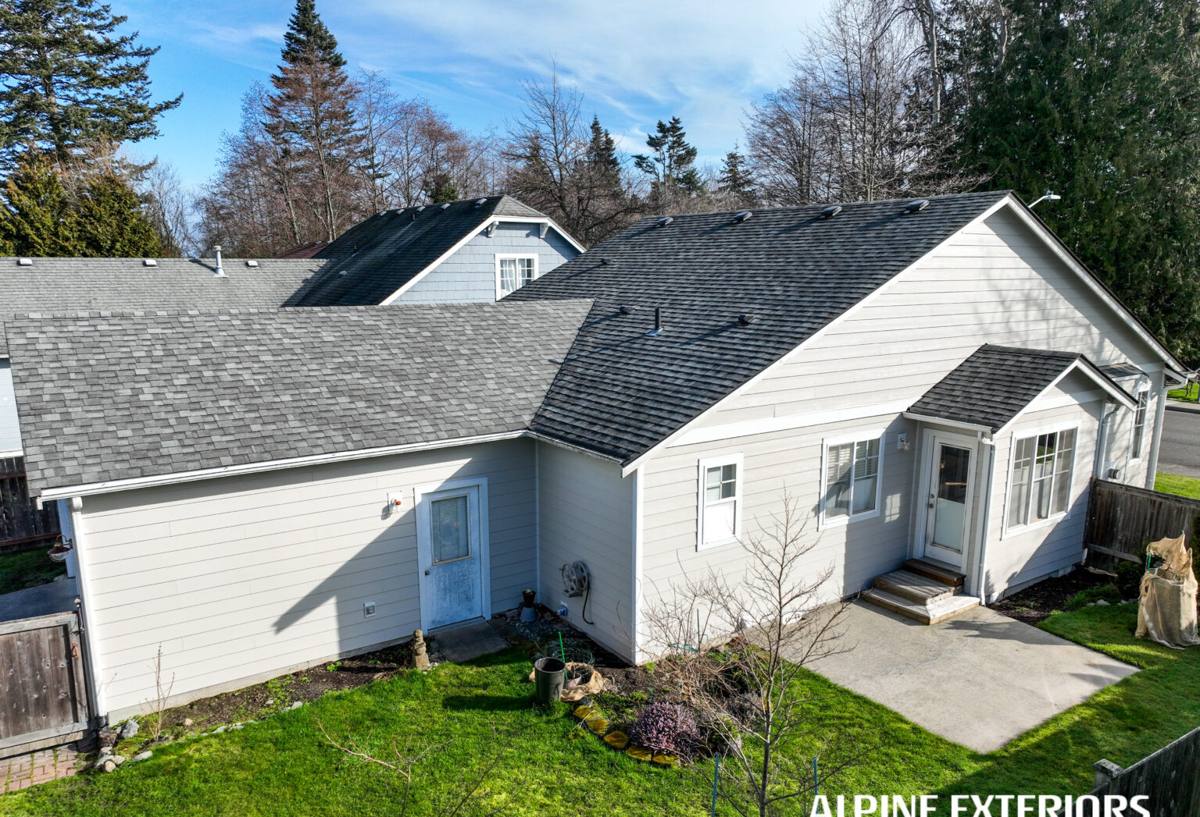
What Salt Air Actually Does to a House
Salt air isn't just a nuisance for boat owners. Airborne salt is corrosive to exposed metal fasteners, hinges, and flashing, and it accelerates the breakdown of finishes that aren't built to handle it. On wood and wood-composite siding, salt exposure combined with moisture speeds up swelling, checking, and paint failure. On vinyl, prolonged salt and UV exposure can lead to fading and brittleness faster than the manufacturer's marketing suggests. It's not that these products fail overnight — it's that the maintenance clock runs faster near the water, and a lot of homeowners don't find out until they're already repainting or patching sooner than they expected.
The practical takeaway for Lopez Island homes, particularly ones with any real water exposure or wind fetch, is that material choice and fastener choice both matter more here than they would on a sheltered inland lot. We factor in proximity to the water, prevailing wind direction, and how exposed a given elevation is when we walk a property.
Moss Season: Longer Here Than Most People Expect
Why Moss Gets a Foothold
Moss and algae need shade, moisture, and time — and San Juan County gives them plenty of all three for a good chunk of the year. Roofs and north- or east-facing wall sections that stay damp longest are the first places it shows up, especially under overhanging trees or in the shadow of a neighboring structure. Once moss establishes on a roof, it holds moisture against the roofing material and can work its way under shingles or panels over time. On siding, algae staining is mostly cosmetic, but it's also a signal that a surface is staying wet longer than it should, which matters for anything with wood content.
Why It Matters for Siding Choice
Products that absorb moisture — solid wood, primed spruce, and to a lesser degree some engineered wood siding — give moss and mildew something to hold onto and a substrate that can soften underneath. Fiber cement doesn't behave the same way. It doesn't wick moisture through its core, so even when the surface picks up seasonal algae staining, the material underneath isn't degrading the way an absorptive product would. That's one of the main reasons we don't recommend wood-based siding for the shadier, wetter lots that are common across the island.
Why We Install Only James Hardie Fiber Cement
We made a decision as a company to install James Hardie fiber cement siding exclusively, and we don't install LP SmartSide, vinyl, Cemplank, Allura, primed spruce, or bare cedar. That's not a knock on every one of those products across the board — some of them work fine in the right application. It's that, given the specific mix of salt air, driving rain, and long moss seasons out here, we'd rather stand behind one system we know performs and that we can install to spec every time, than juggle multiple products with different moisture tolerances and maintenance schedules.
James Hardie fiber cement is non-combustible, it doesn't rely on paint film integrity the way wood does to stay protected, and it holds up to repeated wet-dry cycling without the swelling and checking that plague wood-based products in a marine climate. The factory-applied ColorPlus finish is baked on under controlled conditions rather than field-painted, which matters a lot in a place where field painting has to work around a lot of rainy days.
Matching the Product Line to the Site
James Hardie makes climate-engineered product lines, and the HZ5 formulation is built for regions that see the kind of moisture cycling common in the Pacific Northwest. We spec panel and trim combinations based on the specific exposure of each elevation of the house — a south-facing wall in full sun and a shaded north wall near tree cover aren't dealing with the same conditions, even on the same house, and the install details (fastening, flashing, gapping at trim) get adjusted accordingly.
How Common Siding Materials Compare on the Island's Conditions
| Material | Salt air / marine exposure | Moss & algae resistance | Typical maintenance |
|---|---|---|---|
| James Hardie fiber cement | Strong — non-combustible, doesn't absorb moisture | Surface staining possible; substrate unaffected | Occasional gentle wash |
| Vinyl siding | Can fade and become brittle faster near saltwater | Moderate; staining shows readily on light colors | Periodic washing; limited repair options |
| Primed spruce / cedar | Vulnerable; paint film breaks down faster in salt air | Weak; absorbs moisture, feeds moss growth | Frequent repainting, caulking, spot repairs |
| LP SmartSide / engineered wood | Moderate; edge and cut-end sealing is critical | Moderate; moisture at seams is the failure point | Regular inspection of seams and edges |
This table reflects general material behavior, not a specific product test — every house is different, and installation quality affects all of these outcomes more than the marketing sheets suggest.
Roofing, Windows, and Decks: The Whole Exterior Envelope
Siding doesn't work in isolation. On Lopez Island, we regularly find that the wall assembly, roof, window flashing, and any attached decking all need to work together to keep water moving away from the structure instead of into it. We handle roofing, windows, and decks as well as siding, which means when we're on site we're looking at how water actually moves across the whole exterior — not just whether the siding panels look good. A well-installed Hardie siding job paired with poor roof-to-wall flashing or a deck ledger that's trapping moisture against the house will still lead to problems, so we treat the envelope as one system.
Why a Local Crew Matters Out Here
Working on the islands means working around ferry schedules, tide-dependent access on some properties, and weather windows that can close fast. A crew that's used to San Juan County logistics plans material deliveries and install schedules around those realities instead of getting caught out with a half-finished wall open to the weather. It also means we've seen how houses in different pockets of the islands — close to the water versus tucked into the trees — actually age, which shapes how we spec and install rather than relying on generic guidance written for a different climate.
Keeping Hardie Siding Looking Right in This Climate
- Rinse siding gently once or twice a year to clear salt residue and organic staining, especially on shaded or north-facing walls
- Keep gutters and downspouts clear so runoff doesn't sheet down wall sections and stay in place
- Trim back vegetation and tree limbs that keep a wall section shaded and damp longer than necessary
- Check caulking at trim, window, and door edges annually — the caulking ages faster than the siding itself
- Have flashing at rooflines, decks, and window heads inspected periodically, since that's where most water intrusion actually starts
What to Expect When You Call Us
We start with a walk-around of the house, elevation by elevation, looking at exposure, existing moisture damage, roof condition, and how water is currently draining off the property. From there we can talk through what a Hardie siding install would actually involve for your specific house — product line, color, trim details, and a realistic install timeline that accounts for island logistics and weather windows. There's no pressure and no scripted upsell; we tell you what we see and what we'd recommend, and you decide from there.
If you're weighing a siding replacement on Lopez Island, or you want a second opinion on whether your current exterior is holding up the way it should, we're happy to come take a look. Fill out the form below for a free, no-pressure estimate.