 Orcas Island
 Why Cedar Still Turns Heads on Orcas Island
Cedar siding has a pull that's hard to argue with. It's the material islanders picture when they think "Pacific Northwest home" — warm, natural, and at home against the firs and water views around Orcas Island. We get asked about it often, and we understand the appeal. This page isn't an attack on cedar as a wood species. It's an honest look at what cedar siding actually demands of a homeowner once it's on the wall, and why we've made the decision not to install it, even when clients request it.
We install James Hardie fiber cement siding exclusively. That's not a marketing position — it's a standard we set after weighing what holds up against San Juan County weather with a manageable amount of upkeep, and what doesn't. Cedar falls into the second category, and we'd rather explain why than sell you something we don't believe will serve your home well for the next 30 years.
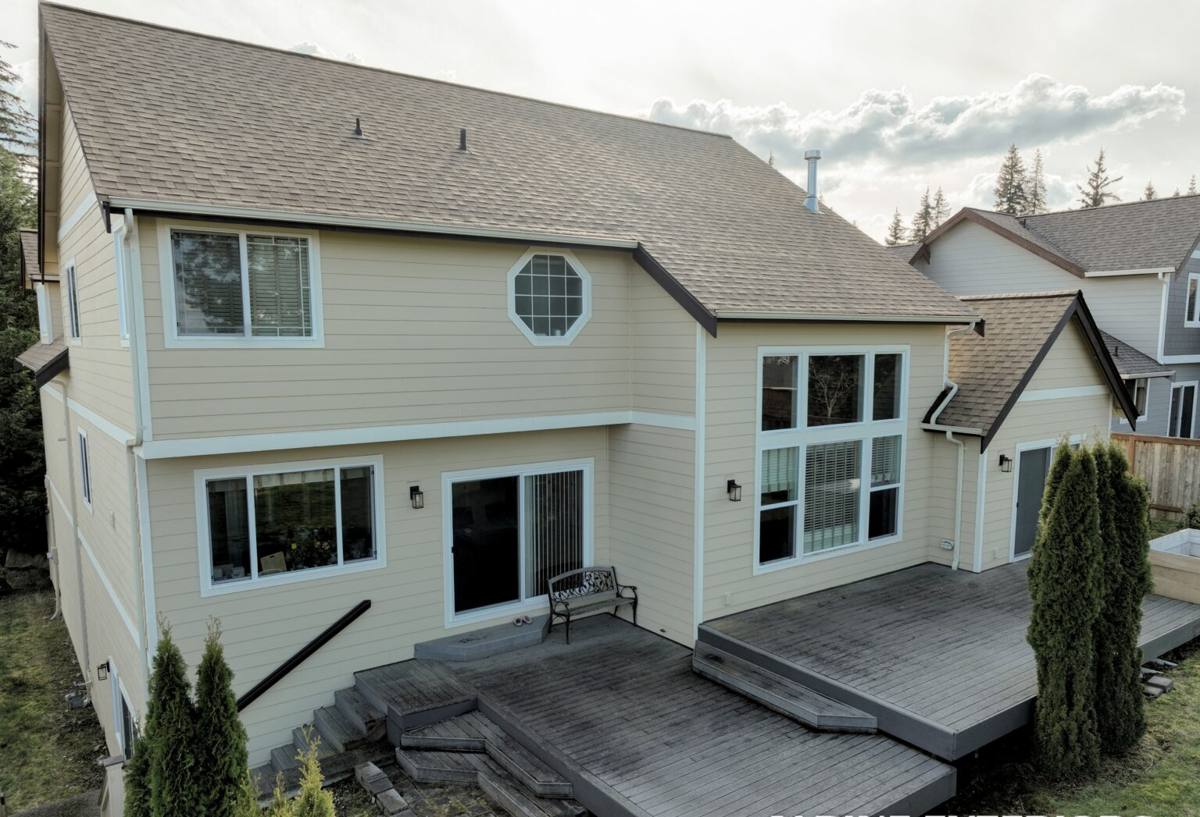
What Cedar Siding Actually Gets Right
Fair is fair. Cedar has real advantages, and they're the reason it's been a Northwest staple for generations:
- Natural appearance: Real wood grain, real depth, real texture — no factory finish fully replicates it.
- Natural rot resistance: Western red cedar contains natural oils (thujaplicins) that resist decay and insects better than most softwoods, at least while the wood is intact and well-sealed.
- Workability: It cuts, shapes, and fits into custom trim details easily, which is why it's still common on gable accents, shakes, and architectural features.
- Renewability: As a wood product, it's a renewable resource when harvested responsibly.
If cedar's natural oils and grain were enough on their own, this would be a short page. The trouble starts once the board goes up on an exterior wall and has to face rain, sun, and salt air for the next few decades.
The Maintenance Cycle Nobody Mentions at the Showroom
Staining and Sealing on a Clock
Cedar siding is not a finish-it-once product. To keep it looking like the sample board and to protect it from moisture intrusion, cedar needs a penetrating stain or sealant reapplied on a recurring schedule — typically every 2 to 4 years depending on sun exposure, orientation, and how well the previous coat was applied. Skip a cycle and the wood starts graying, checking, and absorbing water at the end grain and around fasteners. Once that starts, you're not just refinishing — you're often replacing boards.
This isn't a one-afternoon job either. Proper cedar maintenance means pressure washing (carefully, so you don't drive water behind the boards), letting the wood dry fully, sanding rough or splintered areas, and applying stain in dry, moderate weather — a narrow window on an island where marine weather rolls through unpredictably.
Salt Air, Driving Rain, and San Juan County's Moss Season
Orcas Island sits in a marine environment, and that cuts both ways for wood siding. Salt-laden air accelerates the breakdown of finishes and can draw moisture into end grain and joints faster than it would inland. Add San Juan County's long stretch of driving rain through fall, winter, and spring, and cedar spends much of the year wet or damp — exactly the condition wood siding handles worst.
Then there's moss. The cool, shaded, moisture-heavy conditions common on north-facing walls and tree-sheltered lots around Orcas Island are close to ideal for moss and algae growth. Once moss gets a foothold on cedar, it holds moisture directly against the wood surface, which speeds up rot from the outside in. Keeping cedar clean enough to prevent this means regular soft-washing — another recurring task added to the stain cycle, not a substitute for it.
Where Cedar Fails in the Real World
Cupping, Checking, and Splitting
Wood moves with humidity. As cedar boards absorb and release moisture through repeated wet-dry cycles, they cup, check (develop surface cracks), and eventually split — especially at butt joints and around fasteners where water tends to collect. Once a board has checked deeply, no amount of stain restores its structural integrity; it needs to be replaced.
Moisture Behind the Board
The bigger risk with cedar isn't usually what you can see — it's what happens behind it. If caulking fails, a stain cycle gets missed, or a board cups enough to open a gap, water can work its way behind the siding and into the wall assembly. On a wood product, that moisture doesn't always show up as visible damage until sheathing or framing is already compromised. Catching it early requires an attentive homeowner who's willing to inspect the siding regularly, which is a real ask over 20+ years of ownership.
Insects, Woodpeckers, and Rot
Cedar's natural oils fade over time, which means the older the siding gets, the less inherent resistance it has left. Aging cedar becomes more attractive to carpenter ants, and soft or rotting sections can draw woodpecker damage, which creates its own entry points for moisture. None of this is a defect in the product — it's simply what happens to organic wood siding exposed to a wet climate over decades.
The Cost Picture Over 20-30 Years
The sticker price comparison between cedar and fiber cement often favors cedar or puts them close. The real difference shows up over the ownership period, once you account for recurring maintenance rather than a one-time install cost.
| Factor | Cedar Siding | James Hardie Fiber Cement |
|---|---|---|
| Refinishing cycle | Every 2-4 years (stain/seal) | None required; ColorPlus factory finish is baked on |
| Typical touch-up labor | Wash, sand, stain — recurring | Occasional caulk/paint touch-up only, if unfinished trim |
| Moisture vulnerability | High if maintenance lapses | Engineered for wet climates (HZ5/HZ10 product lines) |
| Fire resistance | Combustible | Non-combustible fiber cement |
| Manufacturer warranty | None (product warranty from lumber mill, not the finish) | Long-term transferable limited warranty on product and finish |
| Board replacement over 30 years | Common — cupping, splitting, rot | Rare when installed to spec |
None of these numbers are exact — every home's exposure, orientation, and upkeep habits differ. But the pattern holds: cedar's ongoing labor and material cost compounds every few years, while fiber cement's cost is mostly front-loaded into a correct installation.
The Warranty Gap
This is the part that gets skipped in a lot of cedar sales pitches. Cedar siding, as a wood product, generally doesn't carry a manufacturer warranty covering the finish, cupping, checking, or rot — you're relying on the quality of the milling and whatever warranty the stain or sealant manufacturer offers on their coating, which is a very different (and much thinner) protection than a siding system warranty. If the wood fails structurally after year 12, that's on the homeowner.
James Hardie backs its fiber cement siding with a long-term, transferable limited warranty covering the product itself, and ColorPlus finishes carry their own finish warranty separate from the substrate. That's a meaningfully different risk position for a homeowner making a 20-30 year decision about their exterior.
Why We Install James Hardie Instead
We standardized on James Hardie fiber cement because it holds up to exactly the conditions that wear cedar down fastest: sustained moisture, salt air, and the freeze-thaw and wet-dry cycling that comes with a marine climate. It's non-combustible, which matters increasingly for insurance and wildfire-adjacent building codes even in a wet region like the San Juans. The factory-applied ColorPlus finish means no recurring stain cycle, and the HZ5 product line is specifically engineered for high-moisture, high-humidity climates like ours.
We're not installing Hardie because it's the only siding that exists — we're installing it because, after weighing what a product needs to survive here with reasonable upkeep, it's the one we're willing to stand behind with our own installation work and warranty.
A Practical Checklist Before You Choose Cedar
If you're still drawn to cedar's look, go in with eyes open. Before committing, walk through this:
- Are you prepared to budget for stain/seal maintenance every 2-4 years, indefinitely?
- Does your property have shaded, north-facing, or tree-covered walls prone to moss?
- How exposed is your home to direct salt air and driving rain off the water?
- Who will inspect the siding regularly for cupping, checking, or hidden moisture behind boards?
- Have you priced out 20-30 years of maintenance labor, not just the install cost?
- Are you comfortable with a warranty structure that doesn't cover the wood's long-term performance?
If those answers give you pause, it's worth seeing what a factory-finished fiber cement system looks like on a home like yours before you commit either way.
Let's Talk About Your Home
Every property on Orcas Island sits a little differently — some closer to the shoreline, some tucked under tree cover, some fully exposed to weather off the water. If you'd like an honest read on how your home's siding will hold up over time, and what a switch to James Hardie would look like and cost, we're happy to come take a look. There's no pressure and no sales script — just a straight answer based on what we see on your walls. Use the form below to request a free estimate.