 Orcas Island
 Why "What Does Siding Cost" Doesn't Have a One-Line Answer
Every homeowner on Orcas Island asks some version of the same question before a siding job starts: what's this actually going to cost? The honest answer is that siding replacement pricing is built from several independent variables, and any quote that skips past them with a single flat number per square foot is skipping the parts that matter. Two homes of identical size on the same road can land tens of thousands of dollars apart once you account for the condition of what's underneath the old siding, how the house is shaped, and what it takes to get materials and a crew to the site in the first place.
This page walks through the real cost drivers in the order they usually surface during an estimate, so you can read a bid with a clearer eye and ask better questions before signing anything.
Home Size, Shape, and Access
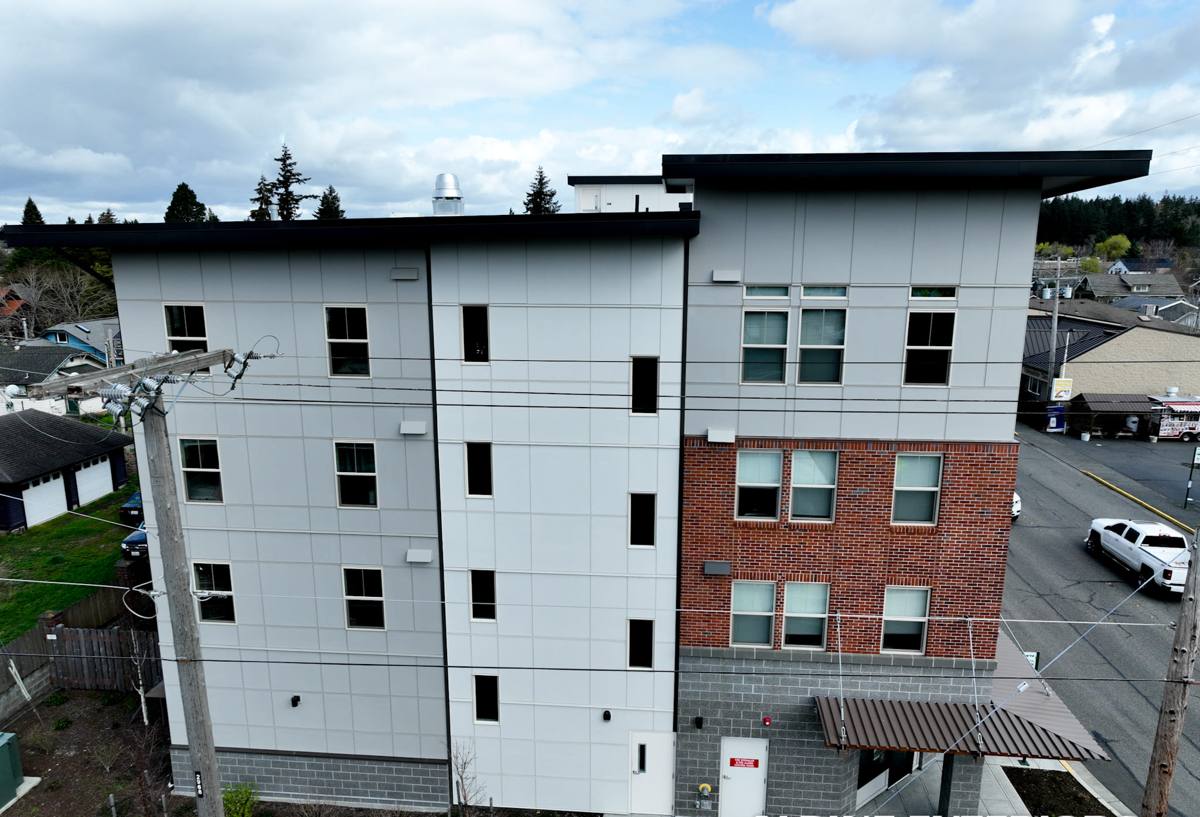
Square footage is the starting point, but it's a rough one. A simple rectangular ranch with few corners and easy ground-level access will always price lower per square foot than a home with steep gables, dormers, multiple roof pitches, or a wraparound porch. Every inside corner, outside corner, window, and door opening adds trim work, cutting, and labor hours that a flat square-footage number doesn't capture.
Access matters just as much as shape. Homes tucked into wooded lots, built on a slope, or perched near bluffs — common around Orcas Island's shoreline and hillside properties — often require staging, extended ladder work, or hand-carrying material where a lift or scaffold can't reach. That labor cost is real and should show up as a line item, not get buried into a vague "difficulty" markup.
Height and Story Count
A single-story home is straightforward. Add a second story, and you're paying for scaffolding or lift rental, additional safety setup, and slower, more careful work at height. This is one of the more predictable cost jumps and worth asking about directly when comparing bids.
Tear-Off, Substrate, and What's Hiding Underneath
This is the factor that surprises the most homeowners, and it's the one no contractor can fully price until the old siding actually comes off. San Juan County's long, wet moss season combined with driving rain off the Strait puts steady moisture pressure on wall assemblies, especially north-facing walls and anywhere caulking or flashing has failed over the years. Once the old siding is removed, it's common to find soft sheathing, compromised house wrap, or framing that's taken on moisture damage behind window trim and butt joints.
A trustworthy quote separates two things clearly: the base cost to remove old siding and install new siding on sound substrate, and a contingency or per-sheet/per-foot rate for sheathing repair or replacement if rot is found. If a bid promises a single fixed number with no mention of what happens if the sheathing underneath is bad, that's a gap worth asking about before work starts — not after the crew has already opened up a wall.
Salt Air's Role
Homes closer to the water deal with an added layer: airborne salt accelerates corrosion on fasteners, flashing, and any exposed metal trim. It doesn't rot wood by itself, but it speeds up the failure of hardware that's supposed to be keeping water out, which is part of why some older homes near the shoreline show more advanced substrate damage than their age alone would suggest.
Material Choice: The Biggest Lever You Control
Of everything on this list, material is the one decision that most changes both the upfront number and the total cost of ownership. We install James Hardie fiber cement exclusively, and we're upfront that it isn't the cheapest option on the shelf — but "cheapest to install" and "cheapest over the life of the siding" are two different numbers, and they matter differently depending on how long you plan to own the home.
| Material | Upfront Cost | Maintenance Reality | Fit for This Climate |
|---|---|---|---|
| Vinyl | Lowest | Low maintenance but cracks in cold snaps, fades, can warp near heat sources; seams and J-channels are common water entry points | Marginal — doesn't handle driving rain and wind-loading as well as heavier claddings |
| LP SmartSide (engineered wood) | Moderate | Requires diligent caulk and paint upkeep; strand-based wood substrate is more moisture-sensitive than fiber cement | Workable if maintained on schedule, but moss-season moisture punishes any lapse |
| Primed spruce / solid wood | Moderate to high | Highest ongoing maintenance — repainting, caulking, and rot-watching are recurring, permanent costs | Struggles in sustained damp; needs an attentive owner |
| Cedar | High | Beautiful but needs regular refinishing or sealing to resist rot, moss, and graying from salt air and moisture | Handsome but high-maintenance in this exact climate |
| James Hardie fiber cement | Higher than vinyl, comparable to or less than quality wood | Factory ColorPlus finish holds color for years without repainting; non-combustible; engineered moisture resistance | Purpose-built HZ product lines are engineered for wet, marine climates like this one |
We stopped installing vinyl, LP SmartSide, cedar, and primed spruce because we kept seeing the same pattern on this island: products that perform fine in a drier, milder climate start showing stress here within a handful of years — swelling seams, moss taking hold in grain and joints, caulk lines failing faster than the paint schedule assumes. Fiber cement isn't magic, but it's dimensionally stable, doesn't feed moss the way wood grain does, and James Hardie's HZ5 product line is specifically engineered for climates with exactly this rain and humidity profile.
Labor and Installation Complexity
Fiber cement is heavier and less forgiving than vinyl or engineered wood, and it has to be installed to Hardie's published specs — correct fastener spacing, proper clearance from grade and roof lines, factory-cut or properly scored edges, and sealed cut ends — to actually deliver the performance and warranty it's rated for. That precision takes more labor time than snapping vinyl panels into place, and it should be reflected honestly in the labor portion of a quote rather than papered over.
This is also where hiring the right crew matters as much as hiring the right material. Fiber cement installed loosely — wrong fastener pattern, no rain-screen gap, unsealed cuts — can fail early and void the manufacturer's warranty regardless of how good the product itself is. The material and the installation are a package; neither one alone determines the outcome.
Site Logistics Unique to Orcas Island
Working on an island changes the cost equation in ways that don't apply to a mainland job. Material has to come over by ferry or barge on a schedule, which means orders need to be placed with more lead time and less flexibility for last-minute changes. Debris removal follows the same constraint in reverse — tear-off waste has to be hauled and shipped back off-island, and that freight cost is a real, unavoidable line item rather than padding.
Crew logistics matter too. A contractor based on Orcas Island or already set up to work San Juan County efficiently avoids the added cost of ferry commuting time and scheduling slack that an off-island crew has to build into every bid. When comparing quotes, it's worth asking directly how a contractor handles material freight and disposal — vague answers here often turn into change orders later.
Warranty Structure and What It's Actually Worth
A lower bid that comes with a thin or non-transferable warranty isn't necessarily the better deal, especially on a home you might sell in the next decade. James Hardie's system carries a strong manufacturer warranty on the siding itself, and the ColorPlus factory finish is separately warranted against fading and peeling — which matters directly for maintenance cost, since it removes the recurring expense of repainting that cedar, primed wood, and eventually most painted sidings require.
When you're weighing bids, ask what's actually covered: the substrate, the finish, and the labor to make a warranty claim useful in practice, not just on paper. A warranty that requires you to prove annual maintenance records or that only covers materials and not the labor to remove and reinstall is worth a lot less than it sounds.
What to Get in Writing Before You Sign
- A clear tear-off scope and a stated process (with pricing) for what happens if sheathing damage is found
- The exact Hardie product line and profile specified — not just "fiber cement"
- Fastener type, spacing, and whether a rain-screen or drainage gap is included, given the local rain load
- Freight and disposal costs itemized, not folded into a vague total
- Manufacturer warranty terms in writing, including what voids them
- A realistic timeline that accounts for ferry-dependent material delivery
- Whether trim, flashing, and window details are included or priced separately
Getting a Real Number for Your Home
Every one of these factors — size and shape, what's found once the old siding is off, material choice, and the logistics of building on an island — has to be looked at in person to give you a number you can actually rely on. If you're weighing a siding replacement on Orcas Island and want a straight assessment of what your home needs and what it would cost to do it right with James Hardie fiber cement, we're happy to walk the property and put together a free, no-pressure estimate.