 Orcas Island
 Life on Cascade Lake Comes With a Different Set of Rules for Your Home's Exterior
Cascade Lake sits inland from the saltwater shoreline that wraps most of Orcas Island, but "inland" here doesn't mean sheltered. The lake basin sits under heavy tree cover, gets shaded and damp for long stretches of the year, and still catches the same marine air that moves across San Juan County. Homes around the lake deal with a combination most mainland siding crews never see: salt-laden air drifting in off the Sound, driving rain that comes sideways during winter storms, and a moss season that can run from October through May if conditions stay wet and shaded. Any one of those is manageable. Together, over years, they find every weak point in a siding, roofing, or window installation that wasn't done right the first time.
We're a local crew that works Orcas Island and the surrounding San Juan County islands full time. That matters more here than in most places — every job on the island runs on ferry schedules, island-only material staging, and a working knowledge of which slopes hold water and which don't. A contractor who trailers over for one job and leaves doesn't build that knowledge. We have.
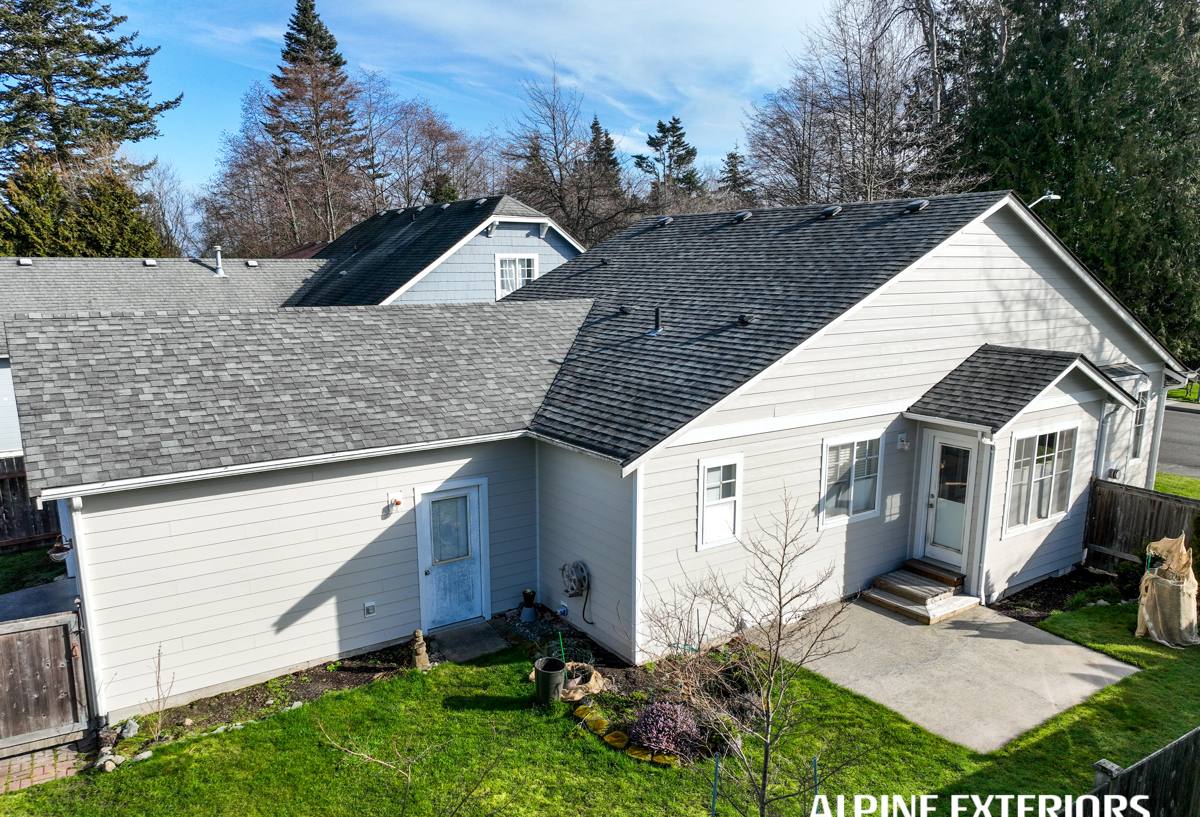
What the Climate Actually Does to Siding Around the Lake
Salt Air
Salt doesn't need to sit right on the water to do damage. Airborne salt travels with the wind and settles on every exterior surface it touches, including homes set back from the shoreline near Cascade Lake. Over time it accelerates corrosion on fasteners and metal trim, and it degrades paint and coatings that weren't formulated to shed it. Siding that isn't dimensionally stable — meaning it swells, shrinks, or warps with moisture — loses its finish faster once salt is added to the equation.
Driving Rain
San Juan County gets less annual rainfall than mainland Western Washington in raw totals, but winter storms here bring wind-driven rain that hits siding at an angle instead of falling straight down. That means water gets forced into laps, seams, and butt joints that a calmer rain would never reach. Flashing details, caulking choices, and how tightly a siding product holds its shape all matter more here than they would in a drier, calmer climate.
Moss and Prolonged Dampness
The tree canopy around Cascade Lake keeps a lot of surfaces shaded and slow to dry. Moss and algae take hold anywhere organic material and moisture linger — north-facing walls, areas under overhangs, and any siding product with a porous or wood-based surface. Moss holds moisture against the wall assembly behind it, which is where real problems start: trapped water leads to rot, delamination, and coating failure over years, even if the surface still looks fine from the road.
Why We Standardized on James Hardie Fiber Cement
We install one siding system: James Hardie fiber cement, with the factory-applied ColorPlus finish. We made that decision after years of repair calls and re-sides on products that looked fine in a showroom but struggled with exactly the conditions Cascade Lake homes deal with every year. Fiber cement is non-combustible, dimensionally stable across wet and dry cycles, and holds a factory finish far longer than field-applied paint on wood-based products. Hardie also engineers specific HZ product lines for different climate zones, which lets us match the product to the moisture and temperature swings this region actually sees rather than installing a generic national product and hoping it performs.
That doesn't mean every other product on the market is worthless. It means we made a professional judgment call about what holds up on San Juan County homes with the least maintenance and the fewest callbacks, and we'd rather install one system well than offer five and cut corners on all of them.
Why We Don't Install Vinyl Siding
Vinyl is inexpensive and easy to install, which is exactly why it's everywhere. But it's a thin plastic product that expands and contracts significantly with temperature swings, and it relies on loose-lock installation to accommodate that movement — which means it can rattle, buckle, or pull away from fasteners over time. In a marine climate with driving rain, vinyl's overlapping panel system isn't sealed the way fiber cement can be, and it doesn't offer the fire resistance that non-combustible siding does. It also can't be painted a dark color in most applications without risking heat warping, which limits design options homeowners often want.
Why We Don't Install LP SmartSide
LP SmartSide is an engineered wood product — strand board with a resin and wax treatment, not fiber cement. It performs reasonably well when installation details (especially cut-edge sealing and flashing) are followed exactly, but it's still wood at its core, and wood-based sidings are more vulnerable to moisture intrusion at seams and cut ends than fiber cement is. In a climate with this much prolonged dampness and moss pressure, we'd rather not stake a long-term installation on a product where a single missed detail can lead to swelling or rot down the road.
Why We Don't Install Cedar or Primed Spruce
Real wood siding has genuine appeal, and a well-maintained cedar home looks great. But wood requires an ongoing maintenance commitment — refinishing, caulking, and moisture monitoring — that most homeowners underestimate, especially on a shaded, damp lot like the ones common around Cascade Lake. Moss and algae take hold on wood faster than on fiber cement, and once moisture gets behind a wood plank, rot can spread before it's visible from the outside. We'll always be honest that cedar can work if a homeowner commits to the upkeep — it's just not the standard we build our installations around.
Siding Material Comparison for This Climate
| Material | Moisture Behavior in Wet, Shaded Sites | Fire Rating | Typical Maintenance |
|---|---|---|---|
| James Hardie Fiber Cement | Dimensionally stable; resists swelling and warping | Non-combustible | Occasional wash; factory finish holds for years |
| Vinyl | Doesn't rot but can warp, buckle, or pull loose over time | Combustible | Low, but limited repair options if damaged |
| LP SmartSide | Vulnerable at cut edges and seams if sealing isn't perfect | Combustible | Moderate; requires attentive caulk and paint upkeep |
| Cedar / Primed Spruce | Prone to moisture absorption and moss growth in shade | Combustible | High; regular refinishing and inspection needed |
Roofing for Cascade Lake Homes
Roofs around the lake take the same driving rain and moss pressure as the siding below them, plus the added stress of shade-heavy tree cover shedding needles and debris onto valleys and gutters. We handle roof replacement and repair with an eye toward the details that actually cause leaks in this climate: proper flashing at valleys and penetrations, ice-and-water protection at eaves, and ventilation that keeps the attic dry so moisture doesn't condense and work its way back down into the roof deck. A roof that isn't ventilated properly on a shaded lot holds moisture longer than one that gets sun and airflow, which speeds up moss growth and shortens the life of the roofing material.
Windows That Hold Up to Marine Air and Wind-Driven Rain
Window failures around Cascade Lake are almost always water intrusion problems, not glass problems. Wind-driven rain finds gaps in flashing, sill pans, and caulking long before it finds a weakness in the glazing itself. When we replace windows, we pay close attention to flashing sequence and drainage so water that does reach the window assembly has somewhere to go instead of sitting against the wall framing. We also talk with homeowners about frame material trade-offs — some hold up to salt air and moisture better than others over a multi-decade lifespan.
Decks Built for Shade, Moisture, and Moss
Decks on shaded, damp lots near the lake deal with the same moss and slow-drying conditions as siding and roofing, plus foot traffic and standing water risk if drainage isn't planned correctly. We build and repair decks with attention to ledger flashing, proper gapping between boards for drainage and airflow, and material choices that resist moisture absorption in a climate where a deck may not see direct sun for days at a stretch in the wet months. A deck that traps moisture underneath is a rot problem waiting to happen, regardless of how good the surface boards look.
What Working With a Local Crew Looks Like
Every material for an Orcas Island job has to cross on the ferry, which means scheduling and staging take real planning — something an off-island contractor unfamiliar with the logistics can underestimate badly. We plan material deliveries, crew time, and weather windows around the realities of working on the island, not around a mainland schedule that assumes easy same-day access. We also know which parts of San Juan County tend to hold moisture longer, which lots get more wind exposure, and which details matter most on a given site before we ever put a level against the wall.
Seasonal Exterior Maintenance Checklist for Cascade Lake Homes
- Inspect north- and shade-facing siding and roof sections for moss growth each fall, before the wet season sets in
- Clear gutters and downspouts of needles and debris at least twice a year given the surrounding tree cover
- Check caulking around windows, doors, and trim annually — this is where wind-driven rain finds its way in first
- Rinse siding periodically to remove salt residue and organic buildup before it has time to work into the finish
- Look underneath deck boards and around ledger connections for trapped moisture or early rot signs
- Have flashing at roof valleys and penetrations checked before major storm season, not after a leak appears
What Drives Cost on a Cascade Lake Project
| Factor | Why It Matters Here |
|---|---|
| Home access and ferry logistics | Material staging and crew scheduling take more planning than a mainland job |
| Existing moisture or rot damage | Shaded, damp sites often reveal hidden damage once old siding or roofing comes off |
| Tree cover and site shade | Affects drying time during installation and long-term moss/algae maintenance needs |
| Product line selection | James Hardie's climate-engineered HZ lines are matched to the home's specific exposure |
| Scope — siding, roofing, windows, decks | Bundling exterior work can reduce redundant setup and staging costs |
If you own a home near Cascade Lake and want an honest look at how your siding, roofing, windows, or deck are holding up against the marine air, rain, and moss this part of San Juan County sees every year, we're happy to come take a look. Reach out for a free, no-pressure estimate using the form below.