 Orcas Island
 An Honest Answer to a Question We Get Often
Homeowners on Orcas Island sometimes come to us with a quote in hand from another contractor specifying Allura fiber cement siding, and they want to know why our estimate is different. It's a fair question, and it deserves a straight answer rather than a sales pitch. Allura is a legitimate fiber cement manufacturer, and it is not a scam product or a hazard to your home. But after years of installing and maintaining siding in San Juan County's marine climate, we made a decision to install James Hardie exclusively — and we think you deserve to understand exactly why before you sign a contract with anyone.
This page isn't about tearing down a competitor's product line. It's about the specific, practical trade-offs that led us to standardize on one system, and why we think that choice matters more here than it might in a drier, more sheltered part of the country.
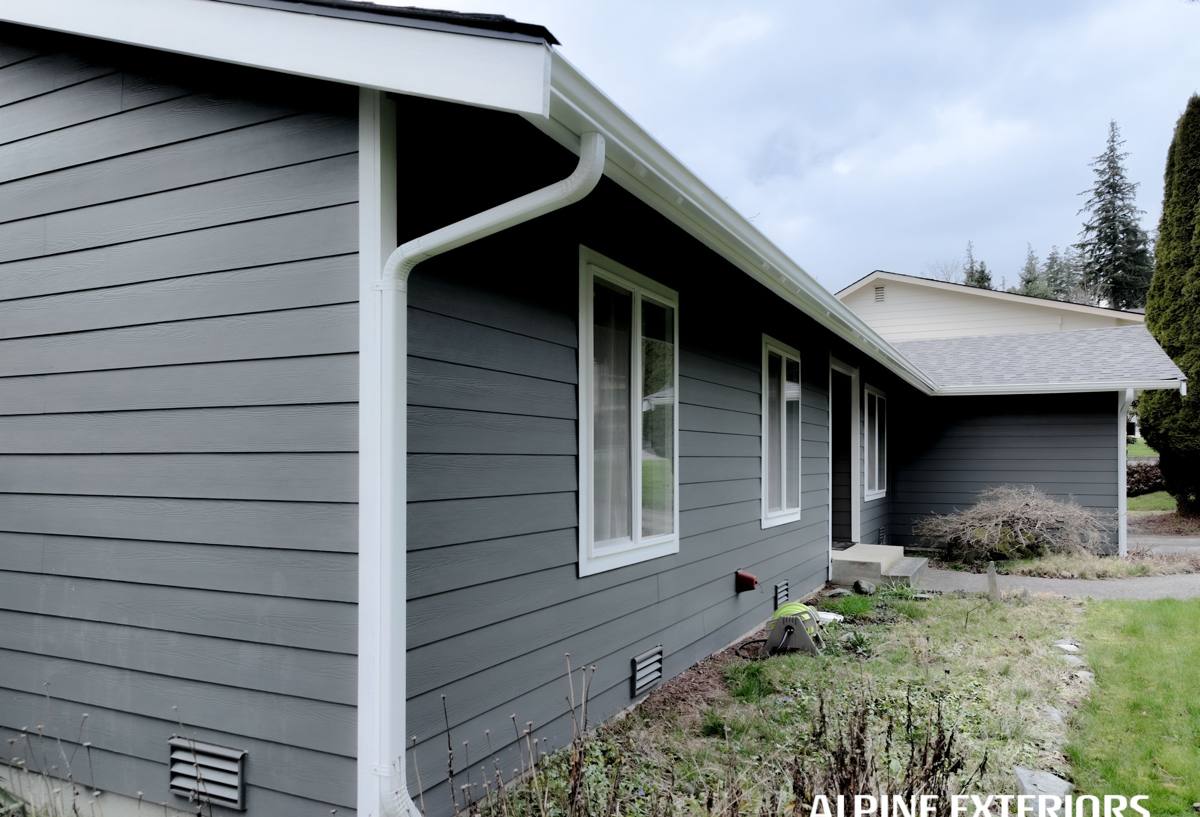
What Allura Gets Right
Fiber cement as a category is a genuine improvement over wood and vinyl for coastal homes, and Allura's product does deliver on the basics of that category. It's a Portland cement, sand, and cellulose fiber composite, non-combustible, and resistant to rot and insect damage in a way that primed spruce and cedar simply are not. Allura also offers factory-primed and pre-finished options, various plank profiles, and pricing that frequently comes in below James Hardie on a per-square-foot basis. For a budget-conscious build in a mild inland climate, that combination can make sense.
We're not disputing any of that. Our concerns aren't with the base chemistry of fiber cement — they're with the specifics of how a given manufacturer engineers, finishes, and warranties that product, and how forgiving that system is of the moisture load and installation conditions we deal with out here.
The San Juan County Climate Test
Salt Air and Driving Rain
Orcas Island sits fully exposed to Pacific-influenced weather moving through the San Juans, and siding here takes on a combination most inland manufacturers don't design around first: salt-laden air off the water, wind-driven rain that hits walls at an angle rather than falling straight down, and long stretches of damp weather that never quite dry out between storms. Any fiber cement product will survive a season or two under those conditions. The question we care about is what the product looks and performs like after ten or fifteen years of it.
A Long Moss Season
Between the marine humidity and the tree cover common on island lots, moss and algae growth is a fact of life here for a good chunk of the year. Siding with a weaker factory finish, more porous surface texture, or field-applied paint is going to show green and black staining sooner, and it's going to need more frequent pressure washing and repainting to keep that staining from working into the substrate. That maintenance cycle is where a lot of the real difference between fiber cement brands shows up — not in year one, but in year eight.
Where the Trade-offs Actually Sit
Factory Finish vs. Field Paint
James Hardie's ColorPlus finish is baked on at the factory under controlled conditions and backed by its own dedicated finish warranty, separate from the substrate warranty. Allura offers primed panels that are typically field-painted after installation, and while pre-finished options exist in some product lines, they are less universally available and less deeply integrated into the warranty structure. Field-applied paint in a wet marine climate is more vulnerable to early failure — moisture gets under a coating faster when the coating goes on outdoors, on a job site, rather than in a factory booth.
Installation Sensitivity
Fiber cement performs exactly as well as the installation behind it, and that's true of every brand. But some systems are more forgiving of the small errors that happen on real job sites — slightly tight clearances, a fastener pattern that's a little off, caulking that didn't get renewed on schedule — than others. James Hardie publishes detailed, climate-specific installation guidance (including a dedicated HardieZone system) and backs correct installation with a stronger, more explicit warranty structure. That combination gives us more confidence that small field variances won't turn into moisture problems five years down the road, which matters more here than in a climate that gets a real dry season to let assemblies recover.
Warranty Structure
This is where the practical difference is easiest to point to directly.
| Factor | James Hardie | Allura |
|---|---|---|
| Substrate warranty | Non-prorated, long-term coverage on the fiber cement itself | Limited warranty, terms vary by product line |
| Factory finish warranty | Separate ColorPlus finish warranty, factory-applied | Finish warranty depends on whether panel is pre-finished or field-painted |
| Climate engineering | HZ5/HZ10 zone-specific formulations for Pacific Northwest conditions | General-purpose formulation, less regionally differentiated |
| Transferability | Warranty transfers to subsequent owners under stated terms | Transfer terms vary by product and dealer |
| Typical material cost | Moderate-to-higher per square foot | Often lower per square foot |
None of this means Allura's warranty is worthless — it means the coverage and the finish durability are structured differently, and in a climate that stresses siding as hard as ours does, we'd rather stand behind the system with the deeper track record and the more explicit, factory-backed finish coverage.
Why We Standardized on One System
Running two or three siding product lines might look like flexibility, but in practice it means our crews are less deeply specialized in any one system's fastening patterns, clearance requirements, and finish handling. We chose to install James Hardie exclusively so that every job we do benefits from the same accumulated experience — the same crew that installed HardiePlank on a waterfront home last year is the crew installing it on your project, using the same tested details for flashing, clearances, and joint treatment. That consistency is worth more to us, and to the homes we work on, than being able to offer a lower-cost alternative we'd be less confident standing behind twenty years from now.
We also weigh resale and insurance considerations. James Hardie's name recognition among appraisers, insurance underwriters, and buyers in this region is well established, and that can matter when a home eventually goes to market. A less widely recognized fiber cement brand doesn't carry the same automatic credibility, even when the underlying product performs reasonably well.
What This Means for Your Project
If you're currently comparing quotes and one includes Allura or another fiber cement brand at a lower price point, that's not automatically a red flag — it may simply reflect a contractor who's made a different standardization decision than we have, for reasons that make sense for their business. What we'd encourage you to do is ask specific questions about finish warranty, substrate warranty length, and whether the product has a track record in a marine, high-moisture climate like ours, rather than comparing bottom-line price alone.
Questions Worth Asking Any Siding Contractor
- Is the finish factory-applied or field-painted, and what specifically does the finish warranty cover?
- What is the substrate (rot, cracking, moisture) warranty term, and is it prorated or non-prorated?
- Does the manufacturer publish installation specs for high-moisture, marine, or coastal climates specifically?
- Is the warranty transferable if you sell the home, and under what conditions?
- How many similar climate projects has this specific crew installed with this specific product?
- What is the manufacturer's history and track record in the Pacific Northwest, not just nationally?
What We Install Instead
We put James Hardie fiber cement on every siding job we do, using the HZ5 formulation engineered for Pacific Northwest moisture and temperature swings, with the ColorPlus factory finish so the color and coating are baked on rather than applied on-site. It's non-combustible, it holds up to the driving rain and salt air that come off the water here, and the finish resists the moss and algae staining that a long damp season on Orcas Island tends to produce. It costs more up front than some alternatives, including Allura, and we think that's a fair trade for a system we've seen perform well over the long run in exactly this climate.
If you'd like a straightforward look at how James Hardie compares to what you've been quoted elsewhere — including actual product lines, colors, and a real cost estimate for your home — we're happy to walk through it. Reach out for a free, no-pressure estimate and we'll give you the same honest comparison we've laid out here, applied to your specific project.