 Orcas Island
 Exterior Work Built for Lopez Village's Island Climate
Lopez Village sits close to the water, and that proximity shapes almost everything about how a home's exterior ages here. Salt-laden air moves off the water and settles on siding, trim, and roofing day after day. Add in the long stretch of driving rain that San Juan County sees from fall through spring, plus the shaded, damp conditions that let moss and algae take hold on roofs and north-facing walls, and you have a climate that is genuinely harder on exterior materials than most mainland neighborhoods ever face. Homes here don't fail because owners neglect them — they fail because standard building products simply weren't engineered for this combination of salt, moisture, and shade.
We work throughout Orcas Island and the surrounding San Juan County islands, and Lopez Village homes get the same attention to detail as anywhere else on our route: correct water management, materials chosen for marine exposure, and workmanship that accounts for the specific way this climate attacks a building envelope.
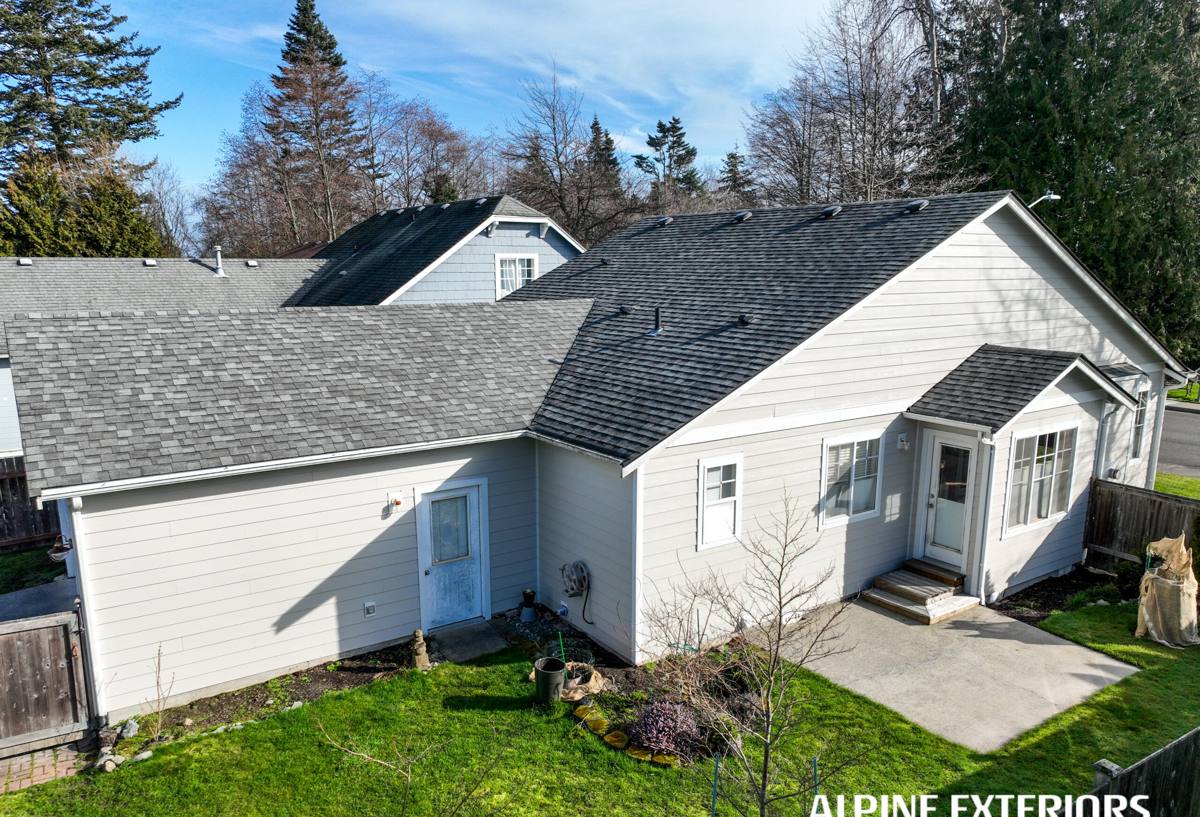
What the Salt Air and Rain Actually Do to a Home
Salt Air and Metal Fatigue
Airborne salt accelerates corrosion on anything metal — fasteners, flashing, gutters, and hardware. Over years, corroding fasteners can loosen siding panels and trim, creating small gaps where water intrudes. It's a slow process, which is exactly why it's easy to miss until a panel starts to separate or a streak of rust bleeds through paint.
Driving Rain and Wall Assemblies
Wind-driven rain doesn't just wet a wall's surface — it can push moisture sideways and upward under laps, around window and door openings, and behind poorly sealed trim. A home near the water sees this kind of weather more often than an inland property, which means the flashing details and water-resistive barrier behind the siding matter more here than almost anywhere else in the region.
Moss, Algae, and Shade
Lopez Village's tree cover and marine layer keep many rooflines and north-facing walls damp well after a storm has passed. That prolonged dampness is exactly what moss and algae need to establish themselves. On roofing, moss roots can lift shingles and hold water against the surface. On siding, persistent algae staining is often less about the material failing and more about a wall that never fully dries between rain events — which is why proper venting, gutter placement, and siding choice all play a role in keeping a wall dry.
Why We Install Only James Hardie Fiber Cement Siding
We made a decision as a company to install one siding system: James Hardie fiber cement. We don't install vinyl, LP SmartSide, Cemplank, Allura, primed spruce, or cedar. That's not a marketing position — it's the result of years of exterior work in exactly this kind of coastal, wet, shaded climate, and watching which materials hold up and which ones create recurring problems for homeowners.
Why We Don't Install the Alternatives
- Vinyl siding — it's affordable and low-maintenance in mild climates, but it can warp or distort under intense reflected heat, and it relies on unpainted, uninsulated panels that don't offer the same fire resistance or impact durability as fiber cement. In wind-driven rain, vinyl's overlapping panel design is also more prone to water intrusion at seams than a properly installed Hardie system.
- LP SmartSide (engineered wood) — a genuinely improved wood product with resin-treated strands, but it is still wood at its core. Wood-based siding is more vulnerable to prolonged moisture exposure than fiber cement, and in a climate where walls stay damp longer because of shade and marine humidity, that's a real long-term risk.
- Cemplank and Allura — both are fiber cement competitors to Hardie, and fiber cement as a category is sound. Our reasoning here is about consistency, factory finish quality, and warranty structure rather than a fundamental material objection — Hardie's ColorPlus finish and product engineering for specific climate zones is what we've found performs most reliably.
- Primed spruce and raw cedar — beautiful, traditional, and genuinely appealing on the right home, but both require ongoing owner maintenance — recoating, caulking, and moisture monitoring — that's difficult to keep up with consistently, especially on a home that isn't occupied year-round, which describes a meaningful share of island properties.
James Hardie fiber cement is non-combustible, dimensionally stable in wet-dry cycling, and comes from the factory with a baked-on ColorPlus finish that resists fading and chipping far better than field-applied paint. Hardie also engineers specific product lines (HZ5, for example) for harsher climate zones, which matters when a home sits close to salt water. That combination — durability, finish quality, and a strong transferable warranty — is why it's the only system we put our name behind.
How a Siding Project Works for a Lopez Village Home
1. On-Site Assessment
We start by walking the exterior and looking at exposure — which walls take the most wind-driven rain, where moss and algae staining already show up, and whether existing trim, flashing, or sheathing has any signs of moisture damage. Island homes often have unique wind and shade patterns depending on tree cover and elevation, so this step is never a generic checklist.
2. Water Management First
Before any siding goes up, we address the water-resistive barrier, flashing at windows and doors, and any transitions where two materials meet. This is the layer that actually keeps a wall dry — the siding is the visible finish, but the flashing and barrier underneath do the real work of managing driving rain.
3. Fastening and Fastener Selection
Given the corrosive effect of salt air, fastener choice matters more here than in an inland install. We use fasteners and hardware appropriate for coastal exposure, and we follow Hardie's fastening specifications closely — under-fastened or incorrectly placed nails are one of the most common causes of premature siding failure, regardless of brand.
4. Finish and Detail Work
ColorPlus panels arrive factory-finished, which reduces on-site painting needs and gives a more consistent, durable color than field-applied coatings. We finish out trim, caulking, and touch-up work to match, so the final result reads as one cohesive exterior rather than patched-together sections.
Beyond Siding: Roofing, Windows, and Decks
Because siding, roofing, windows, and decks all interact at the same envelope, we handle all four rather than treating siding as an isolated project.
Roofing
A roof under heavy tree cover needs attention to moss prevention and proper ventilation, since trapped moisture under shingles is what accelerates moss growth and shortens roof life. We look at ventilation and drainage as part of any roofing scope, not just the shingles themselves.
Windows
Window flashing is one of the most common failure points in wind-driven rain. When we replace siding around existing windows, we check that flashing integrates correctly with the new water-resistive barrier — a detail that's easy to get wrong and expensive to fix later if it's missed.
Decks
Exterior decks near the water face the same salt exposure as siding, with the added stress of foot traffic and standing water. Material choice and proper drainage under the deck surface both matter for longevity in this environment.
Comparing Siding Options for a Coastal San Juan County Home
| Factor | James Hardie Fiber Cement | Vinyl | Engineered Wood / Cedar |
|---|---|---|---|
| Moisture resistance | Strong — cement-based, dimensionally stable | Good surface resistance, weaker at seams | Moderate to weak — wood-based, needs upkeep |
| Salt air / corrosion resistance | Strong when installed with coastal-rated fasteners | Panels resist salt; hardware still corrodes | Moderate — finish breaks down faster near salt air |
| Fire resistance | Non-combustible | Combustible | Combustible |
| Maintenance | Low — factory finish, occasional wash | Low, but seams and warping can develop over time | High — periodic recoating and sealing required |
| Typical finish life | Long-lasting factory ColorPlus finish | Color can fade in strong sun exposure | Shorter — finish weathers and needs reapplication |
Signs a Lopez Village Home May Need Exterior Attention
- Green or black staining on north-facing or shaded walls that doesn't wash off easily
- Visible rust streaks near fasteners, flashing, or hardware
- Moss buildup along roof edges, valleys, or in shaded sections of the roofline
- Soft spots, bubbling paint, or warping on wood-based or painted siding
- Gaps or separation at panel seams, especially on walls facing prevailing wind and rain
- Water stains on interior walls near windows or exterior corners, which often trace back to flashing failures
Why a Local Crew Matters on the Island
Working on Orcas Island and the surrounding San Juan County islands means factoring in ferry schedules, material logistics, and weather windows that mainland crews don't have to think about. A crew that regularly works this area plans material deliveries around the ferry, understands which weeks of the year offer the most reliable dry stretches for exterior work, and has already seen how salt air and shade affect homes just like the one in front of them. That local familiarity translates into fewer surprises mid-project and a schedule that actually holds.
It also means accountability. A crew based in the region is easy to reach if a question comes up after the job is done, and warranty support isn't a matter of waiting for someone to make a special trip out to the islands.
What to Expect From an Estimate
An honest estimate starts with a real look at the home — current siding condition, exposure to wind and rain, existing moisture damage if any, and what the homeowner actually wants out of the project. From there we walk through material options, realistic cost ranges, and a rough timeline that accounts for weather and ferry logistics.
If you're weighing a siding, roofing, window, or deck project for a home in Lopez Village, we're glad to come take a look and talk through what your specific exterior is facing. There's no pressure and no obligation — just a straightforward assessment and a free estimate.