 Orcas Island
 New-Construction Windows for Doe Bay Builds
Doe Bay sits on the exposed east side of Orcas Island, where waterfront and near-waterfront lots take the full brunt of San Juan County's weather: salt-laden air off the water, driving rain that comes in sideways during winter storms, and long stretches of damp, low-sun months that keep moss and mildew active most of the year. When a home is being built from the ground up, the window installation is one of the few chances to get the building envelope right the first time. Get the flashing, sill pans, and sealant details wrong at this stage, and you're often not looking at a fix — you're looking at siding removal, rot repair, and a redo years down the road.
New-construction window work is a different discipline than replacement work. On a replacement job, we're working around existing siding and trim, matching what's already there. On new construction, we're setting the window into a bare rough opening, integrating it with the weather-resistive barrier and flashing before any siding goes on, and making decisions that the framing and siding crews will build around for the life of the house. There's no shortcut version of this that holds up on an Orcas Island coastline lot.
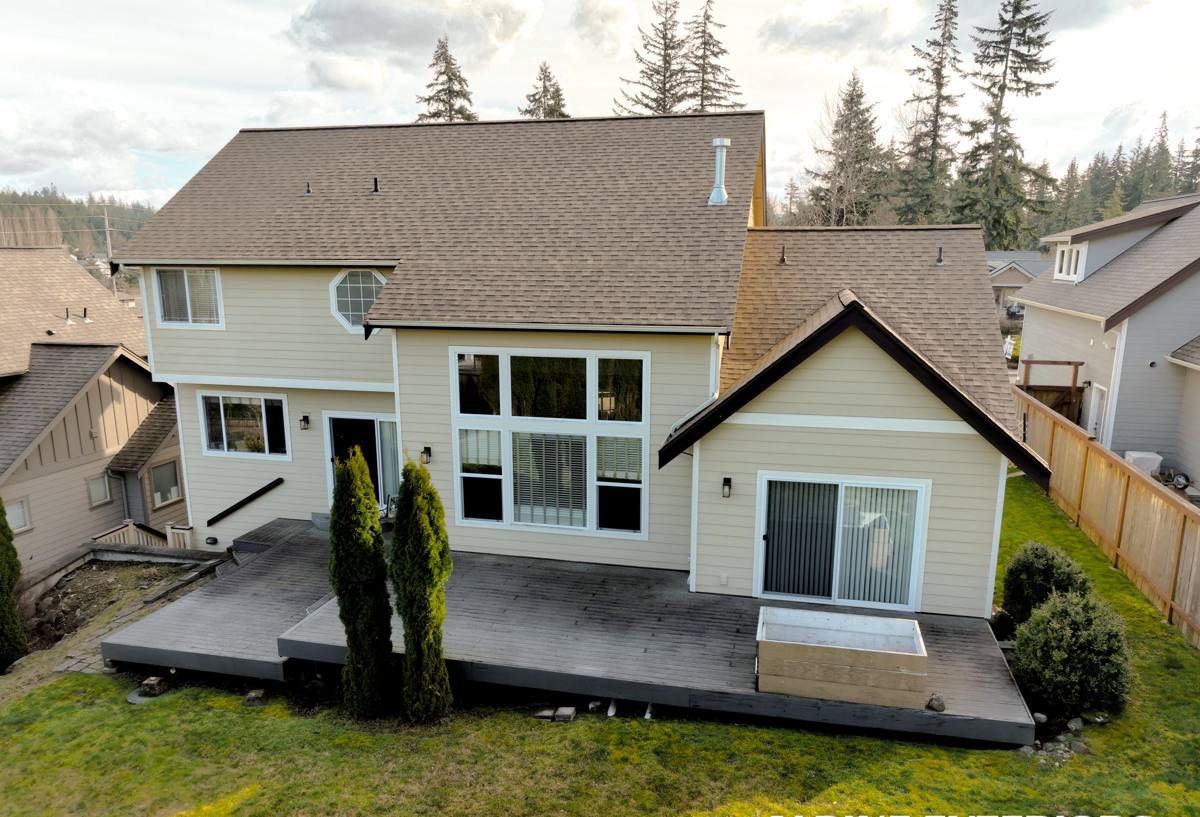
What Doe Bay's Climate Demands from a Window Installation
Three conditions shape how we approach new-construction windows out here, and they're not the same conditions a contractor working inland in Washington deals with every day.
Salt Air and Corrosion
Homes close to the water in Doe Bay see airborne salt settle on every exterior surface, including window hardware, screen frames, and fasteners. Standard mill-finish aluminum trim and low-grade fasteners corrode faster here than they would even a few miles inland. We choose hardware, flashing metal, and fastener coatings with that exposure in mind rather than defaulting to whatever ships with a builder-grade window package.
Driving, Wind-Driven Rain
Winter storms on this side of the island push rain horizontally, not straight down. That means water pressure gets tested at the sill, the jambs, and every seam in the flashing — not just the head of the window. A flashing detail that would pass fine in a calmer inland location can leak here within a season or two if the sill pan and drainage plane aren't built correctly.
Moss, Mildew, and Sustained Dampness
San Juan County's long wet season keeps humidity high around window openings for months at a time. Any gap in the air seal or vapor management invites condensation inside the wall cavity, which is exactly the environment moss, mildew, and eventually rot need to take hold. A correct new-construction install manages both liquid water on the outside and moisture vapor on the inside — they're related problems but require different details to solve.
What a Correct New-Construction Window Job Involves
New-construction window installation is a sequence, and skipping or reordering steps is where most long-term failures start. Here's what we hold to on every Doe Bay build:
- Rough openings checked for square, level, and correct dimension before any window is set — a window forced into an out-of-square opening never seals properly, no matter how good the flashing tape is.
- A sloped sill pan installed at every opening so any water that gets past the window has somewhere to go besides the framing.
- Flashing integrated in the correct shingle-lap order with the weather-resistive barrier — sill first, then jambs, then head, each layer overlapping the one below it so water always sheds outward and downward.
- Compatible sealants and tapes used at every joint — mixing incompatible flashing products is a common cause of adhesion failure that shows up as a leak years later, not on install day.
- Window units set plumb, level, and square, then fastened per the manufacturer's specific nailing-fin or clip pattern — not a generic pattern that happens to be close.
- Interior and exterior sealant applied only where the manufacturer's installation instructions call for it, preserving the drainage path rather than sealing water inside the wall.
- Egress, tempered glass, and energy code requirements verified per room before the opening is ever framed, so there's no rework after drywall or siding is on.
That last point matters more than people expect. Washington's energy code sets minimum performance requirements for window assemblies, and bedrooms have specific egress sizing rules. Catching a code mismatch during framing costs an adjustment. Catching it after the siding and interior finish are done costs a lot more.
Choosing the Right Window Product for This Exposure
We don't push one brand or one material for every build. The right choice depends on the lot's exposure, the home's design, and the owner's maintenance appetite. Here's how the common options actually perform in a Doe Bay-type coastal setting:
| Material | Salt Air Performance | Maintenance | Notes for This Area |
|---|---|---|---|
| Vinyl | Good — won't corrode | Low | Budget-friendly; verify UV and impact rating for exposed sites |
| Fiberglass | Very good — dimensionally stable, resists corrosion | Low | Handles temperature swings and wind load well; higher upfront cost |
| Aluminum-clad wood | Fair — cladding protects wood, but hardware and seams need attention | Moderate | Strong look for waterfront homes; clad finish and fastener quality matter more here than inland |
| Bare wood | Poor without diligent upkeep | High | We generally steer new-construction coastal clients away from this unless they want the look and accept the maintenance schedule |
We're upfront that we don't recommend bare wood windows for exposed Doe Bay sites — not because wood is a bad product, but because the maintenance burden in this climate is real, and we'd rather set that expectation before the windows are ordered than after a few winters of paint failure. Fiberglass and quality vinyl tend to be the most forgiving choices for salt-air, high-rain exposure, while clad-wood remains a solid option for owners who want that look and are committed to the upkeep.
Glass selection matters too. Low-E coatings help manage solar heat gain and glare off the water, and argon or krypton gas fills improve performance through the wide temperature swings a shoulder-season storm can bring. We'll walk through glass packages based on which direction the openings face and how exposed the site is.
How Our Process Works on a Doe Bay New-Construction Site
Because Doe Bay is a working construction site during this phase, our job is to move in step with the builder's schedule, not around it.
Coordination with the General Contractor
We confirm the rough opening sizes against the ordered window schedule before windows are ever delivered to the site — mismatches caught at the framing stage are a quick fix, while mismatches caught at install day mean delays. We also coordinate directly with whoever is installing the siding, since the flashing and window installation has to happen in the right order relative to the weather-resistive barrier and siding start.
On-Site Sequencing
We verify each opening, install sill pans and flashing in the correct order, set and fasten the windows, and inspect our own work against the manufacturer's installation instructions before signing off. On a multi-window build, we work opening by opening rather than rushing the whole house at once — consistency across every window matters more than speed.
Weather and Ferry Logistics
Working on Orcas Island means planning material deliveries around the ferry schedule and building in a buffer for weather delays, since a driving-rain day is not a day to be setting windows into an open wall. A crew that already works this island builds that reality into the schedule from the start, instead of treating it as a surprise.
Why Hiring a Crew That Already Works Doe Bay Matters
New-construction window work isn't something you want a first-timer learning on your house. A crew that's already installed windows on other Orcas Island builds knows how the county inspectors want flashing details documented, knows which products actually hold up on exposed waterfront lots versus which look fine on paper, and has already worked out the logistics of getting materials and crews to the island reliably. That local track record shows up in fewer surprises during the build and fewer callbacks after the siding is closed in.
It also matters for accountability. If a flashing detail needs a second look six months or two years after move-in, you want a contractor who's still working in San Juan County and stands behind their own installation — not a crew that came over for one job and isn't easy to reach.
Common Questions During the Build
A few issues come up on nearly every new-construction project, and it's worth addressing them before they become change orders:
- Window schedule changes mid-build. If the builder or owner swaps a window size or style after framing, we re-verify the rough opening before ordering — a "close enough" opening is how leaks start.
- Delivery damage. Every window is inspected on arrival before installation; a cracked seal or bent frame gets caught and returned rather than installed and dealt with later.
- Inspection timing. We schedule our flashing and installation work so it's ready for the county's inspection points without holding up the rest of the build schedule.
If you're planning a new build in Doe Bay and want the window package handled by a crew that already knows this stretch of coastline, we're happy to walk the plans, talk through product options for your site's exposure, and put together a free, no-pressure estimate — just fill out the form below.