 Orcas Island
 Building a Deck That Holds Up in Doe Bay
Doe Bay sits on the exposed eastern side of Orcas Island, where San Juan County's weather isn't quite as gentle as the postcards suggest. Homes out here take a steady mix of salt-laden air off the water, driving rain that comes in sideways during winter storms, and a long, damp moss season that can stretch from October well into May. A deck built to a generic mainland spec doesn't last long under those conditions. A deck built for Doe Bay does.
We've worked on decks all over Orcas Island, and the ones that fail early almost always share the same root causes: fasteners that weren't rated for coastal exposure, framing that traps moisture instead of shedding it, and surface materials chosen for looks rather than how they behave when they're wet more often than they're dry. This page walks through what a Doe Bay deck actually needs, what a correct build involves, and how we approach the job.
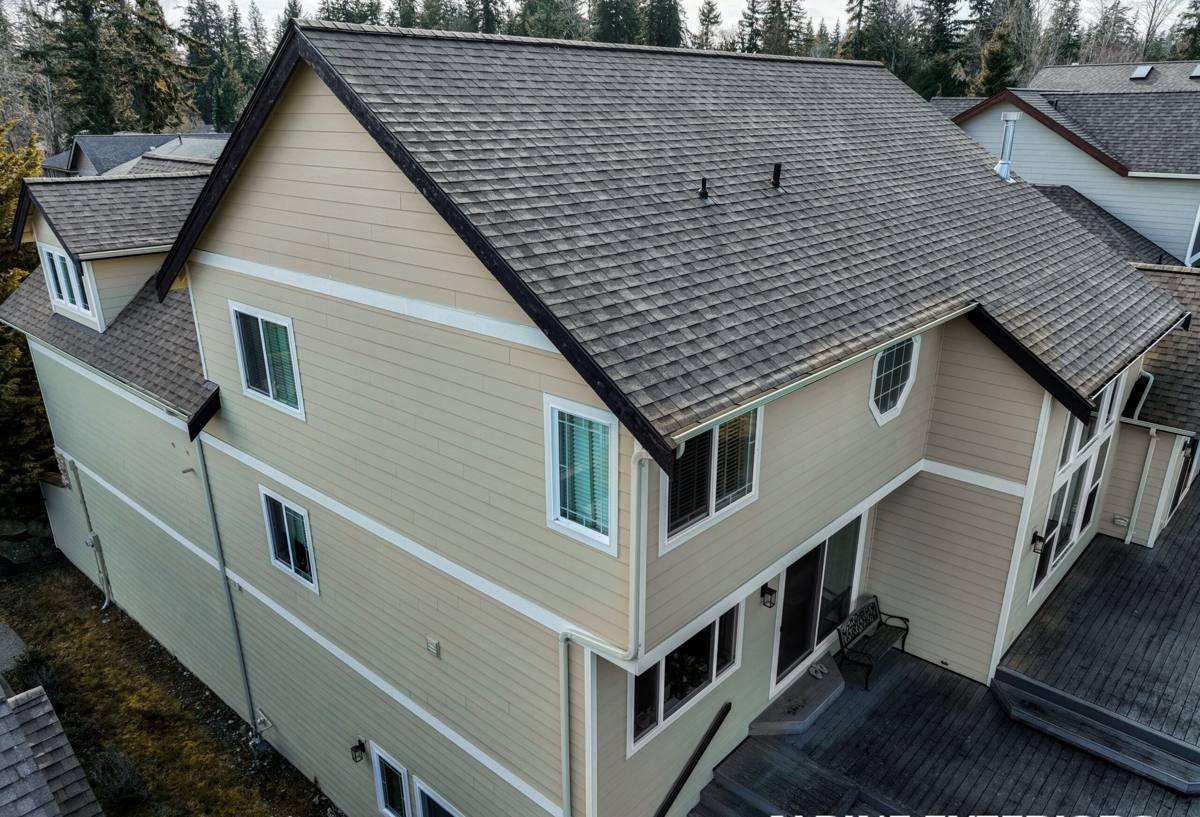
What Doe Bay's Climate Actually Does to a Deck
It helps to be specific about the forces at work, because they don't all attack a deck the same way.
Salt Air and Metal Fatigue
Proximity to salt water accelerates corrosion on anything metal — fasteners, joist hangers, brackets, and railing hardware. Standard galvanized coatings that hold up fine inland can start showing rust bleed on a Doe Bay deck within a few seasons. Once a fastener corrodes, it loses holding strength long before it looks obviously bad, which is part of why deck failures out here can surprise homeowners who thought everything looked fine.
Driving Rain and Water Intrusion
Rain on this side of the island doesn't always fall straight down. Wind-driven rain gets pushed under railings, into ledger connections, and along any horizontal surface that isn't properly flashed or sloped. Water that gets into a joint and can't get back out is what rots framing from the inside, often well before any surface rot is visible on the decking boards themselves.
Moss, Algae, and Trapped Moisture
The long wet season on Orcas Island grows moss and algae readily on any deck surface that doesn't dry out between rains — especially in shaded spots under tree cover, which is common around Doe Bay properties. Beyond being slippery underfoot, a moss layer holds moisture directly against the decking material, which shortens the life of wood and can even affect the wear layer on some composite products over time.
What a Correctly Built Doe Bay Deck Requires
Given those conditions, a deck built for this part of the island needs a few things a standard build might skip.
- Fasteners and hardware rated for coastal or marine-grade exposure, not just standard exterior galvanized
- Proper ledger flashing where the deck attaches to the house, so wind-driven rain can't work its way behind the siding
- Framing spaced and vented to allow air movement underneath, so damp conditions don't turn into standing moisture
- A deliberate slope away from the house on the decking surface, so water sheds instead of pooling
- Decking material chosen with this specific microclimate in mind, not just for appearance
- Railing systems that don't create hidden pockets where blown rain can sit against wood or fasteners
None of this is exotic. It's standard good building practice applied consistently, rather than skipped because a site looks sheltered or a homeowner is working to a tight budget. The extra material and labor cost for doing it right is modest compared to what it costs to repair rot damage a few years down the road.
Choosing Decking Material for This Location
There's no single right answer here — the right material depends on budget, how the deck will be used, and how much upkeep a homeowner wants to take on. Here's how the common options stack up specifically against Doe Bay's salt air, rain, and moss exposure.
| Material | How it handles moss/algae | Maintenance in this climate | Typical lifespan here |
|---|---|---|---|
| Pressure-treated wood | Needs regular cleaning and sealing to resist buildup | Annual cleaning, periodic re-sealing | 10-15 years with upkeep |
| Cedar | Naturally more rot-resistant, still grows moss in shade | Periodic cleaning and oiling to hold color and resist moisture | 15-20 years with upkeep |
| Composite decking | Surface resists rot but moss/algae can still grow on top and needs washing off | Low — occasional washing, no sealing or staining | 20-25+ years, backed by manufacturer warranty |
| PVC/capped polymer | Fully sealed surface, easiest to keep clean of buildup | Lowest — washing only | 25+ years, backed by manufacturer warranty |
We don't push one product on every job. Cedar still has a place where a homeowner wants a natural look and is willing to keep up with oiling. Composite and PVC decking make more sense for owners who want to spend their weekends on the water instead of on deck maintenance, and their sealed or capped surfaces genuinely do better against the moss and algae that build up in shaded, damp spots. What we won't do is install a beautiful surface material over framing or fasteners that aren't built for the exposure — that's a mismatch that shows up as a problem in a few years, and it's on us to flag it before the work starts, not after.
Framing and Substructure: Where Most Failures Actually Start
Homeowners naturally focus on the decking boards because that's what they see and stand on. But the substructure — the framing, ledger, footings, and hardware underneath — is where most real deck failures begin on Orcas Island. A deck can have brand-new composite boards on top and still be unsafe if the joists or ledger connection underneath have been quietly rotting or corroding for years.
Ledger Attachment
The ledger board, where the deck ties into the house, is the single most critical connection on most decks and also the most common place for water intrusion if it wasn't flashed correctly at installation. On a house exposed to Doe Bay's wind-driven rain, this detail matters even more than it would on a more sheltered lot.
Footings and Post Bases
Ground contact points need post bases that keep the wood off the ground and hardware that won't corrode away in a few seasons of salt exposure. Footing depth also matters for frost and soil stability, which varies across different pockets of the island.
Joist Spacing and Airflow
Tight joist spacing with poor airflow underneath traps moisture against the framing. We space and vent the substructure so air can actually move, which is one of the simplest and most effective ways to keep framing dry through a long wet season.
Our Process for a Doe Bay Deck Project
- On-site assessment — we look at sun exposure, tree cover, wind exposure, and how the site drains, since those factors vary a lot even between neighboring Doe Bay properties
- Material and design conversation — honest trade-offs on decking material, railing style, and layout based on your budget and how you'll actually use the space
- Permitting — San Juan County requires permits for most new decks and significant rebuilds; we handle that process rather than leaving it to the homeowner
- Demolition and substructure work — if we're replacing an existing deck, we inspect framing as it's exposed and flag anything that needs replacing rather than covering it back up
- Framing, flashing, and fastening — built to the coastal-exposure standard described above, not a generic inland spec
- Decking and railing installation — installed to the manufacturer's specifications, which matters for warranty coverage on composite and PVC products
- Final walkthrough — we go over maintenance expectations specific to your material choice and site conditions before we consider the job done
Why Hiring a Crew That Already Works Doe Bay Matters
Getting materials, crews, and equipment to this part of Orcas Island takes real logistics — ferry schedules, road access, and lead time on supplies all factor into a project timeline in a way that mainland contractors often underestimate. A crew that already works this area has that figured out, along with a working knowledge of how local microclimates differ from one property to the next, even within the same general part of the island.
There's also a trust factor that matters on a job like this. A deck's substructure gets covered up once the decking boards go down, so the quality of that hidden work depends entirely on the crew's standards, not on what's visible afterward. Working with a contractor who has a track record on Orcas Island — and who will be around locally if a question comes up after the project is done — is worth more here than it might be somewhere with easier access and more competition.
Maintenance Checklist for Doe Bay Deck Owners
Whatever material you choose, a little seasonal attention goes a long way in this climate.
- Sweep off standing debris and needles after storms so they don't hold moisture against the surface
- Wash the deck surface at least once or twice a year to remove moss and algae before it builds up
- Check railing connections and fastener heads annually for rust bleed or looseness
- Keep an eye on shaded areas under tree cover, where moss forms first and fastest
- Re-seal or re-oil wood decking on the schedule the product actually calls for, not just when it looks dry
- Have the substructure checked every few years, since that's the part most likely to have a hidden problem
Get a Free Estimate
If you're planning a new deck or need to replace one that's showing its age, we're happy to come take a look and give you a straightforward, no-pressure assessment of what your Doe Bay property actually needs. Use the form below to request a free estimate.