 Orcas Island
 Why Decks in Doe Bay Wear Out Faster Than People Expect
Doe Bay sits close enough to the water that salt-laden air reaches every exposed surface of a deck, not just the railings facing the shoreline. That salt settles into fastener heads, works into joints between boards, and speeds up corrosion on anything that isn't rated for a marine-adjacent environment. Add San Juan County's long wet season — driving rain that blows in sideways off the water, followed by months of low sun angles that never quite dry the shaded side of a structure — and you get a moisture cycle that most decking products built for inland climates simply weren't designed to handle.
Then there's moss. Anywhere on Orcas Island that gets shade for part of the day and consistent moisture will grow moss on horizontal wood or composite surfaces, and Doe Bay's tree cover and marine humidity make it one of the more moss-prone pockets on the island. Moss isn't just cosmetic — it holds water against the deck surface, keeps boards from drying between rain events, and accelerates rot in wood framing underneath.
None of this means a deck in Doe Bay is doomed. It means the materials, fasteners, and framing details have to be chosen for this specific combination of salt, rain, and shade — not for a generic "deck replacement" spec that would work fine in a drier part of the state.
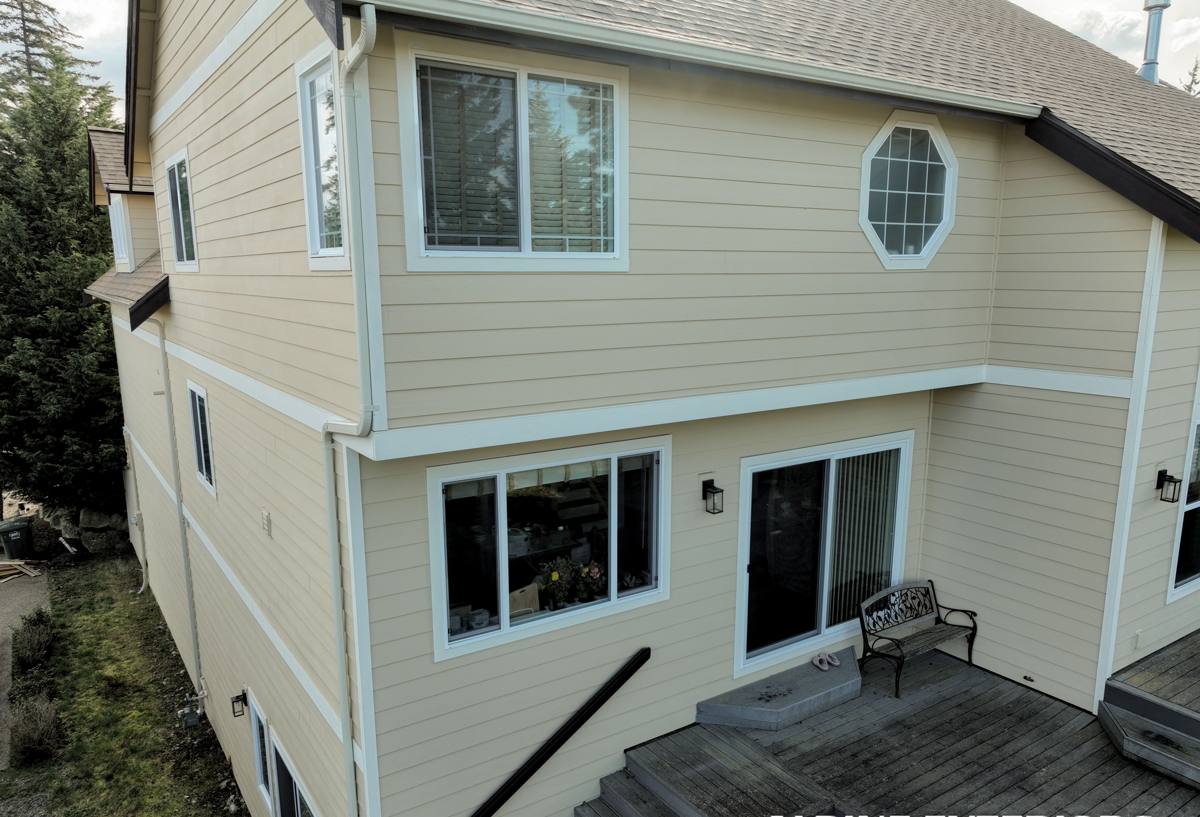
Signs a Deck Needs Replacement, Not Just Repair
Homeowners often call us thinking they need a few boards swapped, and sometimes that's true. But there are signs that point to a full replacement being the more honest recommendation:
- Soft or spongy spots underfoot, especially near the house band board or stair stringers
- Visible rot, delamination, or crumbling wood where posts meet footings
- Rust streaking from fasteners or connectors, which usually means the metal is failing from the inside out
- Railings that flex or feel loose even after tightening hardware
- A ledger board connection that shows gaps, water staining, or separation from the house
- Persistent moss or algae that returns within weeks of cleaning, suggesting the deck can't dry properly
A deck that's structurally sound but cosmetically tired is a repair or resurfacing job. A deck with compromised framing, a failing ledger connection, or widespread fastener corrosion is a safety issue, and patching the surface boards without addressing what's underneath just delays the real cost.
What a Correct Deck Replacement Actually Involves
The Substructure Comes First
The decking boards are the part homeowners see, but the framing underneath determines how long the whole thing lasts. In a Doe Bay replacement, that means checking or replacing joists, beams, and posts for rot, confirming footings are sized and set correctly for the soil conditions on the lot, and making sure the ledger board — where the deck attaches to the house — is properly flashed so water can't get behind the siding. A deck that looks great on top but was built on a rushed or under-flashed substructure will show problems within a few wet seasons.
Fasteners and Connectors Rated for the Environment
This is where a lot of deck failures near the water actually start. Standard galvanized fasteners can corrode faster than expected in salt air, leading to streaking, loosening, and eventually failure at load-bearing connections. We use stainless steel or high-grade coated fasteners and structural connectors appropriate for a coastal environment, and we don't mix metals in ways that cause galvanic corrosion between dissimilar materials.
Drainage and Airflow
A deck that can't shed water and dry out between storms will grow moss and rot regardless of what it's built from. Correct board spacing, proper slope away from the house, and clearance underneath for airflow all matter more in a shaded, wet site like Doe Bay than they would in a drier climate.
Choosing a Decking Material for Doe Bay Conditions
There's no single "best" decking material — there's a best fit for your site, your budget, and how much maintenance you're willing to do. Here's how the common options compare for a shaded, salt-air, high-moisture property:
| Material | Moisture & Salt Behavior | Moss Resistance | Maintenance | Typical Lifespan |
|---|---|---|---|---|
| Pressure-treated wood | Good if sealed regularly; prone to cupping and splitting if neglected | Low — needs regular cleaning | Annual cleaning and resealing | 10–15 years with upkeep |
| Cedar | Naturally rot-resistant but still needs sealing near salt air | Low to moderate | Periodic cleaning and finish renewal | 15–20 years with upkeep |
| Capped composite | Excellent — won't absorb moisture or corrode | Moderate — surface texture matters | Occasional washing | 25+ years |
| PVC decking | Excellent — fully synthetic, no wood fibers to rot | Moderate to good | Low — occasional washing | 25–30+ years |
Wood is often the right call when a homeowner wants to match an existing structure, keep costs down up front, or simply prefers the look and is willing to maintain it. Capped composite and PVC cost more initially but hold up better against the specific combination of salt exposure and shade-driven moisture that Doe Bay properties deal with, and they cut down on the moss-scrubbing cycle that wood decks in shaded spots tend to need.
Our Process for a Doe Bay Deck Replacement
1. On-Site Assessment
We look at the existing deck's framing, footings, ledger connection, and site exposure — how much sun and wind the deck actually gets, how close it is to salt spray, and where moss and water tend to collect. This tells us what's failing and why, not just what's visible on the surface.
2. Honest Scope and Material Recommendation
We explain what needs full replacement versus what can be reused, and we walk through material trade-offs in plain terms — upfront cost against long-term maintenance — so the decision fits your budget and how you actually want to spend your weekends.
3. Permitting
Deck work in San Juan County can require a permit depending on size, height, and whether the deck is attached to the house — the exact threshold depends on your specific project, so we confirm what applies before work starts rather than guessing.
4. Demolition and Framing
Old decking, and any compromised framing or footings, come out. We rebuild the substructure to current code with corrosion-resistant hardware throughout, including at the ledger connection where most water intrusion problems originate.
5. Decking Installation and Detail Work
Boards go down with proper spacing for drainage, correctly fastened, with stair and railing systems built to the same standard as the deck surface itself — railings are a structural component, not an afterthought.
6. Final Walkthrough
We walk the finished deck with you, cover basic care for whatever material you chose, and make sure everything meets the standard we'd want on our own property.
Why Hiring a Crew That Already Works in Doe Bay Matters
A contractor who mostly builds decks in drier, inland parts of Washington may not default to stainless fasteners, may not think to check ledger flashing as carefully, and may spec a finish schedule that assumes far less moisture exposure than Doe Bay actually delivers. None of that is dishonesty — it's just a different baseline experience. Working regularly on Orcas Island properties means we've already seen how salt air corrodes the wrong hardware, how shaded decks near the water grow moss even with regular cleaning, and which material and framing choices actually hold up here rather than in a spec sheet written for a different climate.
There's also a logistics side to it. Materials, equipment, and scheduling around island ferry service and weather windows are part of any exterior project here, and a crew that already works San Juan County has that built into how they plan a job rather than treating it as a surprise mid-project.
Keeping a New Deck Performing After Replacement
Whatever material you choose, a few habits make a real difference in a climate like this one:
- Sweep debris off the deck regularly, especially in fall and winter when leaves and needles trap moisture
- Clean moss and algae as soon as it appears rather than waiting for it to spread
- Check railings and stair connections once or twice a year for looseness
- Reseal or refinish wood decking on the schedule your material actually needs, not just when it looks bad
- Keep gutters and downspouts near the deck clear so runoff isn't dumping extra water onto the structure
- Confirm underneath the deck stays ventilated — don't stack storage tight against the framing
A deck built correctly for this environment, with the right fasteners and drainage details, needs far less of this than one that was built to a generic spec and is fighting the climate every season.
Get a Straight Answer About Your Deck
If your Doe Bay deck is showing soft spots, corrosion, or moss that keeps coming back, it's worth getting an honest read on whether it needs repair or full replacement before another wet season sets in. We offer free, no-pressure estimates — we'll look at what's actually going on with your deck, explain the options in plain language, and give you a straightforward recommendation. Reach out using the form below to get started.