 Orcas Island
 Why Doe Bay Homes Put Extra Demands on Windows
Doe Bay sits on the exposed east side of Orcas Island, where homes take a steady mix of salt-laden air off the water, wind-driven rain, and long stretches of shade and moisture that keep moss and algae active for much of the year. That combination is harder on windows than most inland San Juan County properties ever see. Salt air accelerates corrosion on hardware and fasteners, driving rain finds any gap in flashing or sealant, and a moss season that can run six months or more keeps wood trim and sills damp long after a storm has passed.
Windows are one of the first places this shows up. A frame or sill that isn't detailed correctly for this exposure will start failing years before it should — soft wood at the corners, cloudy or fogged glass from a blown seal, hardware that seizes or stains, and drafts that show up right when the wind shifts out of the south. None of that is inevitable. It's a function of the product chosen and how it's installed, not just age.
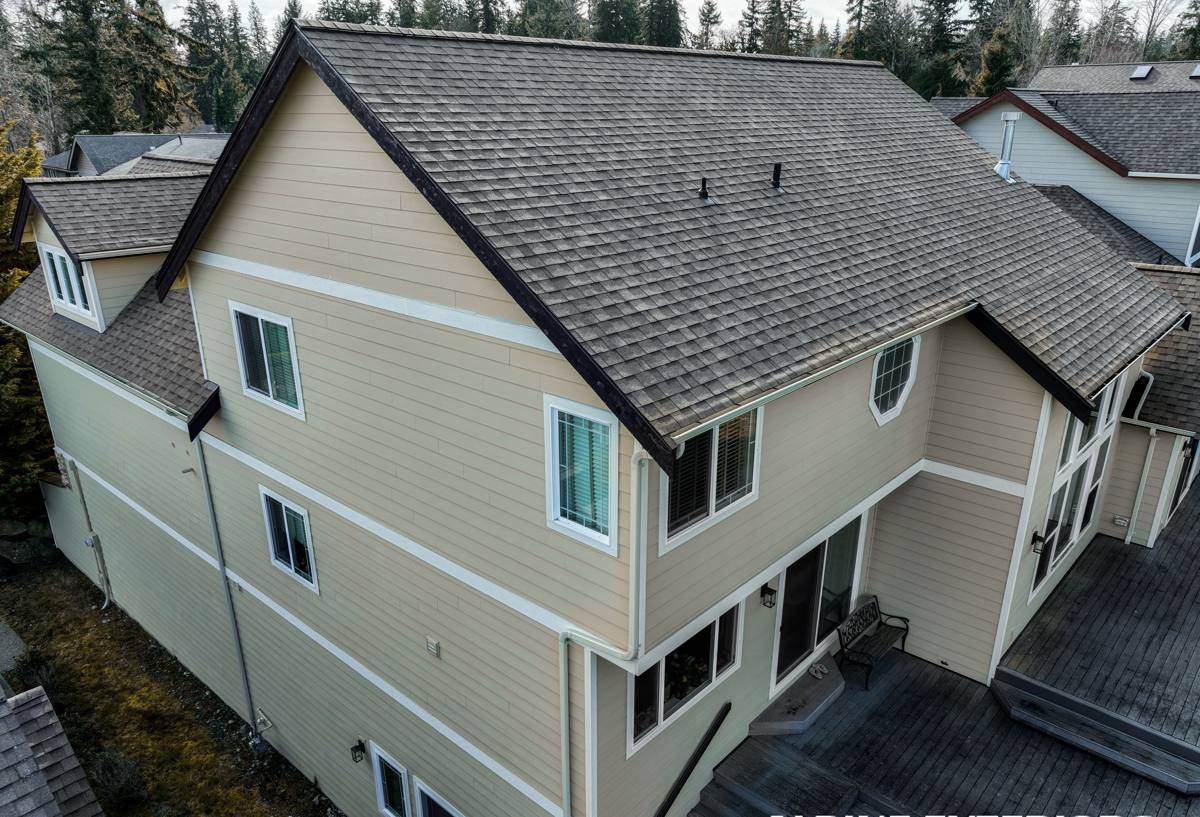
What "Custom" Really Means for a Doe Bay Property
Custom windows aren't just about a nicer view or a non-standard shape, though both come up often here. Many Doe Bay homes were built in stages over decades, by different builders, with openings that were never quite standard size to begin with. Older cabins and additions frequently have rough openings that are out of square, slightly undersized, or built around a view line that a stock window size doesn't respect.
Common reasons homeowners need a custom approach
- Older or additions-built homes with non-standard rough openings
- Water- or forest-facing walls where the window size or shape is driven by the view, not a catalog
- Replacing a single failed unit in a wall of matching windows, where an exact match matters
- Larger openings that need structural or header changes to accept a bigger unit
- Corner, transom, or angled openings that a standard product line doesn't cover
Custom, in practice, means measuring the actual opening — not assuming it matches a standard size — and either ordering a manufacturer's custom unit or field-modifying the opening so a quality standard unit fits correctly. Either path can be the right call. The wrong call is forcing an ill-fitting window into an opening and relying on extra caulk to make up the difference.
Material and Glazing Choices for This Exposure
There's no single "best" window material for every home — the right choice depends on exposure, budget, and how much upkeep the homeowner wants to take on. For a Doe Bay property, we weigh corrosion resistance and moisture behavior heavily, since those two factors are what salt air and a long wet season actually attack.
| Material | How it handles salt air & rain | Upkeep | Where it fits best |
|---|---|---|---|
| Vinyl | Doesn't corrode or rot; performs well in salt exposure | Low — occasional cleaning | Budget-conscious replacements, rentals, secondary structures |
| Fiberglass | Very stable in temperature swings and moisture; strong long-term performer near water | Low | Primary residences wanting durability without high upkeep |
| Wood, unclad | Handsome but needs consistent maintenance; moisture and moss exposure shortens paint/finish life | High — regular repainting and sealing | Historic or architecturally specific homes where wood interior/exterior is a priority |
| Wood, clad (aluminum or fiberglass exterior) | Wood warmth inside, protected exterior face; cladding needs correct flashing to avoid trapped moisture | Moderate | Homeowners who want a wood interior look with better exterior durability |
| Aluminum | Strong but conducts cold and can corrode faster in salt air without a marine-grade finish | Moderate | Modern designs, sunrooms, larger commercial-style openings |
For glazing, we generally recommend dual-pane, low-E glass as the baseline on this coast, with the specific coating and gas fill selected based on which direction the window faces. South- and west-facing units benefit from solar control coatings; north- and water-facing units are more about cutting heat loss and condensation.
Hardware and finish details that matter here
Standard hardware finishes can pit or discolor faster in salt air than they would twenty miles inland. We spec corrosion-resistant hardware and fasteners on every Doe Bay job — stainless or coated components at contact points, not just the visible parts. It costs a little more up front and saves a service call in three years.
What a Correct Installation Actually Involves
The window unit itself is maybe half the job. The other half — flashing, sealing, and how the opening is prepared — is what determines whether that window still performs well after ten wet winters. This is also where corner-cutting is hardest for a homeowner to spot after the fact, since it's covered by trim.
Step by step, what should happen at each opening
- Remove the old unit and inspect the rough opening for hidden rot, soft sheathing, or prior water damage before anything new goes in
- Repair or rebuild any compromised framing — never install a new window into a wet or rotten opening
- Install a sloped sill pan so any water that gets past the window drains back out, not into the wall
- Apply flashing tape and building paper in the correct shingle-lap order so water sheds down and out at every layer
- Set the window level, plumb, and square, and confirm it operates smoothly before final fastening
- Insulate the gap around the frame without over-packing, which can bow the frame and cause operation problems
- Seal and caulk the exterior with a product rated for this climate, and finish interior trim
Skipping the sill pan or flashing sequence is the single most common reason we find rot and staining when we're called out to look at a "leaking window" on an older Doe Bay home. The window itself is often fine — the water management around it was never done correctly.
How Our Process Works
We keep the process straightforward because Doe Bay jobs already come with enough variables — weather windows, ferry-dependent scheduling, and older construction that isn't always predictable once we open a wall.
From first call to final walkthrough
- On-site assessment: we measure every opening in person, note existing damage, and discuss what you actually want from the windows — light, view, ventilation, style
- Material and product selection: we walk through the honest trade-offs for your specific exposure and budget, not a one-size pitch
- Written estimate: clear scope, product specs, and a realistic timeline that accounts for custom order lead times
- Ordering and scheduling: custom units typically take several weeks to arrive; we schedule install around weather rather than rushing a wet-day install that compromises the seal
- Installation: opening prep, flashing, setting, insulating, and sealing done in the sequence above, one opening fully closed in before moving to the next when practical
- Walkthrough: we test operation on every window and go over care basics before we leave
We don't install on days when wind-driven rain would compromise the flashing or sealant cure — on this coast, that's a real scheduling factor, not an excuse.
Signs an Existing Window Is Already Failing
Because moss season and salt exposure work slowly, a lot of window problems on Orcas Island go unnoticed until they're expensive. A quick self-check can catch things early.
| What you notice | Likely cause | Urgency |
|---|---|---|
| Fogging or haze between the panes | Failed seal on an insulated glass unit | Not urgent, but efficiency loss — plan for replacement |
| Soft or spongy trim/sill wood | Water intrusion, often from missing or failed flashing | Urgent — active rot spreads to framing |
| Difficulty opening/closing, sticking sash | Frame movement, swelling, or hardware corrosion | Moderate — address before it worsens |
| Visible moss or dark staining on sills | Consistent moisture retention, poor drainage or drying | Moderate — indicates a drainage or exposure issue |
| Drafts near the frame in wind | Failed seal, settling, or original poor installation | Moderate to urgent depending on severity |
A Practical Checklist Before You Get Quotes
- Have the actual rough openings measured — don't assume "standard" sizes on an older home
- Ask what sill pan and flashing method will be used, not just what window brand
- Confirm hardware and fastener finishes are rated for coastal/salt exposure
- Get the glazing spec (pane count, coating, gas fill) in writing, matched to each window's orientation
- Ask how weather delays are handled for scheduling — a contractor familiar with island weather should have a straight answer
- Check that any quote includes opening repair contingency if rot is found once the old window comes out
Why a Crew That Already Works Doe Bay Matters
Doe Bay isn't downtown Eastsound, and getting materials, crews, and equipment there takes planning that a contractor unfamiliar with the island simply doesn't have dialed in. Ferry schedules affect when custom orders can actually arrive on-site, and the exposure at Doe Bay specifically — more open to weather than more sheltered parts of Orcas Island — means a crew needs to know when a window install can actually be done cleanly and when it needs to wait for a break in the weather.
A contractor who regularly works this part of San Juan County has already solved the logistics problems that can otherwise turn into schedule slips or rushed installs. That familiarity also means we've seen how the older homes in this area were originally built and where they typically need attention when we open a wall — knowledge that saves time and avoids surprises mid-job.
If you're dealing with a drafty, foggy, or aging window at your Doe Bay home, or planning windows for a larger project, we're happy to come take a look and put together a straightforward, no-pressure estimate using the form below.