 Orcas Island
 Decking Built for Doe Bay's Weather, Not Just Its View
Doe Bay sits on the exposed east side of Orcas Island, close enough to the water that salt air, wind-driven rain, and shade from the surrounding fir and cedar canopy all show up on outdoor living spaces faster than they would further inland. A deck out here isn't just a place to put a grill and a couple of chairs — it's a structure that has to shed water fast, resist moss and algae in the shoulder seasons, and hold up to salt spray without the surface breaking down. Composite decking, installed correctly for this specific environment, handles that combination better than most wood options and holds up longer with less upkeep.
This page covers what composite decking needs to do well in Doe Bay specifically, what a correct installation actually involves, and how we approach the job as a crew that already works this part of San Juan County.
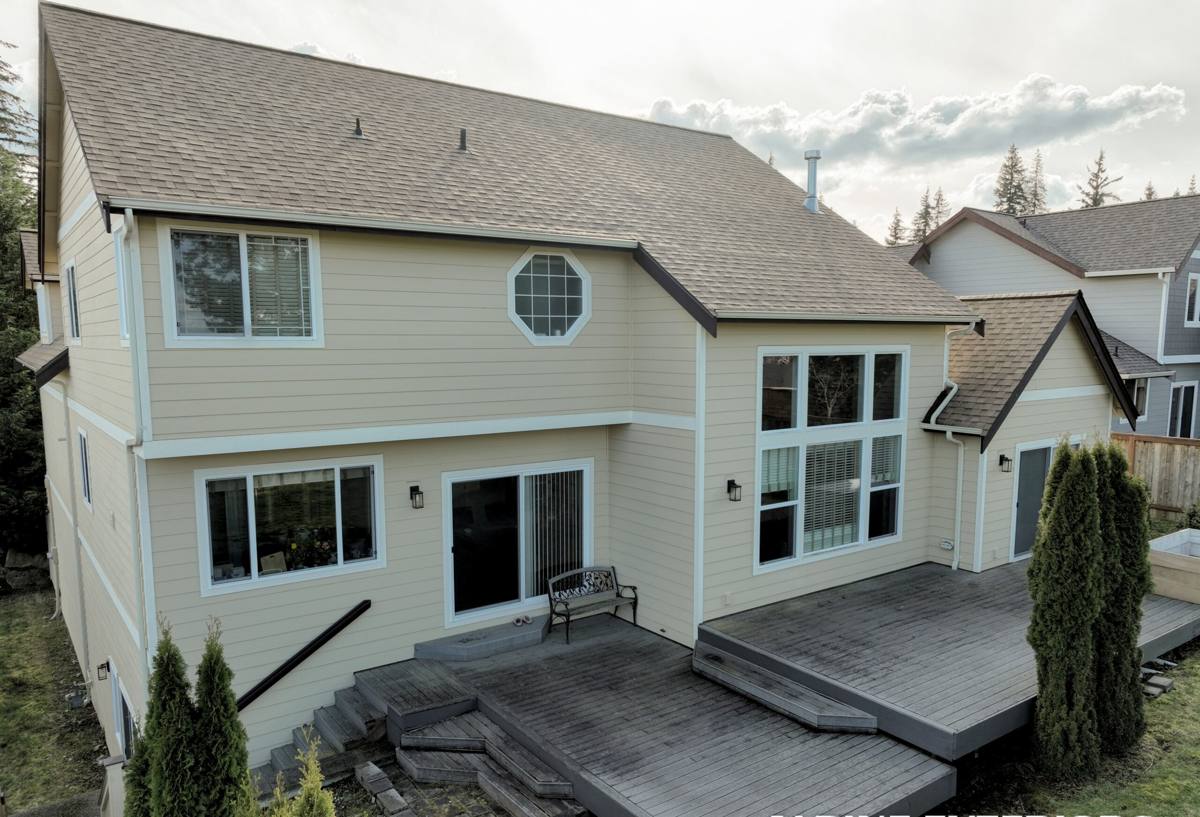
What Doe Bay's Climate Actually Does to a Deck
Salt Air and Metal Fasteners
Proximity to saltwater accelerates corrosion on anything exposed — screws, joist hangers, flashing, railing hardware. Composite boards themselves don't corrode, but the fasteners and structural hardware holding the deck together will, if they're not rated for a marine or coastal environment. A deck can look fine on the surface while the hardware underneath is quietly failing.
Driving Rain and Standing Water
Orcas Island gets sustained wet weather, and wind off the water can drive rain sideways under railings and against fascia boards. Composite decking resists water absorption far better than wood, but the framing underneath — joists, beams, ledger boards — still needs to be protected and pitched to drain, or water sits and rot starts in the structure even while the decking surface looks perfect.
Moss, Algae, and Shade
A long moss season is normal here, especially on decks with tree cover or a north-facing exposure that doesn't dry out between rains. Moss and algae growth on decking isn't just cosmetic — a mossy deck surface gets slick and dangerous underfoot, and left alone it holds moisture against the board surface longer than it should. Composite boards vary a lot in how well their surface texture and cap resist this, which is one of the bigger differences between decking lines.
Why Composite Makes Sense for This Location
Wood decking can absolutely be done well on Orcas Island, but it demands a maintenance schedule — sanding, staining, sealing — that a lot of homeowners with a part-time or seasonal Doe Bay property don't have the time or presence on the island to keep up with. Miss a season of maintenance in a salt-air, high-moisture environment and wood decking degrades quickly.
Composite decking shifts that equation. A quality capped composite board won't absorb water the way wood does, won't need staining or sealing, and resists the surface graying and splintering that untreated or under-maintained wood gets. It's not maintenance-free — nothing exposed to this climate is — but the maintenance is periodic cleaning rather than an annual refinishing project.
Where Composite Still Has Trade-Offs
- Composite decking costs more upfront than standard wood decking, though it typically costs less over the life of the deck once you factor out repeated staining and repairs.
- Not every composite line performs the same in shaded, damp conditions — surface texture and cap technology matter more here than in a drier climate.
- Composite boards expand and contract with temperature, so gapping and fastening have to be done to spec, not eyeballed, or you'll get buckling or unsightly gaps over a few seasons.
- Dark composite colors absorb more heat and can also show pollen, moss residue, and salt film more readily than lighter tones — worth discussing before you pick a color.
We'll walk through these trade-offs honestly for your specific site — sun exposure, tree cover, and how close you are to the shoreline all factor into which composite product and color make sense.
What a Correct Installation Involves Here
The Substructure Matters More Than the Boards
The composite decking itself is the part homeowners see, but the framing underneath determines how long the whole deck lasts. In a wet, salt-exposed environment like Doe Bay, that means:
- Joists and beams sized and spaced correctly for the composite product being installed — composite has different span requirements than wood, and undersized framing leads to a bouncy or sagging deck.
- Corrosion-resistant, coastal-rated fasteners and structural connectors throughout, not just at points that are easy to see.
- Proper flashing where the deck ledger attaches to the house, so water doesn't track behind siding or into the rim joist — this is one of the most common failure points on older decks we're asked to repair.
- Deck framing protected with a joist tape or equivalent barrier, since composite boards trap moisture against the joist top differently than wood does.
- Correct slope built into the substructure so water sheds off the deck surface instead of pooling.
Board Installation Details That Actually Matter
Composite manufacturers publish specific fastening patterns, gapping tolerances, and ventilation requirements — and following them isn't optional if you want the warranty to hold up or the deck to perform as advertised. Board-to-board and board-to-house gapping has to account for both drainage and thermal movement. Hidden fastener systems, where used, need to be installed evenly so boards don't work loose over time in a windy, temperature-swinging environment.
Cost Factors for a Doe Bay Composite Deck
Every deck is different, but these are the variables that most affect what a project actually costs once we've looked at your site:
| Factor | Why It Matters Here |
|---|---|
| Site access | Doe Bay's terrain and some driveway/road access points make material delivery and equipment staging more involved than a flat, easy-access lot. |
| Existing structure condition | If we're replacing an old deck, hidden rot or corroded hardware in the substructure is common near the water and can add scope once we open things up. |
| Composite product tier | Entry-level composite, mid-tier capped composite, and premium PVC-composite hybrids all have different price points and different real-world performance in shade and salt exposure. |
| Railing and fastener spec | Coastal-rated hardware and railing systems cost more than standard-grade but hold up substantially longer this close to the water. |
| Deck size and complexity | Multiple levels, stairs, picture-frame board edging, and custom shapes all add labor beyond a simple rectangular deck. |
As a broad range, homeowners on the island should expect composite decking projects to run from the low tens of thousands for a modest, straightforward deck up into significantly more for larger or multi-level projects with premium materials — we'll give you a real number after seeing the site, not a guess over the phone.
Our Process for a Doe Bay Project
1. On-Site Assessment
We look at sun exposure, tree cover, wind direction relative to the water, and the condition of any existing deck or ledger connection before recommending a product or scope.
2. Product Recommendation
We'll narrow composite options based on how your specific site performs — a shaded, north-facing deck near the water gets a different recommendation than an open, south-facing one, particularly around surface texture and moss resistance.
3. Permitting
Deck work in San Juan County often requires a permit depending on size, height, and location relative to setbacks and critical areas — we handle that process rather than leaving it to you to figure out.
4. Build
Framing and structural work first, inspected before boards go down, then decking installed to manufacturer spec for fastening, gapping, and ventilation.
5. Walkthrough
We go over basic care with you — cleaning frequency, what to do if moss starts forming, and what's covered under the product warranty — so you know what ongoing upkeep actually looks like.
Why a Local Crew Matters for This Job
Decking that's engineered for a general Pacific Northwest climate doesn't always account for the specific combination Doe Bay gets — salt exposure, sustained shade in places, and a wet season that runs long. A crew that already works Orcas Island and San Juan County knows which composite products actually hold their surface finish in shaded, damp spots on this island, which fastener grades are worth the upcharge this close to saltwater, and how local permitting and site access realistically play out. That's the difference between a deck that looks right on installation day and one that still looks and performs right five winters in.
A Simple Maintenance Checklist for Composite Decking Here
- Sweep debris and pine or fir needles off the deck regularly, especially in fall — trapped organic matter holds moisture and feeds moss growth.
- Rinse the deck surface periodically to clear salt film, particularly after storms with onshore wind.
- Clean with a soft-bristle brush and a manufacturer-approved cleaner if moss or algae starts to form — avoid pressure washers set too aggressively, which can damage the board cap.
- Check railing posts and stair connections annually for any looseness, which can indicate hardware starting to corrode underneath.
- Keep gutters and downspouts near the deck clear so runoff isn't dumping extra water onto or under the deck surface.
- Trim back overhanging branches where practical to reduce shade and debris buildup on the deck.
Get an Honest Look at Your Project
If you're planning a new composite deck in Doe Bay or replacing one that's not holding up to the salt air and rain, we're glad to come take a look and give you a straightforward assessment — no pressure, no upsell. Fill out the form below for a free estimate.