 Orcas Island
 Deck Repair Built for Deer Harbor's Marine Climate
Deer Harbor sits right on the water on the west side of Orcas Island, and that location is exactly what wears a deck out faster than it would inland. Salt-laden air moves through the harbor daily, driving rain comes in sideways off the water during fall and winter storms, and the shaded, damp stretches under trees and along the north side of homes stay wet for weeks at a time. Add San Juan County's long moss season, and you have a combination that attacks wood, fasteners, and finishes from several directions at once. A deck that would last two decades in a dry inland climate can show real structural problems in half that time here if it isn't built and maintained with this environment in mind.
We repair decks throughout Deer Harbor and the surrounding Orcas Island shoreline, and the failures we see are consistent enough that we can usually tell a homeowner what we'll find before we even pull the first board.
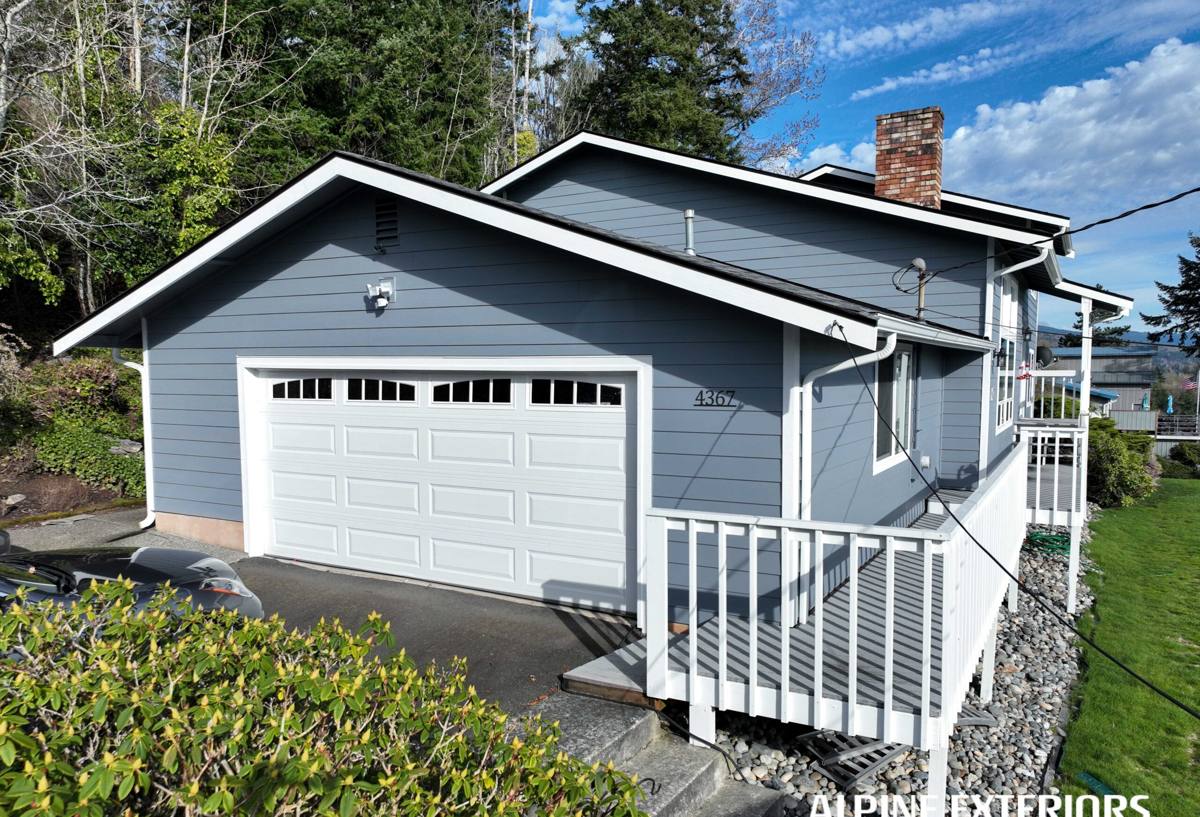
Signs a Deer Harbor Deck Needs Repair, Not Just Cleaning
Moss and algae staining are cosmetic and washable. The problems underneath them are not always so simple. Here's how to tell the difference.
Surface-level issues
Green or black staining on decking, slippery spots in shaded areas, and faded or peeling finish are maintenance issues. They matter because they trap moisture against the wood, but by themselves they don't mean the structure is compromised.
Structural warning signs
- Boards that feel spongy, springy, or noticeably softer underfoot than the rest of the deck
- Rust streaks bleeding out from screw heads or joist hangers
- Gaps opening up where the deck ledger meets the house
- A railing or post that has any side-to-side movement
- Visible daylight or dark staining where joists meet beams or posts
- A musty smell coming from underneath the deck
Any one of these is worth a real inspection, not just a pressure wash. On a waterfront property, we'd rather look at a deck a year too early than get called after a board has already given way.
Where Deer Harbor Decks Actually Fail
The ledger board — where the deck attaches to the house — is the single most common failure point we find. It sits in a spot that collects runoff and rarely dries fully, and if the original flashing was undersized or missing, water works its way behind it for years before anything looks wrong from outside. Fastener corrosion is the second most common issue: older decks built with standard galvanized screws and joist hangers rust from salt air exposure far faster than the same hardware would inland, and rusted fasteners lose holding strength long before they look obviously bad. Post bases and any wood-to-concrete contact points are the third recurring problem, since they hold moisture at ground level and are usually the last thing anyone thinks to check.
What a Correct Deck Repair Actually Involves
A proper repair starts underneath the deck, not on top of it. We check the ledger connection and flashing, the condition of joists and beams, post bases, and every joist hanger before we touch a single deck board. Replacing surface boards on a deck with a rotten ledger or corroded hangers just hides the real problem under a new finish — it looks fixed for a season or two and then fails again, usually at a worse spot.
Our repair scope typically covers
- Removing and replacing rotted or compromised structural framing — joists, beams, posts, and ledger board
- Correcting or adding proper ledger flashing to stop water intrusion at the house connection
- Swapping corroded fasteners and hangers for stainless or heavily coated hardware rated for coastal exposure
- Replacing individual deck boards versus a full resurfacing, depending on how widespread the damage is
- Rebuilding or reinforcing loose railings and posts to meet a safe, solid standard
- Improving drainage and airflow underneath the deck where moisture has been sitting
We also look at spacing and ventilation between boards. Decking installed too tight doesn't shed water or dry out between rains, which is part of why moss and rot come back faster in some spots than others.
Repair vs. Full Rebuild: What Drives the Decision
Not every deck with problems needs to be torn out. The decision usually comes down to how much of the structural framing is affected versus how much is just surface wear.
| Factor | Favors Repair | Favors Rebuild |
|---|---|---|
| Ledger board condition | Solid, properly flashed | Rotted or improperly flashed |
| Extent of rot | Isolated boards or a few joists | Widespread across framing |
| Fastener condition | Hardware still sound, minor surface rust | Corrosion at multiple structural connections |
| Age of original build | Newer deck, isolated failure | Older deck nearing end of typical service life |
| Railing and post stability | Solid, no movement | Loose posts or undersized original framing |
We'll walk you through which category your deck falls into and give you a straightforward recommendation — we're not going to sell a full rebuild when a targeted repair will hold up, and we're not going to patch something that's going to be back on our schedule again next year.
Materials That Hold Up in a Deer Harbor Environment
For framing repairs, we use pressure-treated lumber rated for ground contact where it's exposed to moisture, and we're deliberate about fastener choice — stainless steel or high-corrosion-resistant coated hardware for anything near the water or under heavy tree cover, since standard galvanized fasteners are one of the first things to fail in salt air. For decking surfaces, we'll talk through wood versus composite honestly: composite decking resists moisture and skips the annual staining cycle, but it still needs proper ventilation underneath and periodic cleaning to keep moss from gaining a foothold in shaded areas. Wood decking costs less upfront and repairs board-by-board easily, but it needs more consistent maintenance in this climate to get a full service life out of it. Neither is the "right" answer for every home — it depends on how much upkeep you want to do and how the deck is situated relative to sun, shade, and water.
Our Deck Repair Process
We start with a full inspection from underneath the deck as well as on top, checking ledger, framing, hangers, posts, and decking condition. From there we give you a clear picture of what's cosmetic, what's structural, and what our recommendation is — repair or rebuild — along with a straightforward estimate. Once the work is scheduled, we handle demolition of the affected sections, structural repairs, hardware upgrades, and decking replacement, then finish with a check of drainage and ventilation underneath. We aim to schedule major structural repair work during the drier stretches of the year when possible, since framing repairs need time to be properly dry before they're closed back up — trying to rebuild a ledger connection in the middle of a wet stretch just invites the same problem back.
Deck Maintenance Checklist for Orcas Island Homeowners
Between repairs, a few habits go a long way toward keeping a Deer Harbor deck out of trouble:
- Sweep or blow off leaves and debris regularly, especially in shaded corners where moss takes hold first
- Rinse salt spray and grime off the surface a few times a year if the deck faces the water
- Check railings and posts twice a year for any looseness
- Look underneath the deck once a year for staining, soft wood, or rust streaks at hangers
- Keep gutters and downspouts clear so runoff isn't draining directly onto the deck or ledger
- Reapply stain or sealant on wood decking on the schedule the product calls for — don't stretch it another year to save time
Why Hire a Crew That Already Works Deer Harbor
Deer Harbor is a small community with a mix of full-time homes, vacation properties, and older builds that have been through decades of San Juan County weather. Getting materials, equipment, and crews out to Orcas Island isn't the same as scheduling a job on the mainland, and a contractor who already works the island doesn't need to build that logistics plan from scratch every time. More importantly, we've seen how decks actually fail here — which ledger details tend to leak, which fastener types hold up and which don't, and which spots on a property stay wet long after a storm has passed. That local pattern recognition is what separates a repair that lasts from one that's back on the schedule in two years.
If you've got soft spots, rust stains, a loose railing, or you just want an honest look at what your deck needs before it becomes a bigger problem, we're happy to come take a look. Fill out the form below for a free, no-pressure estimate.