 Orcas Island
 A deck in Deer Harbor works harder than a deck almost anywhere inland. Between the salt-laden air coming off the water, the driving rain that blows sideways off the Strait during winter storms, and the shade-and-moisture combination that keeps moss thriving most of the year, an Orcas Island deck is under constant low-grade attack. Built correctly, it will shrug all of that off for decades. Built to a generic mainland spec, it will show fastener bleed, soft framing, and slick moss-covered boards within a handful of seasons. This page covers what a deck actually needs to hold up in Deer Harbor, and how we build to that standard.
Why Deer Harbor's Conditions Are Different
Deer Harbor sits close to the water, tucked into terrain that mixes exposed shoreline lots with shaded, tree-covered slopes further up from the harbor. That combination creates two separate problems for outdoor structures. Near the water, salt air accelerates corrosion on anything metal — fasteners, hardware, flashing — faster than it would a few miles inland. Further up under tree cover, decks stay wet longer after rain because they don't get direct sun or wind to dry them out, which is exactly the environment moss and algae need to take hold.
San Juan County's rain doesn't fall straight down for much of the year. Winter storms push moisture sideways and up under overhangs and railings, which means water reaches parts of a deck that would stay dry in a calmer climate. A deck built without that in mind ends up with trapped moisture in places nobody thinks to check until the wood is already soft.
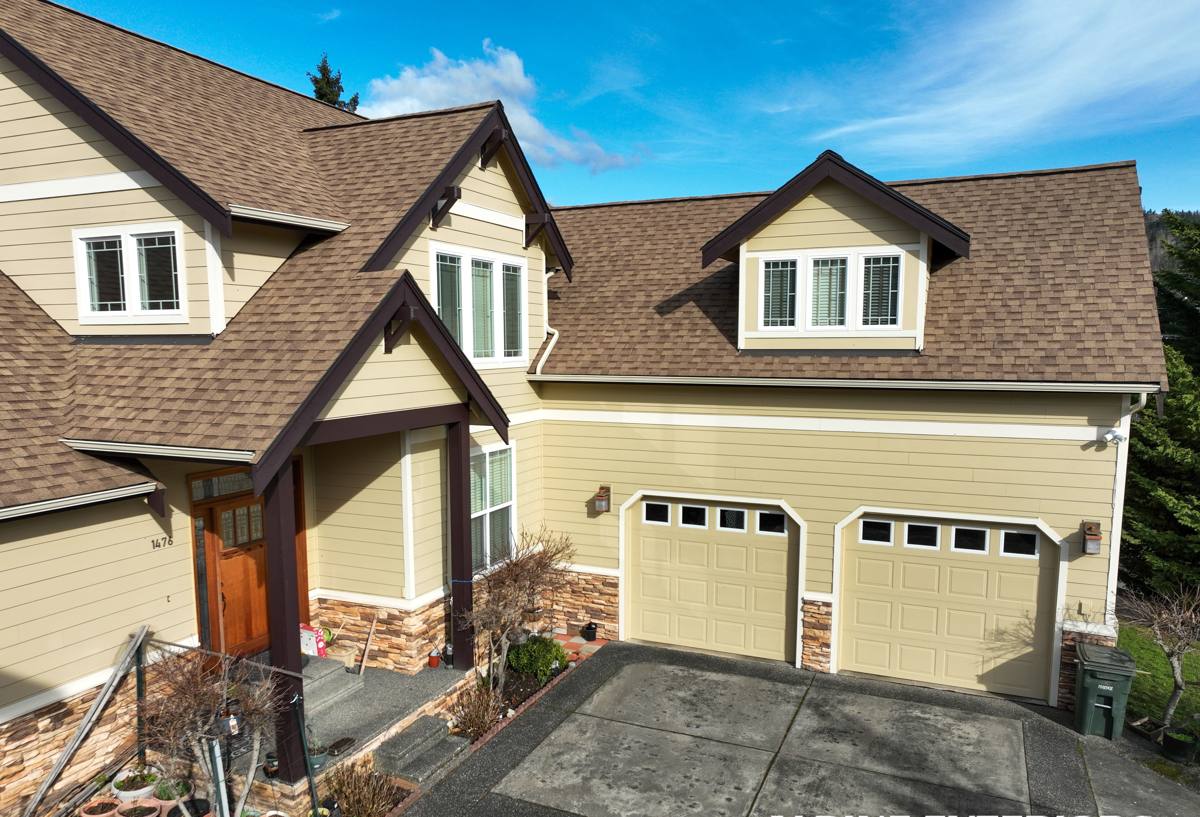
What a Deer Harbor Deck Needs to Get Right
Framing and Fasteners
The framing is the part of a deck nobody sees and the part that actually determines how long it lasts. In this climate, we treat fastener selection as a first-order decision, not an afterthought. Standard coated deck screws and joist hangers are not rated for the corrosion exposure this island sees, especially on harbor-adjacent lots. We use stainless steel or heavy hot-dip galvanized hardware rated for coastal exposure throughout the structure — hangers, hanger nails, ledger bolts, and screws — because a single mismatched fastener can start a rust stain and a slow structural failure years before the decking itself shows any wear.
Ledger and Flashing Details
Most deck failures we're called out to inspect on Orcas Island start at the ledger board — the point where the deck attaches to the house. If flashing isn't installed correctly, wind-driven rain gets behind the ledger and rots the house rim joist from the inside, often invisibly for years. We flash every ledger connection with a code-compliant water management system: proper ledger flashing, self-adhering membrane, and correct fastener spacing and gapping. This is the single most important detail on any deck attached to a home in this climate, and it's the one detail that's cheapest to do right the first time and most expensive to fix later.
Choosing Decking Material for Salt Air and Moss
There's no single "best" decking material — there's a best material for a given lot, budget, and how much upkeep the homeowner actually wants to do. Here's how the common options actually perform under Deer Harbor conditions:
| Material | Moisture & Moss Behavior | Maintenance | Typical Lifespan |
|---|---|---|---|
| Pressure-treated fir/pine | Absorbs water readily; moss and algae take hold quickly in shaded spots without regular cleaning | Annual cleaning, periodic sealing | 10–15 years before boards need replacing |
| Western red cedar | Naturally rot- and insect-resistant; still needs airflow and cleaning to resist moss in shaded areas | Cleaning and re-oiling every 1–2 years to hold color and resist moss | 15–25 years with upkeep |
| Composite/PVC decking | Doesn't absorb water or rot, but moss and algae can still grow on the surface in shaded, damp spots and need periodic washing | Occasional washing; no sealing or staining required | 25+ years, manufacturer-backed |
| Tropical hardwood (e.g. ipe) | Extremely dense and rot-resistant; very low water absorption | Periodic oiling to maintain appearance; low but not zero maintenance | 25+ years |
For lots with heavy tree cover and limited sun exposure, we lean toward composite or a well-maintained hardwood, because both resist the underlying rot risk even when a homeowner isn't out there scrubbing moss every few months. For open, sunnier harbor-view lots, cedar remains a strong, more affordable choice because natural drying does a lot of the maintenance work for you. We'll walk your specific site's sun and shade pattern with you before recommending a material — it matters more than any spec sheet.
Site Conditions: Slopes, Rock, and Footings
A lot of Deer Harbor building sites aren't flat. Elevated view decks, sloped lots down toward the water, and partial rock outcroppings are common, and they all change how a deck's footings need to be engineered. Standard poured concrete footings work fine on stable, diggable soil, but rocky or steeply sloped sites often call for helical piers or engineered pier systems that don't rely on excavating a clean hole. We assess soil and slope conditions on-site before finalizing a footing plan, rather than assuming a standard spec will work — guessing wrong here means a deck that settles unevenly or, in the worst case, needs to be rebuilt.
Elevated decks built for a harbor or water view also carry higher wind and railing-load requirements, since they're more exposed. We size posts, beams, and railing connections to the actual height and exposure of the structure, not a one-size-fits-all minimum.
Permitting in San Juan County
Most new decks and significant deck rebuilds on Orcas Island require a permit through San Juan County, and decks near shoreline or critical areas can also trigger additional review depending on setback and buffer requirements for the parcel. Permit requirements and processing timelines shift, and every Deer Harbor lot has its own zoning and shoreline context, so we don't guess — we pull the specifics for your parcel and handle the permit application and inspections as part of the project, so you're not the one chasing down county paperwork.
Our Process for a Deer Harbor Deck Project
- Site visit and assessment — we walk the lot, check sun/shade exposure, soil and slope, and the existing structure if we're replacing a deck.
- Design and material selection — we talk through decking material, railing style, and layout based on how you actually use the space and what the site's conditions call for.
- Permitting — we handle the San Juan County permit application and any required engineering for footings or elevated structures.
- Framing — corrosion-rated hardware throughout, correct ledger flashing, and footings matched to your site's soil and slope.
- Decking and railing installation — installed with proper spacing and fastening for the material chosen, so it drains and dries the way it's supposed to.
- Final walkthrough — we go over maintenance expectations specific to your material and site before we consider the job done.
Keeping a Deer Harbor Deck Looking and Performing Its Best
Every deck material on this island benefits from a little seasonal attention — the difference between a deck that lasts fifteen years and one that lasts thirty usually comes down to whether these basics get done.
- Sweep debris and standing organic matter off the deck surface regularly, especially in fall when leaves and needles accumulate under tree cover
- Clean moss and algae off the surface at least once a year, more often in shaded spots — a soft wash rather than a pressure washer to avoid damaging the surface
- Check railing and stair connections annually for loosened hardware, which corrosion can accelerate near the water
- Inspect the ledger flashing area where the deck meets the house for any sign of staining or soft wood
- Re-oil or reseal wood decking on the manufacturer or species-recommended schedule — don't wait until it's visibly gray and dry
- Keep gutters and downspouts near the deck clear so runoff isn't dumping extra water onto or under the structure
Why a Crew That Already Works Deer Harbor Matters
Building on Orcas Island isn't the same as building on the mainland, and a contractor who doesn't already work here regularly will learn that on your project instead of before it. Material deliveries have to be scheduled around the ferry, not a same-day supply run. Site access on some Deer Harbor lots is tighter or steeper than what a mainland crew is used to planning for. And a crew that's already dealt with San Juan County's permitting process and shoreline considerations moves through that paperwork instead of getting stuck in it. We work this island regularly, which means fewer surprises and fewer delays on your project.
If you're planning a new deck or need to replace one that's showing its age, we're happy to come take a look and put together a straightforward estimate — no pressure, no hard sell. Use the form below to get started.