 Orcas Island
 Deer Harbor Homes Take a Different Kind of Beating
Deer Harbor sits close to the water, and that proximity shapes everything about how siding ages here. Salt-laden air moves off the harbor and settles on exterior walls day after day, accelerating corrosion on fasteners, trim, and anything not built to shrug off airborne salt. Add San Juan County's long, damp shoulder seasons — where rain doesn't fall hard so much as it just doesn't stop — and you get siding that stays wet longer than it does almost anywhere else in the state. Wood-based products absorb that moisture. Some fiber cement competitors handle it better but still need careful detailing. It's a slow, cumulative kind of wear, and it's exactly why the products and installation details that work fine forty miles inland can fail early on a home a short walk from the shoreline.
Then there's moss. The combination of shade from mature evergreens, persistent moisture, and mild temperatures gives moss and algae a long growing season on Orcas Island — longer than most homeowners moving here from drier climates expect. Moss doesn't just look bad; it holds water against the siding surface, keeps that surface from drying out between rains, and creates the exact conditions that rot, paint failure, and substrate breakdown thrive in. A siding installation in Deer Harbor has to be planned around all three of these realities — salt, rain, and moss — not just installed to a generic spec sheet.
What "Correct" Siding Installation Actually Means Here
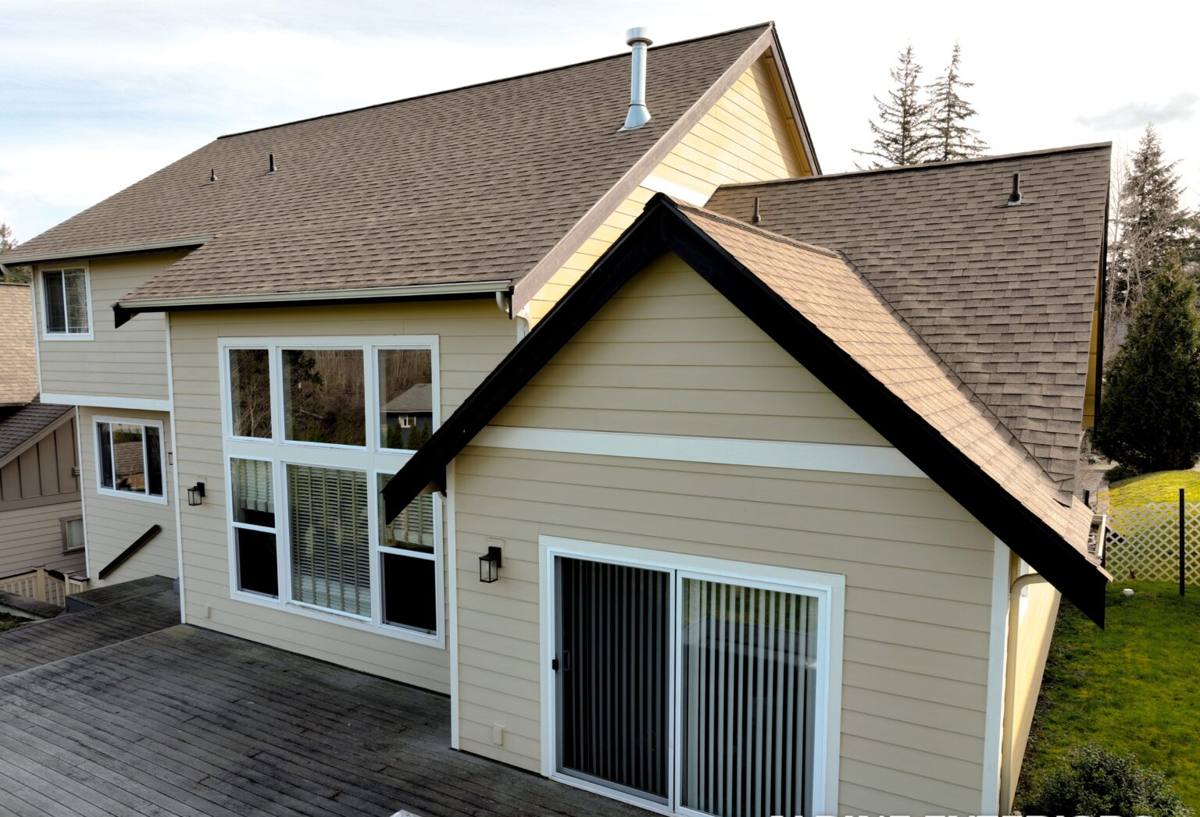
Siding installation is often talked about like it's just cutting boards and nailing them up. On a waterfront-adjacent property in San Juan County, the installation details matter as much as the product itself. A correct job accounts for:
- Proper water-resistive barrier and flashing at every window, door, and penetration — the first line of defense against driving rain
- Fastener spacing, type, and corrosion resistance suited to a salt-air environment
- Rainscreen or drainage gap detailing so moisture that does get behind the cladding has somewhere to go
- Correct clearance between siding and grade, decks, and roof lines to avoid wicking and standing moisture
- Factory-finished panels and trim installed to the manufacturer's exposure and caulking specifications, not field-painted shortcuts
Skip any one of these and the siding may look fine for a year or two before the underlying problems show up as staining, soft spots, or paint failure. On Orcas Island, where a service call means a ferry schedule instead of a same-day drive, getting it right the first time isn't a convenience — it's the whole point.
Why We Only Install James Hardie Fiber Cement
We install James Hardie fiber cement siding exclusively. We don't install vinyl, LP SmartSide, cedar, primed spruce, or other fiber cement brands like Cemplank or Allura — and that's a deliberate standard, not a sales pitch.
Fiber cement as a category resists moisture, insects, and fire far better than wood-based siding, which matters in a climate that keeps siding damp for long stretches of the year. Within fiber cement, James Hardie's HZ5 product line is engineered specifically for the kind of freeze-thaw, high-moisture Pacific Northwest conditions Orcas Island sees. The ColorPlus factory finish process bakes color onto the board under controlled conditions, which gives it better fade and moisture resistance than field-applied paint — a real advantage when your siding is fighting salt air and long wet seasons instead of a mild dry climate.
We're not going to tell you every other product is worthless. Vinyl is inexpensive and low-maintenance in the right climate. Cedar has real curb appeal for the right buyer who's willing to maintain it. LP SmartSide and other fiber cement brands have their own engineering and warranty terms. But we've made a professional call: on Orcas Island's coastline, the moisture behavior, long-term durability, and warranty backing of James Hardie is what we're willing to put our name behind. That's why it's the only thing we install.
How James Hardie Compares to Common Alternatives
| Factor | James Hardie Fiber Cement | Vinyl | Cedar / Wood |
|---|---|---|---|
| Moisture resistance | Engineered for wet climates (HZ5) | Doesn't absorb, but can trap moisture behind panels | Absorbs moisture, needs consistent upkeep |
| Salt air performance | Non-combustible, stable in coastal conditions | Can become brittle and discolor over time | Prone to swelling, checking, and premature rot |
| Moss/algae resistance | Factory finish resists staining better than field paint | Surface can hold algae in shaded, damp spots | Highly susceptible, especially in shade |
| Maintenance | Occasional wash, repaint on a much longer cycle | Low, but limited repair options when damaged | Regular sealing, staining, or painting required |
| Fire resistance | Non-combustible | Can melt or deform under heat | Combustible |
Our Installation Process for Deer Harbor Homes
Every siding installation starts with an assessment of what's actually happening behind the existing cladding, not just what's visible on the surface. On older Orcas Island homes, that often means checking for trapped moisture, compromised sheathing, or window flashing that was never done correctly in the first place.
- Site walk and moisture check. We look at drainage patterns, shade exposure, moss growth, and any signs of past water intrusion around openings, decks, and roof-wall intersections.
- Tear-off and substrate inspection. Old siding comes off and we inspect the sheathing underneath. Soft or rotted sheathing gets replaced before anything new goes up — covering a compromised substrate just hides the problem.
- Weather barrier and flashing. A properly lapped water-resistive barrier goes on first, with flashing detailed at every window, door, and penetration to shed water outward and downward.
- Drainage plane. Depending on the wall assembly, we build in a rainscreen gap so any moisture that gets past the cladding can drain and dry instead of sitting against the sheathing.
- Hardie panel and trim installation. Boards, panels, and trim go up to manufacturer spec — correct fastener type and spacing, proper clearances at grade and roof lines, and factory-finished joints sealed per Hardie's guidelines.
- Final walk-through. We review the finished work with the homeowner, including basic care and what to watch for going forward.
Moss, Shade, and Drainage: The San Juan County Reality
A lot of Deer Harbor properties sit under mature tree cover, which is part of what makes the area beautiful — and part of what makes siding maintenance harder. Shaded walls dry out slower after rain, which extends the window moss and algae have to establish themselves. This isn't something you can fully engineer around with product choice alone; it also comes down to installation details like keeping siding off grade, maintaining proper clearance from shrubs and landscaping, and making sure gutters and downspouts are actually directing water away from walls rather than dumping it against them.
Where we can influence it through the installation itself, we do — proper rainscreen gaps let air move behind the siding and speed up drying time, which directly reduces how long moss has to take hold. It won't eliminate moss on a heavily shaded wall, but it changes how fast it comes back and how much damage it does while it's there.
What Drives the Cost of a Deer Harbor Siding Installation
Every home is different, but the same handful of factors move the price up or down on most projects in this area. We won't quote a number without seeing the house, but this is what to expect going in:
| Cost Factor | Why It Matters |
|---|---|
| Existing substrate condition | Rotted sheathing or hidden moisture damage adds repair work before new siding can go on |
| Home size and wall complexity | More corners, gables, and dormers mean more cutting, flashing, and labor time |
| Siding profile chosen | Lap siding, shingle-style panels, and board-and-batten all install differently and price differently |
| Access and staging | Waterfront lots, steep driveways, and limited staging area on Orcas Island can affect logistics |
| Trim and detail work | Window and door trim, corner boards, and fascia detailing add material and labor |
| Material delivery | Ferry scheduling factors into project timelines and needs to be planned for up front |
Signs Your Siding Needs Attention
Waterfront and near-waterfront homes often show wear in specific spots first. If you're seeing any of the following, it's worth having someone look before it becomes a bigger repair:
- Persistent moss or algae staining that comes back quickly after cleaning
- Soft spots, especially near the bottom courses, deck ledgers, or under windows
- Paint that's peeling, bubbling, or failing faster than it should
- Visible gaps, warping, or cupping in individual boards
- Rusted or discolored fasteners bleeding through the surface
- Higher-than-expected heating bills, which can point to compromised siding letting in drafts
Why Hiring a Crew That Already Works Deer Harbor Matters
Siding work on Orcas Island isn't the same logistical exercise as siding work on the mainland. Material has to be ordered and delivered around ferry schedules, weather windows for tear-off and installation are tighter, and every property has its own relationship with wind, shade, and water exposure. A crew that already works this specific stretch of San Juan County has already solved those logistics — they know how to sequence a job so siding isn't sitting exposed during a stretch of driving rain, and they know what moisture and moss patterns to expect on a shaded, near-water lot like the ones around Deer Harbor.
That local familiarity also means fewer surprises mid-project. Ferry delays, material lead times, and weather windows get planned around from day one instead of discovered halfway through the job.
Ready to Talk About Your Siding?
If your Deer Harbor home is showing wear, or you're planning ahead for a replacement, we're happy to take a look and walk you through what we're seeing — no pressure, no obligation. Fill out the form below for a free estimate and we'll get back to you with honest answers about what your home actually needs.