 Orcas Island
 What West Beach Homes Are Actually Up Against
West Beach sits close enough to the water that salt-laden air is a daily fact of life, not an occasional event. Add in the driving rain that comes off Puget Sound during fall and winter storms, plus the long, low-sun moss season that keeps north- and west-facing walls damp for weeks at a time, and you have one of the tougher exterior environments in San Juan County. Siding here doesn't fail because it's old — it fails because it was never matched to these three conditions in the first place.
We've replaced siding on enough homes in this stretch of Orcas Island to see the pattern repeat: paint that blisters and peels years ahead of schedule, seams that swell and separate, and green-black staining that keeps coming back no matter how many times it's pressure washed off. None of that is bad luck. It's what happens when a siding product built for a mild, dry climate gets installed in a marine one.
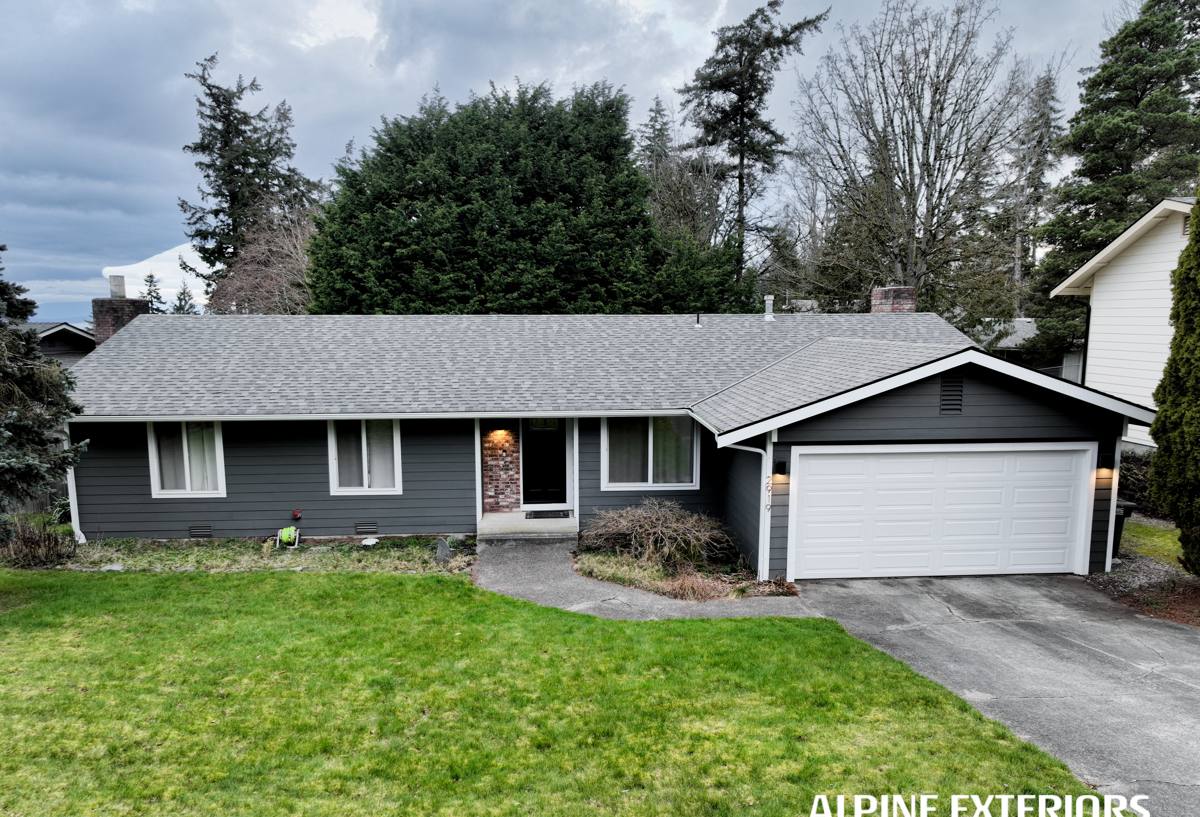
How Salt Air, Rain, and Moss Actually Damage Siding
Salt Air
Airborne salt is corrosive to fasteners and hard on painted finishes. Field-applied paint sits on the surface and starts to chalk and fade as salt crystals abrade the coating with every gust of wind. Once the finish breaks down, the substrate underneath is exposed directly to moisture.
Driving Rain
Wind-driven rain doesn't just fall on siding — it gets pushed sideways and upward into laps, seams, and butt joints. If the siding isn't installed with the right overlaps, gaps, and flashing details, water works its way behind the cladding and into the wall assembly, where it can sit against sheathing for months before anyone notices a problem inside.
Moss and Algae
Shaded, north-facing walls near evergreen tree cover stay damp longer than sun-exposed walls. That moisture supports moss and algae growth, which holds even more water against the siding surface and accelerates whatever damage the material is already prone to. On wood-based products, this is often where rot starts.
What a Correct Siding Replacement Involves Here
Replacing siding on a West Beach home isn't just stripping off the old material and nailing up new panels. Done right, it addresses the wall assembly underneath, not just the visible surface.
- Full tear-off so the sheathing can actually be inspected, not just glanced at through gaps
- Repair or replacement of any sheathing that's gone soft, delaminated, or rotted from prior moisture intrusion
- A continuous, correctly lapped water-resistive barrier (weather barrier) installed shingle-style so water sheds outward, not inward
- Properly flashed windows, doors, and any wall penetrations before the new siding goes on
- Correct fastener spacing, siding overlap, and clearance at grade, trim, and roof lines per the manufacturer's installation instructions
- Rainscreen or drainage gap detailing where the wall assembly calls for it, so any moisture that does get behind the siding can drain and dry
Skip any one of these steps and you can end up with brand-new siding covering the exact same moisture problems that took out the old siding — just delayed a few years.
Why We Install James Hardie Fiber Cement Only
We don't install vinyl, LP SmartSide, primed spruce, cedar, or other fiber cement brands. That's a deliberate standard, not a lack of options. For a marine climate like Orcas Island's, the trade-offs on those products — moisture sensitivity at cut edges and seams, field-applied finishes that break down under salt exposure, or maintenance schedules that most homeowners can't realistically keep up with — are exactly the problems West Beach's climate is built to expose.
James Hardie fiber cement is engineered specifically to resist the failure modes we see most in this area:
- Non-combustible material that doesn't rot, delaminate, or attract wood-boring insects
- ColorPlus factory-applied finish, baked on and warranted against fading and peeling far longer than a field-applied paint job on wood or engineered wood siding
- HZ climate-engineered product lines — Hardie manufactures its siding in versions tuned to specific moisture and freeze conditions, so a home in a wet coastal zone gets a product built for that exposure, not a one-size-fits-all board
- A strong, transferable manufacturer warranty that holds up when the installation itself meets Hardie's published specifications
That last point matters as much as the product choice. Hardie's warranty is tied to correct installation. A crew that doesn't follow the fastening, clearance, and flashing requirements to the letter can void protection the homeowner is counting on — which is exactly why installation process matters as much as material selection.
Material Comparison for a Marine, Moss-Prone Climate
| Material | Salt Air Resistance | Moisture/Moss Behavior | Finish Durability |
|---|---|---|---|
| James Hardie fiber cement (HZ line) | Strong — non-combustible, dimensionally stable | Doesn't rot; engineered for wet climate exposure | Factory ColorPlus finish, long fade/peel warranty |
| Vinyl siding | Can become brittle and discolor with UV and salt exposure over time | Won't rot, but seams and channels can trap moisture and moss buildup | Color is molded-in but fades; can't be repainted easily if it does |
| Cedar / wood siding | Salt accelerates weathering of the wood and any finish | Prone to rot and moss growth without diligent, ongoing maintenance | Field-applied finish needs recoating every few years |
| Engineered wood (e.g. LP-style products) | Moderate — coatings help but edges remain a vulnerability | Sensitive to sustained moisture at cut edges and seams | Depends on maintaining factory coating integrity over time |
Our Process on a West Beach Job
- On-site inspection — we walk the exterior, check for soft sheathing, moisture staining, and moss patterns that tell us where the wall has been taking on water
- Written scope and estimate — what's being torn off, what sheathing repair is likely, and which Hardie products and colors fit the home
- Tear-off and sheathing assessment — old siding comes off in full sections so we can actually see the wall, not patch around problem areas
- Weather barrier and flashing — installed correctly lapped and sealed at every penetration before any new siding goes up
- Hardie installation to manufacturer spec — fastener pattern, clearances, and joint treatment done to the letter so the warranty stays intact
- Trim, caulking, and finish detail — the parts that determine whether the job still looks tight in ten years, not just on install day
- Final walkthrough and cleanup — site cleared, debris hauled, and the work reviewed with the homeowner before we call it done
What Drives the Cost of a Siding Replacement Here
| Factor | Why It Matters on Orcas Island |
|---|---|
| Extent of sheathing repair | Homes with a history of moisture intrusion often need more of the wall opened up and repaired before new siding goes on |
| Home size and wall complexity | Gables, dormers, and multiple wall planes take more labor and trim work than a simple rectangular footprint |
| Product line and profile | HardiePlank lap siding, panel siding, and trim boards carry different material and labor costs |
| Site access and logistics | Material delivery to Orcas Island and site access on wooded or sloped lots can affect scheduling and setup time |
| Existing damage found during tear-off | Rot or delamination discovered once old siding comes off is common near West Beach and should be budgeted for as a possibility, not a surprise |
What to Look For Before Hiring a Siding Contractor
- Do they inspect and photograph the sheathing before covering it back up, or just go straight to installation?
- Do they install to the manufacturer's published specifications, including fastener spacing and clearances?
- Can they explain how their weather barrier and flashing details handle wind-driven rain specifically?
- Do they have experience with island logistics — material delivery, scheduling around weather windows, and site access?
- Is their estimate written and itemized, or a vague verbal number?
- Do they stand behind the installation in a way that keeps the manufacturer's warranty valid?
Why Local Experience on West Beach Specifically Matters
A siding crew that already works this part of Orcas Island knows which walls take the worst of the wind-driven rain, where moss builds up fastest, and how salt exposure shows up differently here than it does even a few miles inland in San Juan County. That's not something a contractor coming from off-island picks up on a single visit — it comes from having torn off enough old siding in this exact area to know what's usually hiding underneath before the first board comes off.
It also matters for the practical side of the job: knowing realistic delivery timelines for materials coming to the island, planning around the weather windows that actually exist here rather than a generic construction calendar, and being available afterward if a question comes up rather than being a one-time visitor.
If you're weighing a siding replacement for a West Beach home, we're glad to take a look and give you a straightforward, no-pressure estimate — use the form below to get started.