 Orcas Island
 Building New in Lopez Village: What Your Windows Are Up Against
A new-construction project in Lopez Village gives you one real advantage over a remodel: you get to do the window opening right the first time, before siding, trim, and interior finishes cover up the details. That matters here more than in most inland towns. San Juan County sits fully exposed to marine weather — salt-laden air off the surrounding water, driving rain that comes in sideways during winter storms, and a long stretch of the year where shaded north- and west-facing walls stay damp enough to grow moss and algae on almost any exterior surface, glass included.
None of that is a reason to over-build or over-spend. It is a reason to get the basics right: correct flashing sequence, hardware and fasteners that won't corrode, frame materials that don't wick moisture, and glass that won't fog or degrade early from constant humidity cycling. A window that's installed correctly for this climate will outlast one that was installed the same way you'd install it in a dry inland subdivision, even if the two units came from the same box.
New Construction vs. Retrofit: Why the Distinction Matters
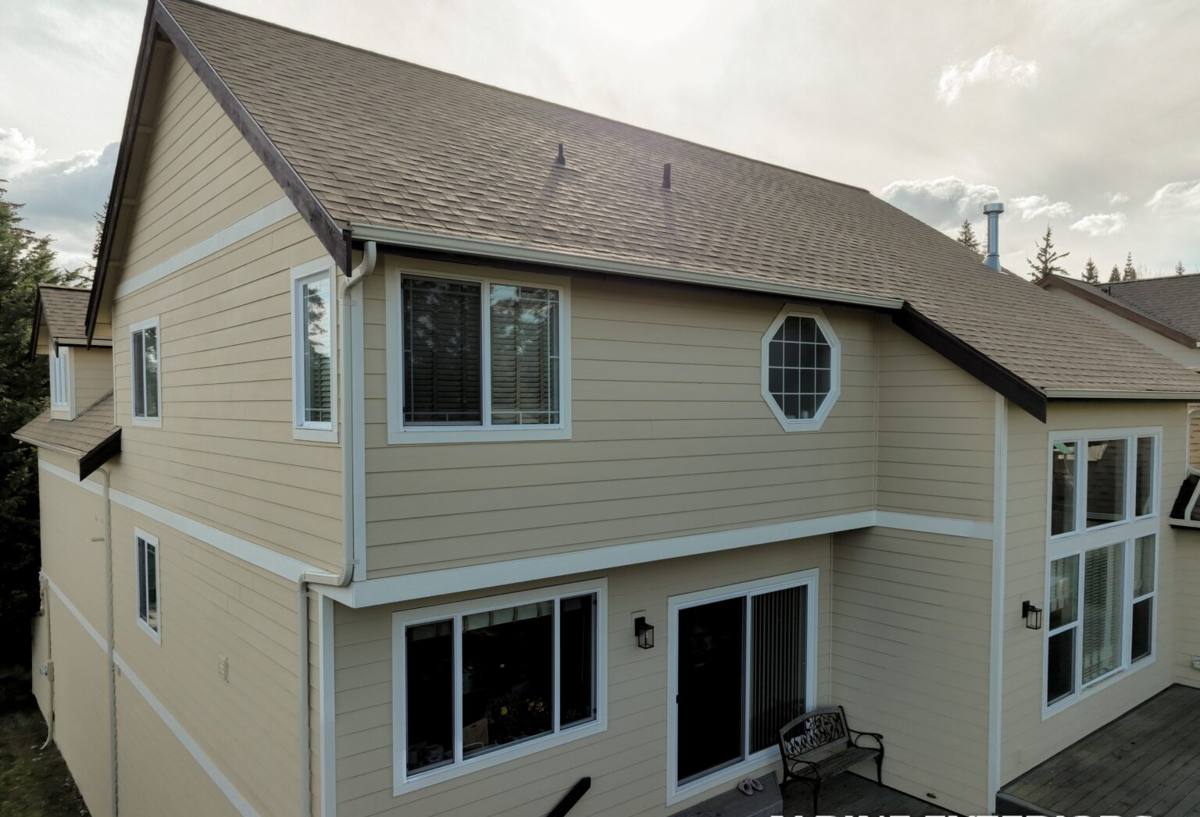
New-construction windows are a different product and a different install method than replacement windows, and the difference is bigger than most homeowners expect. On a retrofit, the old frame usually stays in the wall and a new window gets fitted inside it — a compromise that works, but it means the crew is building around decisions someone else already made. On new construction, the window goes into a bare rough opening before the weather-resistive barrier and siding go on, which means the flashing, the water management, and the air sealing can all be done in the correct order from scratch.
That's an opportunity, but it's also a point where mistakes get buried. A new-construction window with a poorly lapped head flashing or a missing sill pan won't show a problem on day one — it'll show up two or three winters later as a stain on the interior sill or rot in the framing below the window, right when it's expensive to fix. Getting this stage right the first time is the whole game.
What "Correct" Looks Like in the Rough Opening
- A sloped or pre-formed sill pan that sheds any water that gets past the window to the outside, not into the wall cavity
- Side flashing (jamb flashing) installed and lapped in the right order relative to the sill pan and the weather-resistive barrier
- Head flashing installed last, shingle-lapped over the barrier above so water is always directed outward and down
- Sealants and tapes that are chemically compatible with the window's frame material and the housewrap — mismatched products can fail to bond or degrade each other over time
- Fasteners rated for coastal/marine exposure, not standard interior-grade hardware
- Proper shimming and squaring so the sash operates smoothly for the life of the window, not just on install day
Choosing Materials for a Salt-Air, High-Moisture Climate
There is no single "correct" frame material for every new build in Lopez Village — it depends on your budget, your architectural style, and how exposed the specific wall is to wind-driven rain. But the trade-offs are worth understanding before you sign off on a window package.
| Frame Material | Salt-Air / Moisture Behavior | Maintenance | Typical Trade-Offs |
|---|---|---|---|
| Vinyl | Won't rust or rot; performs well in humid, salty air | Low — occasional cleaning | Fewer color/finish options; can look less traditional on classic island architecture |
| Fiberglass | Very stable in temperature and moisture swings; excellent corrosion resistance | Low | Higher upfront cost than vinyl |
| Aluminum-clad wood | Exterior clad face resists weather well if flashed correctly; wood interior offers a traditional look | Moderate — clad seams and any exposed wood need periodic attention | More installation-sensitive; a poor seal at the cladding can trap moisture against the wood |
| Bare wood | Attractive but the most vulnerable to constant damp and moss growth | High — regular refinishing needed | We generally steer new builds here away from bare wood on exposed elevations, not because the product is bad, but because the maintenance schedule this climate demands is a real ongoing cost most owners underestimate |
Hardware is just as important as the frame. Locks, hinges, and cranks should be rated for coastal exposure — standard-grade hardware can start showing corrosion within a couple of seasons on a wall that takes direct salt spray or sits in near-constant damp shade.
Glass Packages Worth Discussing
Low-E coatings and argon or krypton gas fills are standard on most new-construction windows now, and they do real work here beyond energy savings — they reduce condensation on the interior glass during cold, damp stretches, which in turn reduces the moisture available for mildew to grow on sills and frames. If a room faces open water or gets strong afternoon sun off the water, it's worth discussing a glass package tuned for glare and heat gain rather than defaulting to whatever the builder's spec sheet lists.
Energy Code and Permitting: What to Expect
New-construction windows in Washington have to meet the current Washington State Energy Code's performance requirements, and San Juan County's permitting process will check window specifications against your submitted plans as part of the building permit review. Bedroom windows also have to meet egress requirements — minimum opening size and sill height — which is a code detail that's easy to get wrong if a window gets substituted or resized late in framing without anyone re-checking the egress math.
We don't handle your permit application, but we do make sure the windows we're installing match what was approved on your plans, and we'll flag it before install day if a substitution or field change would put a bedroom window out of egress compliance.
Island Logistics: Why Timing Matters More Here
Getting materials to Lopez Village isn't the same as getting them to a mainland job site. Windows are typically special-ordered to exact rough-opening dimensions, and once an order is placed, a mis-measurement or a late design change doesn't just mean a phone call — it means another manufacturing lead time plus another ferry crossing to get the corrected unit onto the island. On a mainland job that might cost a few days. Here it can cost weeks, and it can stall a framing crew that's waiting to close in the walls.
That's why we take rough-opening measurements seriously and verify them against the actual framed openings on site, not just the plan set, before any order goes in. We also build ferry schedules and weather windows into our own install timeline, so a delayed sailing or a rough forecast doesn't turn into a delayed job for you.
Our Process for Lopez Village New Builds
- Plan review and site visit. We look at the window schedule in your plans, walk the site with the builder if there is one, and note any openings that need special attention — heavy water exposure, unusual sizing, or egress-critical bedrooms.
- Verified measurements. We measure the actual framed rough openings, not just the drawings, before any order is placed.
- Ordering with island lead times built in. We account for ferry scheduling and manufacturer lead times so materials arrive when your framing schedule actually needs them.
- Flashing and install. Sill pan, jamb flashing, window set, head flashing, sealant, and fastening — done in that order, every time.
- Interior air-sealing and insulation. The gap between the frame and the rough opening gets sealed and insulated correctly, which affects both energy performance and long-term condensation control.
- Final check. Every window gets operated, checked for square, and inspected for a clean, weathertight exterior seal before we call the job done.
What Drives Cost on a New-Construction Window Package
| Factor | Why It Matters |
|---|---|
| Number and size of openings | More or larger windows means more material and more install time |
| Frame material | Vinyl is typically the most budget-friendly; fiberglass and clad-wood cost more upfront but may cost less in long-term maintenance |
| Glass package | Upgraded Low-E coatings, gas fills, or tempered/impact-rated glass for specific openings add cost |
| Site access and logistics | Ferry scheduling, crane or lift needs, and staging space on a tight lot all affect labor time |
| Opening complexity | Custom shapes, large picture windows, or openings on hard-to-flash wall transitions take more time to detail correctly |
Most new-construction window packages for a single home fall into a broad range from the low thousands to well into five figures depending on the factors above — we'll give you real numbers once we've seen your plans, not a guess pulled from a national average that has nothing to do with a Lopez Village build.
Checklist: What to Confirm Before Your Windows Are Ordered
- Rough-opening dimensions have been field-verified, not just taken from the plan set
- Frame material and hardware are appropriate for direct salt-air and driving-rain exposure
- Bedroom windows meet current egress size and sill-height requirements
- Flashing details are specified and understood by whoever is installing the weather-resistive barrier around each opening
- Lead times account for island shipping and ferry scheduling, with a buffer for delays
- Glass package matches the exposure and orientation of each room, not a single default spec applied everywhere
Why a Crew That Already Works Lopez Village Matters
A window is only as good as its install, and an install on the islands has variables a mainland-based crew doesn't deal with every day: ferry-dependent scheduling, weather windows that can close a job site for days, and building details suited to a marine climate that most inland crews rarely see. A crew that regularly works San Juan County has already worked out how to plan around sailings, how to sequence a job so a missed boat doesn't cascade into missed framing deadlines, and what flashing and hardware choices actually hold up here versus what looks fine on a spec sheet.
There's also the follow-up question. If a window needs an adjustment or a warranty claim two years after move-in, it matters whether the crew that installed it is a local outfit that can get back out to Lopez Village on a normal schedule, or a mainland company for whom every island trip is a special, costly trip. We're already here, working other homes in the area — a callback is a normal part of the week, not a logistics problem.
Get a Straight Answer for Your Build
If you're framing a new home in Lopez Village and want window specs, flashing details, or a timeline that actually accounts for island logistics, we're happy to take a look at your plans. There's a form below for a free, no-pressure estimate — send us your window schedule and we'll give you honest numbers and a realistic schedule, not a guess.