 Orcas Island
 Building a Deck That Can Actually Handle Obstruction Pass
A deck in Obstruction Pass has to deal with a different set of conditions than a deck built twenty miles inland. Salt-laden air off the water, long stretches of driving rain through the fall and winter, and a moss season that can run for months all work on a deck year-round, not just during storms. A deck built the way it might be built in a dry inland town will show problems here faster: soft spots, corroded fasteners, slick moss-covered boards, and finishes that fail well before they should. Getting it right on Orcas Island means designing and building specifically for this climate from the ground up, not treating it as an afterthought.
This page covers what actually matters for a deck project in Obstruction Pass: the materials that hold up, the framing and fastener details that decide whether a deck lasts fifteen years or forty, the drainage and airflow choices that keep moss from taking over, and what our process looks like from first visit to final walkthrough.
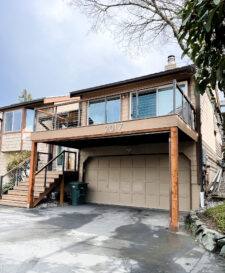
What Salt Air, Rain, and Moss Actually Do to a Deck
Salt Air and Corrosion
Airborne salt doesn't just affect homes right on the waterfront — it travels on wind and settles on any exposed metal, including framing hardware, screws, and fastener heads. Over time it accelerates corrosion in anything that isn't rated for a marine environment. On a deck, this shows up first at the fasteners holding the decking down, then in structural connectors and hangers underneath, long before the visible wood itself looks bad.
Driving Rain and Moisture Trapping
San Juan County gets long stretches of steady, wind-driven rain rather than short heavy downpours. That kind of weather finds every gap — around ledger boards, under railing posts, between deck boards that are spaced too tight. Water that gets trapped instead of shedding is what causes rot, not water that simply falls and drains away.
Moss and Organic Growth
The combination of shade, moisture, and mild temperatures on Orcas Island supports moss growth for a large part of the year, not just a few weeks in spring. Moss holds moisture against the wood surface, feeds on organic buildup like pollen and needles in deck gaps, and makes boards slippery long before they look visibly worn. A deck built without moss in mind will need pressure washing and treatment far more often than one designed to shed debris and dry out between rains.
Choosing the Right Decking Material for a Marine Climate
There's no single "best" decking material for every home — it depends on budget, how much maintenance you want to take on, and how exposed the deck is to wind and salt air. Here's how the common options actually compare once you factor in this climate specifically:
| Material | Moisture / Salt Resistance | Moss Resistance | Maintenance | Typical Lifespan Here |
|---|---|---|---|---|
| Pressure-treated wood | Good if properly sealed and re-sealed | Low — needs regular cleaning | Annual cleaning/sealing recommended | 10–20 years |
| Cedar | Naturally decent, degrades with age | Low to moderate | Periodic sealing to hold color and resistance | 15–20 years |
| Composite decking | Very good — doesn't absorb water like wood | Moderate — surface film can still grow moss without cleaning | Low — occasional washing | 25–30+ years |
| Capped PVC decking | Excellent — fully sealed surface | Moderate to good depending on texture | Lowest — mostly rinsing | 25–30+ years |
Composite and capped PVC products cost more upfront but ask for far less maintenance in a climate where moisture and moss are constant, which is why we see homeowners in this area lean that direction for decks that get shade or heavy tree cover. Wood is still a reasonable choice for homeowners who prefer its look and are willing to stay on top of cleaning and sealing on a real schedule — the trade-off is maintenance time, not durability of the framing underneath, which matters just as much regardless of what decking surface you choose.
Framing, Flashing, and Fasteners — Where Decks Actually Fail First
Ledger Board Flashing
Where a deck attaches to the house is the single most common failure point on any deck, and it's worse in a wet climate. Proper flashing directs water away from the ledger board and the house's wall assembly instead of letting it sit and soak in behind the decking. This is a detail that's invisible once the deck is finished, but it's the difference between a ledger connection that lasts the life of the deck and one that causes hidden rot within a handful of years.
Fastener Grade Matters
Not all "outdoor rated" fasteners are equal, and in a salt-air environment the difference shows up faster than people expect:
| Fastener Type | Corrosion Resistance in Salt Air | Notes |
|---|---|---|
| Standard galvanized | Low | Not recommended this close to the water |
| Hot-dip galvanized | Moderate | Acceptable for framing not in direct exposure |
| Stainless steel (305) | Good | Common choice for visible decking screws |
| Stainless steel (316) | Best | Marine-grade; best for high-exposure or waterfront sites |
We choose fastener grade based on how exposed the specific site is — a deck tucked back under tree cover doesn't need the same hardware as one facing open water. This is a judgment call that comes from knowing the area, not a one-size answer.
Drainage, Airflow, and Keeping Moss From Taking Over
A deck that dries out quickly after rain will always outperform one that stays damp, no matter what material it's built from. A few design choices make the biggest difference:
- Correct board spacing so water and debris don't collect and hold moisture against the wood
- Ventilation gaps underneath the deck so air can circulate and dry out the framing, not just the surface
- A slight slope away from the house so water sheds instead of pooling near the foundation
- Joist tape or a similar protective layer on top of framing members to keep standing water off structural wood
- Keeping nearby vegetation trimmed back where it's shading the deck and feeding moss growth
If your deck sits low to the ground or has living space underneath, an under-deck drainage system may be worth discussing — it channels water off the top surface before it reaches whatever is below, which matters more here than in a drier climate where that water would simply evaporate.
Permits and Site Factors Specific to Building in Obstruction Pass
Deck projects on Orcas Island go through San Juan County's permitting process, and requirements can shift depending on the size of the deck, its height off the ground, and how close the property is to shoreline or critical areas — waterfront and near-waterfront parcels are often subject to additional setback and environmental review. We handle pulling the right permits as part of the job rather than leaving that step to the homeowner, but it's worth knowing upfront that a straightforward deck and a shoreline-adjacent deck are not the same permitting process.
Beyond permitting, building on the island comes with practical logistics that affect timeline: materials generally have to come over by ferry, weather windows for pouring footings or working with sealants are narrower in the wetter months, and site access on some Obstruction Pass lots is tighter than on a typical mainland suburban lot. None of this is a reason to avoid building here — it's just why realistic scheduling and material ordering matter more on an island project than they would somewhere with same-day supplier delivery.
How We Build Your Deck
- Site visit to assess exposure, drainage, existing structure (if replacing a deck), and access for materials and equipment
- Design and material selection based on your budget, maintenance preference, and how exposed the site is to wind, rain, and salt air
- Permitting through San Juan County, including any shoreline or setback review the site requires
- Footings, framing, and flashing — the structural work that determines how long the deck lasts, done to hold up under this climate specifically
- Decking installation with fasteners and hardware matched to the site's exposure level
- Railings, stairs, and any finish work, sealed and detailed to shed water properly
- Final walkthrough covering how to care for your specific decking material through an Orcas Island winter
Maintaining a Deck in a Salt-Air, Moss-Prone Climate
Even a well-built deck needs some seasonal attention here. A simple, honest maintenance routine goes a long way:
- Sweep off needles, leaves, and debris regularly so they don't hold moisture against the boards
- Rinse or pressure wash (at a safe distance/pressure for your material) at least once or twice a year to knock back moss and algae before it takes hold
- Check and re-seal wood decking on the schedule your product recommends — don't wait until it visibly needs it
- Inspect fasteners and hardware periodically for early rust or corrosion, especially on decks closer to open water
- Trim back overhanging branches and vegetation that keep the deck surface shaded and damp
- Clear debris from under-deck drainage systems or gaps between boards before the wet season sets in
Why a Crew That Already Works Obstruction Pass Matters
A lot of what makes a deck last in this climate isn't visible in a set of plans — it's judgment calls about fastener grade for a specific site's wind exposure, knowing which decking products actually hold up under real Orcas Island winters versus what looks good in a showroom, and scheduling around weather and ferry logistics without surprises mid-project. A crew that already works in Obstruction Pass has seen how different materials and details perform on real decks in this exact environment over time, not just in a manufacturer's spec sheet. That local track record is what keeps a deck project from turning into a series of avoidable problems down the road.
If you're planning a new deck or need to replace one that hasn't held up to the weather out here, we're happy to take a look and talk through what makes sense for your site. Reach out for a free, no-pressure estimate using the form below.