 Orcas Island
 Windows Built for West Beach's Exposure
West Beach sits along the open water side of Orcas Island, which means homes here take a different kind of weather than properties tucked into the island's interior or its more sheltered coves. Wind-driven rain comes in at an angle instead of falling straight down, salt air rides in off the water year-round, and the long stretch of wet, shaded months lets moss and algae get a foothold on anything that stays damp too long. Windows are one of the first building components to show the strain — and one of the most expensive to get wrong.
When we talk about "energy-efficient windows" for a property out here, we're not just talking about a U-factor rating on a sticker. We're talking about a window and installation system that can shed wind-driven rain, resist salt corrosion on hardware and frames, and keep its seals intact through repeated freeze-thaw and wet-dry cycles without becoming an air leak or a rot pocket behind the trim.
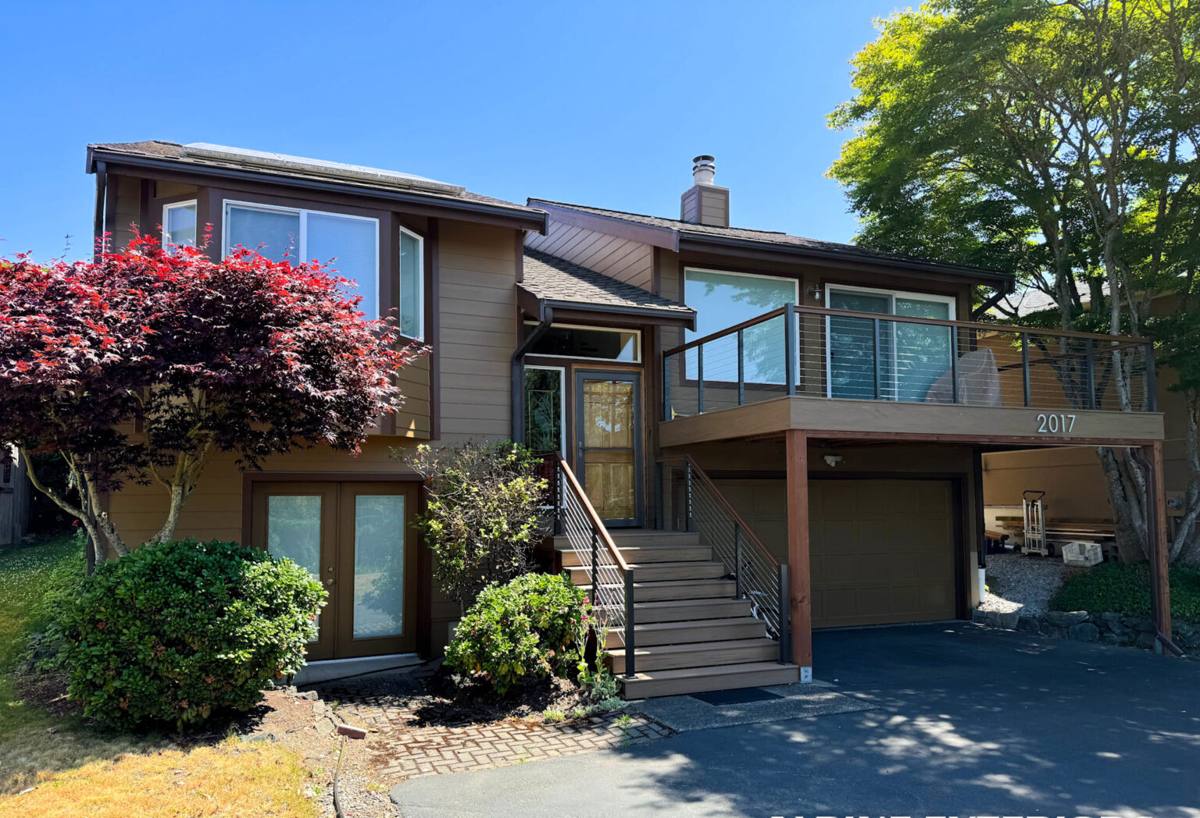
What Salt Air, Driving Rain, and Moss Season Actually Do to Windows
Every one of these climate factors attacks a window in a slightly different way, and understanding the failure mode helps explain why the fix isn't just "buy a better window."
Salt Air
Airborne salt accelerates corrosion on any exposed metal — hinge pins, balance hardware, screws, and lower-quality cladding. Once hardware starts to seize or corrode, windows get harder to open and close properly, and a window that doesn't seat correctly won't seal correctly either. Over years, that corrosion can also stain frames and sills even when the window itself is still structurally sound.
Wind-Driven Rain
A west-facing exposure means rain frequently arrives with enough wind behind it to push water sideways and upward against a wall, not just down onto a sill. That kind of exposure finds every weak point in flashing, caulking, and window-to-wall transitions. A window that would perform fine on a sheltered elevation can leak on a west-facing wall if the flashing details weren't built for that load.
Moss and Prolonged Dampness
San Juan County's long wet season keeps north- and west-facing surfaces damp for extended stretches, which is exactly what moss and mildew need to establish. On windows, that shows up as green growth in corners, on sills, and in track channels — areas that don't dry out quickly. Left alone, trapped moisture in those spots slowly breaks down sealants, wood trim, and even the finish on some clad frames.
What "Correct" Actually Means on This Job
Replacing a window is straightforward. Replacing it correctly on a home exposed to driving coastal rain is a different level of care. A correct job addresses three layers, not just the window unit itself.
1. The Water Management Behind the Window
Before a new window ever goes in, the rough opening needs proper flashing — typically a sill pan to catch and redirect any water that gets past the primary seal, plus flashing tape integrated with the home's weather-resistive barrier so water is directed out and down, never trapped behind the siding.
2. The Window Unit Itself
Glass package, frame material, and hardware all need to match the exposure. On a west-facing coastal wall, that usually means dual- or triple-pane glass with a low-E coating suited to the home's orientation, and frame hardware rated for coastal or marine-adjacent use.
3. The Finish Work
Proper shimming so the frame isn't racked, correct fastening so the window can still move slightly with seasonal expansion, and sealant applied in the right locations — not everywhere, since over-sealing can trap moisture just as easily as under-sealing.
Comparing Frame Materials for a West Beach Property
There's no single "best" frame material for every home — it depends on your budget, your home's style, and how much upkeep you want to take on. Here's how the common options stack up for this kind of exposure.
| Frame Material | Coastal/Salt Air Durability | Maintenance | Notes for This Exposure |
|---|---|---|---|
| Vinyl | Good — won't corrode or rust | Low | Reliable, budget-friendly choice; quality varies a lot between manufacturers |
| Fiberglass | Very good — stable and corrosion-resistant | Low | Handles temperature swings and moisture well; strong option for exposed elevations |
| Wood-clad | Fair to good, depends on cladding integrity | Moderate to high | Attractive interior wood look; any breach in the cladding invites moisture into the wood core |
| Aluminum | Fair — prone to corrosion unless properly treated | Moderate | Conducts heat and cold readily; generally not our first recommendation for direct salt exposure |
We'll walk through these trade-offs with you in person rather than pushing one product line — the right call depends on which elevation of your home the window is on, how much direct weather it takes, and what you're trying to match stylistically.
Signs Your Current Windows Are Costing You Money
Homeowners often wait until a window is visibly failing before calling, but there are earlier warning signs worth acting on:
- Condensation forming between the panes of a double-pane window — the seal has failed and the insulating gas is gone
- Drafts you can feel near the frame even when the window is fully latched
- Hardware that's stiff, corroded, or won't latch tight anymore
- Soft or discolored trim or sill material around the window
- Green or black growth in corners or tracks that keeps coming back after cleaning
- Noticeably higher heating bills in winter without another clear cause
Any one of these on its own might just mean a minor repair. Several together, especially on a west-facing wall, usually mean it's time to have the window and the wall assembly behind it looked at properly.
Our Process for a West Beach Window Project
We keep the process straightforward and try to minimize disruption to your home, especially since these projects open up exterior walls to the weather during the work.
- On-site assessment — we look at each window's exposure, current condition, and the flashing and sheathing behind it, not just the glass
- Honest recommendation — we tell you which windows need full replacement, which need repair, and which are fine as-is
- Product selection — we go over frame material, glass package, and finish options suited to that wall's exposure and your budget
- Scheduling around the weather — we plan installation windows around forecasted dry stretches whenever possible, since an open wall in driving rain is never ideal
- Installation with proper flashing — sill pans, flashing integration, correct shimming, and appropriate sealant, not just "pull the old one and drop in the new one"
- Final check — we confirm the window operates smoothly, seals correctly, and the surrounding trim and siding are properly closed back up
Why Local Experience on Orcas Island Matters
A crew that mostly works inland or in milder microclimates can still do competent window work — but they may not default to coastal-grade flashing details or factor in how a west-facing wall on Orcas Island behaves differently than the same wall would on a sheltered lot. Working across San Juan County properties regularly means we've seen how salt air, wind-driven rain, and moss season actually play out over years, not just how a spec sheet describes a product's rating. That shapes which materials we recommend, where we spend extra care on flashing, and what maintenance advice we give you afterward so the investment holds up.
Maintaining Your Investment After Installation
Even a correctly installed, high-quality window benefits from a little seasonal attention in this climate:
- Rinse salt residue off frames and glass periodically, especially after storms
- Check and clear weep holes so water can drain out rather than pool in the frame
- Keep gutters and nearby vegetation clear so water and organic debris aren't sitting against the window
- Address any moss or algae growth promptly rather than letting it establish
- Have hardware lubricated periodically to keep locks and hinges from seizing
None of this is intensive, but a few minutes a season goes a long way toward getting the full lifespan out of the windows and the wall assembly around them.
Get a Straightforward Estimate
If you're dealing with drafty, foggy, or hard-to-operate windows on your West Beach property, or you're planning ahead for a full replacement, we're happy to take a look and give you an honest read on what your home actually needs. There's no pressure and no pushy sales pitch — just a clear assessment and a real number. Fill out the form below to schedule a free estimate.