 Orcas Island
 Siding Built for Eastsound's Marine Climate
Eastsound sits at the head of a saltwater bay, which means homes here take on a different kind of weather stress than siding manufacturers assume in their generic installation guidance. Salt-laden air moves through the harbor and up into the surrounding hillsides year-round, driving rain comes in sideways off the water during winter storms, and the shaded, moisture-heavy pockets around mature fir and cedar cover give moss and algae a long growing season with almost no dry stretch to interrupt it. Any siding product installed here has to handle all three conditions at once, not just one of them.
James Hardie fiber cement siding is the product we install because it holds up to that combination better than the alternatives, provided it goes on correctly. This page covers what that actually means for a home in Eastsound specifically — the climate factors, the installation details that matter most here, and what our process looks like from first visit to final walk-through.
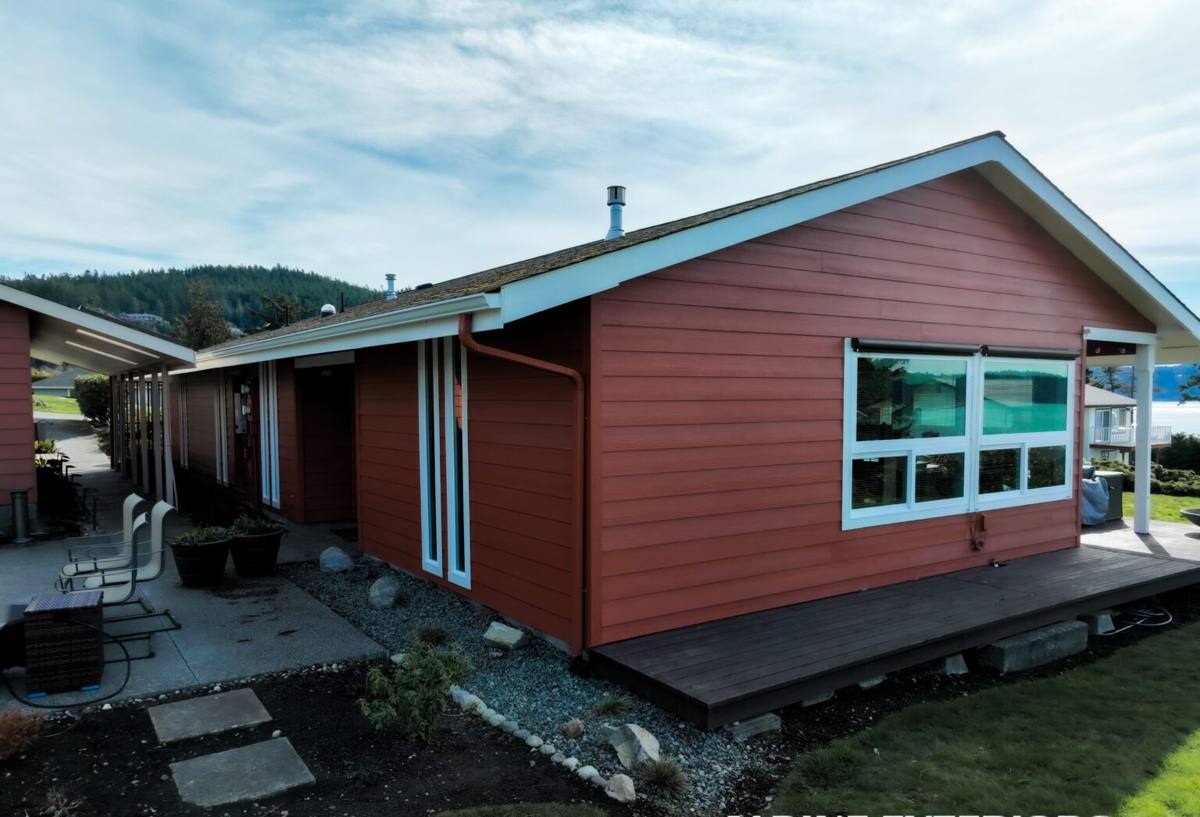
What San Juan County's Marine Climate Does to Siding
Salt Air and Corrosion
Airborne salt doesn't just affect homes directly on the waterfront. In a place like Eastsound, salt spray carries on wind gusts well inland, settling on siding, trim, and especially fasteners and flashing. Over years, that salt exposure accelerates corrosion in anything less than a high-grade, corrosion-resistant fastener and metal flashing system. Wood siding and many composite products are more forgiving of a marginal fastener choice than fiber cement is — with Hardie, using the wrong fastener in a salt-air environment can cause staining and eventual failure at every nail point, which is why fastener spec is one of the first things we lock down on any Orcas Island job.
Driving Rain
Storms coming across the Strait of Juan de Fuca and through the San Juans often arrive with real horizontal force, not just straight-down rainfall. That kind of wind-driven rain finds every gap in a siding system — behind trim, at butt joints, around windows and doors, and at any place where the water-resistive barrier wasn't lapped correctly. A siding job that looks fine on a calm day can still be failing behind the surface if the drainage plane and flashing details weren't built for sideways rain, not just vertical rain.
Moss and Algae Season
Between the tree cover common on Orcas Island lots and the extended damp season, north-facing and shaded wall sections can stay moist for months at a stretch. That's ideal growing conditions for moss and algae, which cling to porous or textured surfaces and hold moisture against the wall longer than it would otherwise sit there. Siding material, surface finish, and even how tight the coursing gaps are all affect how much of a foothold moss gets.
Why James Hardie Fits This Climate
James Hardie fiber cement is non-combustible, doesn't rot, and doesn't provide the organic material that wood-based or wood-fiber composite sidings offer moss and fungus as a food source. Its factory-applied ColorPlus finish is baked on under controlled conditions, which gives it more consistent, longer-lasting protection against UV and moisture cycling than field-applied paint. For a climate that alternates between salt spray, soaking rain, and long damp shoulder seasons, that combination matters more than it would in a drier inland market.
Hardie also engineers its product lines by climate zone. HZ5 and HZ10 formulations are built with moisture and freeze-thaw performance in mind for wetter regions, and the Pacific Northwest falls squarely into that engineering target. We spec the correct HZ line for Orcas Island jobs rather than defaulting to whatever's easiest to source.
Hardie Product Lines We Install
| Product | Typical Use | Why It Works Here |
|---|---|---|
| HardiePlank lap siding | Primary wall cladding, most common choice | Clean traditional look, wide color range, engineered for wet-climate performance |
| HardiePanel vertical siding | Modern facades, accent walls, gable ends | Fewer horizontal joints for water to find, popular on newer island builds |
| HardieShingle | Accent sections, gables, dormers | Textured look without the moisture retention of real wood shingle |
| HardieTrim boards | Corners, window and door surrounds, fascia | Matches siding durability so trim doesn't become the weak point |
What a Correct Installation Involves
Fiber cement siding is only as good as the assembly behind it. Most siding failures we get called out to inspect on Orcas Island trace back to installation shortcuts, not the material itself. A correct job includes:
- A continuous, properly lapped water-resistive barrier behind the siding, installed so every seam sheds water downward and outward
- Correct rainscreen or drainage gap where wall assembly and exposure call for it, so any water that gets behind the cladding can drain and dry rather than sit against the sheathing
- Flashing at every horizontal transition — window heads, door heads, deck ledgers, roof-to-wall intersections — installed to shed water over the layer below it, not just tucked in place
- Corrosion-resistant, Hardie-approved fasteners driven to the manufacturer's depth and placement spec, which matters even more in a salt-air environment
- Correct minimum clearance from the siding's bottom edge to grade, decking, and roofing, so splashback and standing moisture don't sit against the material
- Factory-cut and field-cut edges sealed per Hardie's specification, since an unsealed cut edge is a weak point for moisture intrusion
- Butt joints and trim gaps sized and caulked correctly rather than jammed tight, which lets the material handle normal expansion and contraction without cracking the seal
None of this is unique to Eastsound in principle — it's Hardie's published installation standard everywhere. What's different here is the margin for error. A flashing detail that's "close enough" in a drier climate can fail within a few wet seasons under Orcas Island's rain load, so we don't treat any of these steps as optional.
Our Process for an Eastsound Job
1. On-Site Assessment
We walk the exterior with you, looking at current siding condition, moisture staining, moss buildup patterns, existing flashing, and any trouble spots specific to the lot's exposure — shaded north walls, wind-exposed corners, areas near mature tree cover.
2. Tear-Off and Substrate Check
Once old siding comes off, we inspect the sheathing underneath for rot or water damage before anything new goes on. Covering up a compromised substrate is one of the most common ways a siding job fails early, and it's not something you can catch from the outside once the new siding is up.
3. Water Barrier and Flashing
We install a continuous water-resistive barrier and flash every penetration and transition before the first piece of siding goes up. This is the step that determines how the wall performs in driving rain, and it's not visible once the job is finished — which is exactly why it has to be done right the first time.
4. Siding Installation
Panels or planks go up per Hardie's fastening schedule, with attention to correct overlap, gapping, and clearances. Trim and corner details are set to shed water outward at every transition.
5. Finish and Walk-Through
We do a final check of caulking, touch-up paint at any field cuts, and clean up the site before walking the job with you.
Why a Crew That Works Orcas Island Regularly Is Worth Choosing
Working on Orcas Island comes with logistics that a mainland-based crew doesn't deal with day to day. Materials, equipment, and crews all move by ferry, which means job scheduling has to account for sailing times and weather delays that can push a barge crossing. A contractor who works the island regularly plans material staging and delivery around that reality instead of discovering it mid-project. Permitting through San Juan County also has its own timeline and requirements, and familiarity with that process keeps a project from stalling on paperwork.
There's also a practical benefit to a crew that has already seen how different Eastsound lots behave — which walls take the worst of the winter storms, which areas hold moss longest, where salt exposure is worse than it looks. That local pattern recognition shapes real decisions on the job, from flashing details to product line selection.
Maintenance Expectations After Installation
Correctly installed Hardie siding is low-maintenance, but "low" isn't "none" in this climate. A few things are worth planning for:
- Periodic gentle rinsing of north-facing and shaded wall sections to keep moss and algae from establishing, especially under tree cover
- Keeping gutters and downspouts clear so runoff doesn't concentrate against any one section of wall
- Trimming back vegetation and tree limbs that hold moisture against the siding or restrict airflow and drying
- A visual check after major winter storms for any loose trim, damaged flashing, or caulking that's pulled away
- Repainting field-cut edges or any touch-up areas if the factory finish gets scuffed during other exterior work
Cost Factors for an Eastsound Hardie Project
| Factor | Why It Matters Here |
|---|---|
| Wall exposure and complexity | More corners, transitions, and trim details mean more flashing work, which is where labor time concentrates |
| Existing substrate condition | Rot or water damage found at tear-off adds repair scope before new siding can go on |
| Product line selection | Plank, panel, and shingle products carry different material and labor costs |
| Site access and staging | Ferry-dependent material delivery and site access can affect scheduling and logistics costs |
| Trim and detail work | Window/door surrounds, corner boards, and fascia in matching HardieTrim add to scope beyond flat wall coverage |
Questions Worth Asking Any Siding Contractor
- What water-resistive barrier and flashing details will be used, and can they walk you through them before the walls are closed up?
- Which Hardie HZ product line are they specifying, and is it matched to this climate zone?
- What fastener type will be used, and is it rated for a salt-air environment?
- How will they handle substrate repair if rot is found during tear-off?
- Do they carry manufacturer certification for Hardie installation, and can they explain the warranty terms in plain language?
If you're weighing a siding replacement or new install in Eastsound, we're happy to take a look at your home, walk you through what correct James Hardie installation looks like for your specific exposure, and put together a free, no-pressure estimate. There's a form below to get that conversation started.