 Orcas Island
 Metal Roofing for Lopez Village Homes
Lopez Village sits close enough to the water that salt air is simply part of daily life, and that changes what a roof needs to survive here. Between wind-driven rain off the water, a moss season that can stretch for months under our marine cloud cover, and the slow corrosive drip of salt-laden air on anything metal, a roofing system that would be fine forty miles inland can wear out early on a home here. Metal roofing, done correctly, is one of the better answers to that combination of stresses — but "done correctly" is doing a lot of work in that sentence, and it's where most of the difference between a twenty-year roof and a forty-plus-year roof gets decided.
This page covers what metal roofing specifically means for a home in the Lopez Village area: how the local climate shapes material and detail choices, what a correct installation actually involves, and why it matters to hire a crew that already knows this stretch of San Juan County rather than one that's driving in from off-island for the first time.
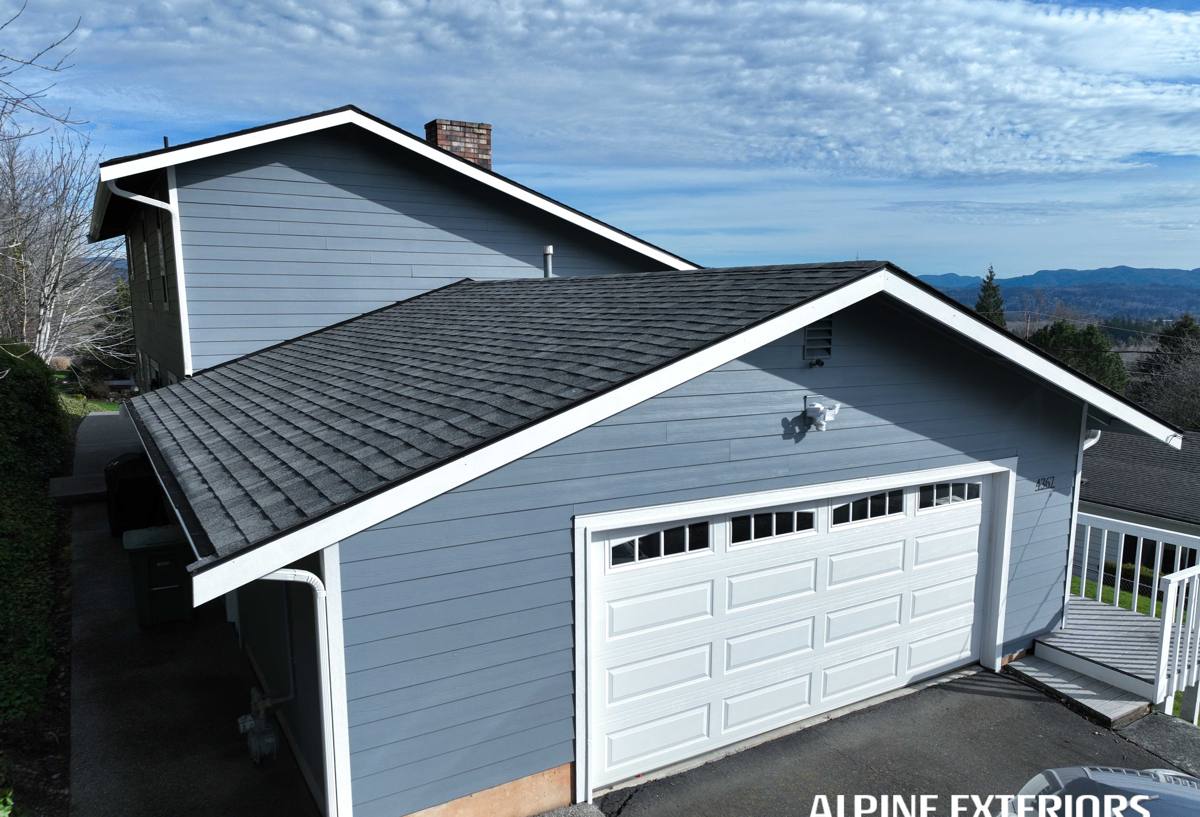
What the Local Climate Actually Does to a Roof
Salt Air and Corrosion
Airborne salt is an electrolyte. On a roof, it accelerates corrosion at any point where dissimilar metals touch, where a coating is thin or scratched, or where a fastener head is exposed to weather. This is why the specific alloy, coating, and fastener package matter more here than they would in a dry inland climate — a roof spec that's "fine" fifty miles from salt water can corrode noticeably faster a few hundred yards from it.
Driving Rain
Wind off the water doesn't just fall straight down — it drives rain sideways and up under laps, ridge caps, and penetrations that would shed water fine in a calmer climate. Every seam, flashing detail, and fastener pattern on a metal roof here has to assume rain will hit it from an angle, not just from above.
Moss and Sustained Moisture
San Juan County's long damp season and heavy tree cover give moss and lichen plenty of time to establish on any roof surface that stays consistently moist and has texture for spores to grip. Moss holds moisture against the roofing material, and on organic-surfaced roofing that moisture retention accelerates decay. Metal roofing doesn't stop moss spores from landing, but a smooth, properly pitched metal surface with good water shed gives moss far less to hold onto than a textured or granulated surface does.
Why Metal Is a Strong Fit Here — With Caveats
Metal roofing's real advantages in this climate are drainage and longevity of the surface itself: water sheds fast off a smooth panel, there's no granule layer to erode or hold moisture, and a quality coated metal roof can outlast most other roofing categories by decades. Those are genuine strengths for a Lopez Village home.
The caveat is that metal roofing is less forgiving of installation mistakes than some other roofing types. A poorly cut flashing detail, the wrong fastener in a corrosive environment, or panels installed without room to expand and contract will show problems faster on a metal roof than on some alternatives, precisely because metal moves more with temperature and has fewer redundant water paths if a single detail fails. That's the trade-off: high durability potential, low tolerance for shortcuts.
Panel and Coating Options
Not every metal roofing product handles salt air and moisture the same way. The table below compares the choices we discuss most often with Lopez Village homeowners.
| Option | How It Handles Salt Air | Maintenance | Typical Look |
|---|---|---|---|
| Standing seam, PVDF (Kynar-type) coating | Best corrosion and fade resistance available in coated steel or aluminum | Low — occasional rinse and debris clearing | Clean vertical panel lines, concealed fasteners |
| Standing seam, SMP or polyester coating | Good, but coating breaks down faster near salt air than PVDF | Low to moderate — watch for chalking over time | Same panel profile, slightly shorter coating life |
| Exposed-fastener metal panel | Adequate if fasteners and washers are matched correctly; fastener heads are the weak point | Moderate — fastener gaskets need periodic inspection | Ribbed panel look, visible screw lines |
| Aluminum panel systems | Naturally corrosion-resistant, a strong choice directly near salt water | Low | Similar to steel standing seam, slightly softer material |
For homes closest to the water, we generally steer the conversation toward standing seam with a PVDF-class coating, or aluminum, because the concealed-fastener design and coating quality both remove the weak points that salt air finds fastest.
Underlayment and Fasteners
What's under and holding the panels matters as much as the panels themselves. In this climate we default to a fully adhered, high-temp synthetic or self-adhered underlayment rather than felt, because it gives a secondary water barrier that doesn't degrade as fast in persistent moisture. Fasteners and clips get matched to the panel metal to avoid galvanic corrosion — mixing incompatible metals is one of the most common causes of early rust streaking we see on roofs that weren't installed with the salt-air environment in mind.
What a Correct Installation Involves
Assessment First
Before any material gets ordered, we look at the existing roof deck condition, the pitch, how exposed the home is to prevailing wind and rain, and where moss or moisture has been collecting historically. That assessment drives the underlayment spec, panel choice, and flashing details — it isn't a generic package applied to every roof the same way.
Deck and Ventilation
A metal roof over a damaged or under-ventilated deck will trap moisture regardless of how good the metal is. We check for soft or water-damaged sheathing and confirm the attic or roof assembly has adequate ventilation before panels go on — skipping this step is one of the fastest ways to turn a durable roof into a hidden rot problem.
Flashing and Penetrations
Chimneys, vents, skylights, and valleys are where driving rain finds its way in. Correct metal roofing installation means custom-formed flashing at every penetration and valley, not a generic trim piece caulked into place. Caulk is a backup, not a water seal.
Fastening and Panel Movement
Metal panels expand and contract with temperature swings. Fastening systems need to allow for that movement, especially on longer runs, or panels can oil-can, buckle, or work fasteners loose over time.
Our Process
- On-site assessment — deck condition, pitch, exposure, and moss or moisture history reviewed in person.
- Material and detail selection — panel type, coating, underlayment, and flashing plan matched to that specific roof and its exposure.
- Tear-off or overlay decision — based on deck condition, not a default assumption either way.
- Installation — deck repairs if needed, underlayment, panels, custom flashing, ridge and edge details.
- Final walkthrough — checking seams, fasteners, and flashing before we consider the job done.
Cost Factors
Metal roofing costs vary by panel type, coating, roof complexity, and current deck condition. Rather than quote a number that won't fit your specific roof, here's what actually moves the price:
| Factor | Why It Matters |
|---|---|
| Panel type and coating | Standing seam with PVDF coating costs more upfront than exposed-fastener panel, but lasts longer with less maintenance |
| Roof complexity | Valleys, dormers, and multiple penetrations add labor and custom flashing work |
| Deck condition | Rot or soft sheathing found during tear-off adds repair cost before roofing can proceed |
| Tear-off vs. overlay | Removing an old roof adds cost but lets us properly inspect and repair the deck underneath |
| Access and staging | Site access affects how efficiently material and equipment can be staged |
We walk every roof and give a written estimate based on what we actually find, not a phone-quoted average.
Homeowner Maintenance Checklist
A metal roof needs less upkeep than most, but "less" isn't "none." A few habits go a long way in this climate:
- Clear leaves, needles, and debris from valleys and gutters each fall, before wet weather sets in
- Walk the roofline visually a couple times a year and note any moss or dark streaking starting to form
- Check that gutters and downspouts are draining freely, since standing water near roof edges accelerates both corrosion and moss growth
- Have flashing around chimneys, skylights, and vents inspected periodically rather than waiting for a leak to show up inside
- Trim back overhanging branches that keep sections of roof shaded and damp longer than the rest
Why a Crew That Already Works Lopez Village Matters
Working on the islands isn't the same as working on the mainland. Material has to be ordered and staged around ferry schedules, weather windows for tear-off work are narrower, and a crew that already knows the local supply chain and typical exposure conditions on this part of San Juan County can plan a job realistically instead of guessing. A contractor who hasn't worked island jobs before can underestimate how much salt exposure, wind-driven rain, and moss pressure actually affect material choice and detailing here — and that shows up years later as premature corrosion or leaks, not on installation day.
We also carry the accountability of being a name homeowners in this area can actually check on — not a crew that installed one roof and left. That matters when a flashing detail needs a look five years down the road.
Get a Free, No-Pressure Estimate
If you're considering metal roofing for a home in the Lopez Village area, we're happy to come take a look, walk you through what your specific roof needs given its exposure and condition, and give you a straightforward written estimate — no pressure, no generic quote over the phone. Use the form below to get started.