 Orcas Island
 Olga's Siding Takes a Different Kind of Beating
Olga sits on the east side of Orcas Island, close enough to the water that salt-laden air is a daily fact of life, not an occasional nuisance. Add San Juan County's long wet season, the driving rain that comes sideways off the water during winter storms, and the shade from mature evergreens that keeps north- and east-facing walls damp for weeks at a time, and you get a set of conditions that are genuinely harder on exterior siding than what most mainland contractors deal with. A siding repair here isn't the same job as a repair in a dry inland town — it has to account for salt, moisture, and moss all working on the wall at once.
We repair siding on Orcas Island regularly, and Olga's homes show a consistent pattern: damage concentrates on the sides of the house that face prevailing weather and on the shaded sides that stay wet longest. A repair that only patches the visible spot without understanding why that spot failed tends to fail again within a season or two.
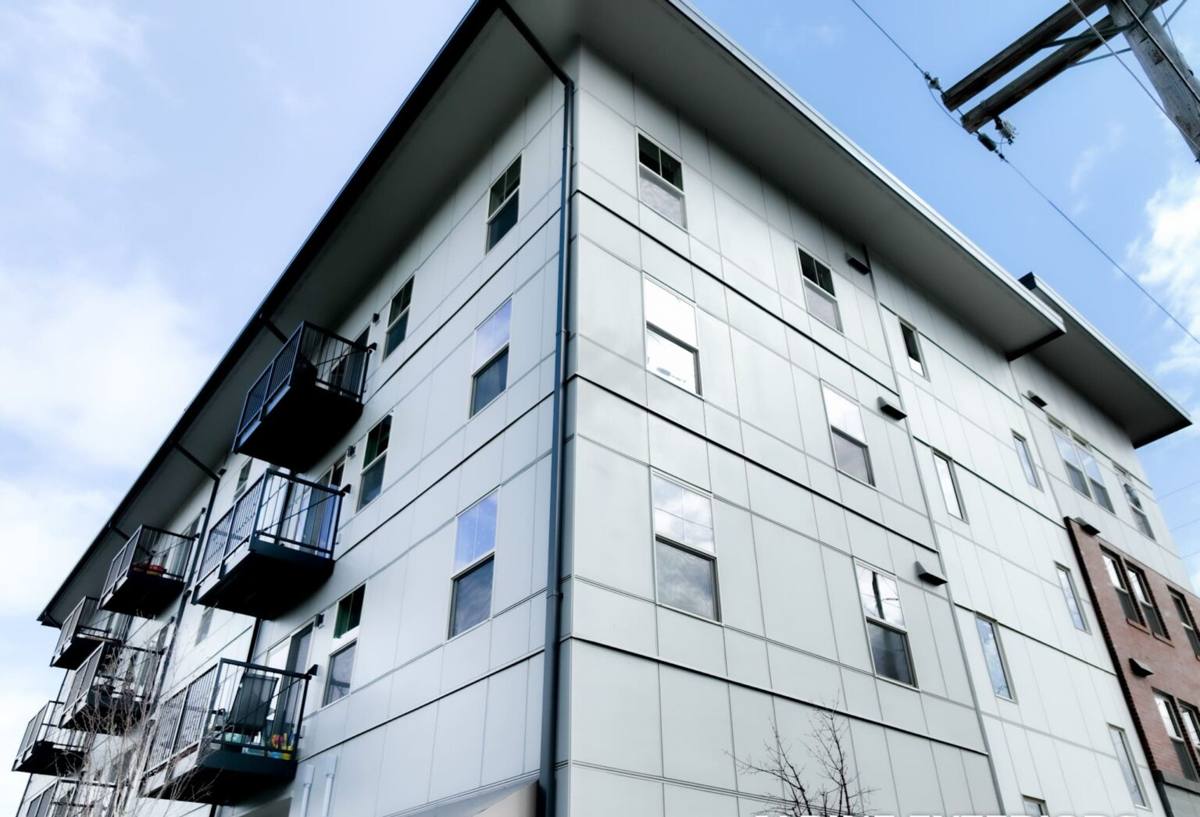
Signs Your Olga Home Needs Siding Repair
Most siding problems on the island start small and get dismissed as cosmetic. By the time they're obvious from the driveway, there's usually already moisture behind the wall. Walk your exterior and look for:
- Soft or spongy spots when you press on the siding, especially near the bottom courses or around window trim
- Persistent moss or dark green-black staining that keeps returning after cleaning
- Cracked, bubbled, or peeling paint, particularly on shaded or north-facing walls
- Visible swelling, delamination, or a puffy edge along seams or butt joints
- Corroded or rust-streaked fasteners, trim, or flashing
- Gaps opening up at caulk lines around windows, doors, or corner boards
- A musty smell or visible mold on the interior side of an exterior wall
Any one of these is worth a closer look. Several of them together usually mean water has been getting behind the siding for a while, not just sitting on top of it.
What's Actually Causing the Damage We See
Salt Air and Fasteners
Salt air accelerates corrosion on anything metal — nails, screws, flashing, even the metal drip caps above windows. Once a fastener corrodes, it loses its grip, siding starts to work loose, and small gaps open up that let water in behind the panel. This is one of the most common root causes we find when a "cosmetic" repair turns out to be a structural one.
Driving Rain and Wall Orientation
Orcas Island storms don't just fall straight down — wind pushes rain sideways into walls, especially on exposures that face open water or a clearing in the trees. Water finds its way in at butt joints, around penetrations, and at any spot where caulking has failed, then travels behind the siding before it shows up as a stain or soft spot somewhere else entirely.
Moss, Shade, and the Long Wet Season
Wooded lots keep walls shaded and slow to dry. Moss and algae take hold on siding that stays damp, and beyond looking bad, that constant moisture film keeps the substrate wet longer after every rain, which is exactly the condition that leads to rot in wood-based products and finish failure in others.
Repair vs. Replacement: How We Make the Call
Not every problem needs a full re-side, and we don't push a bigger job than a home actually needs. The honest answer depends on how far the damage has spread and what the siding is made of.
| Situation | Usually a Repair | Usually Replacement |
|---|---|---|
| Damage location | Isolated to one or two wall sections | Spread across multiple exposures |
| Cause | Failed caulking, a single bad fastener run, minor impact damage | Long-term moisture intrusion, widespread rot or delamination |
| Underlying sheathing | Dry, sound | Soft, stained, or previously repaired |
| Age and material | Newer Hardie siding, damage from a specific event | Aging wood, LP, or vinyl nearing end of service life |
| Color match feasibility | Matching ColorPlus finish or panels available | Discontinued color or product no longer manufactured |
We'll always tell you plainly which category your home falls into before we quote anything.
What a Correct Siding Repair Actually Involves
1. Find the Source, Not Just the Symptom
We start by figuring out why the damage happened, not just where it's visible. That means checking flashing above and below the affected area, inspecting caulk joints, and in some cases pulling a board to look at what's happening behind it. A patch over an unresolved leak just buys you a shorter interval before the next repair call.
2. Remove Damaged Material Cleanly
Rotted, swollen, or corroded sections come out entirely — we don't skim-coat or caulk over a compromised panel. Fasteners are replaced with corrosion-resistant hardware appropriate for a salt-air environment, not whatever was on hand.
3. Correct the Water Path Before Re-Covering
This is the step that separates a durable repair from a temporary one: flashing gets corrected or added where it was missing, house wrap or weather barrier is patched properly, and joints are sequenced so water sheds outward instead of behind the wall.
4. Match Materials and Finish
Because we only install James Hardie fiber cement, repair panels come from the same manufacturer system as the rest of the wall whenever possible, and we do our best to match the existing ColorPlus finish or profile. When an exact factory match isn't available, we'll tell you honestly what your options are — a close match, a field-painted section, or a slightly larger repair scope to keep the wall looking uniform.
5. Seal and Inspect
Final caulking, touch-up, and a walk-through so you know exactly what was done and why.
Why We Only Use James Hardie for Repairs
We don't install or repair-in-kind with LP SmartSide, vinyl, Cemplank, Allura, primed spruce, or cedar. That's a standard we hold across every job, including small repairs, and it's worth explaining why. Wood-based products like cedar and LP SmartSide are more vulnerable to the exact conditions Olga throws at siding — sustained moisture and shaded, slow-drying walls — because their core material can swell, delaminate, or rot when water gets past the finish. Vinyl handles moisture fine but can crack in cold snaps and fades unevenly over time, which makes color-matching a repair years later nearly impossible. James Hardie's fiber cement is non-combustible and doesn't have an organic core to rot, and the factory-baked ColorPlus finish holds up better against UV and salt exposure than field-applied paint. For a marine climate like this one, Hardie's HZ5 product line is engineered specifically for wetter, humid regions — which is exactly the environment San Juan County sits in. When we repair a wall, we want confidence that the material we're putting back is going to outlast the next repair call, not just get us to the next one.
Cost Factors for Siding Repair in Olga
Every repair is different, but the price generally depends on a handful of factors rather than square footage alone:
| Factor | Why It Matters |
|---|---|
| Extent of hidden damage | Rot found behind the siding once it's opened up adds scope |
| Access and site conditions | Steep lots, tree cover, and limited equipment access affect labor time |
| Color and profile matching | Discontinued colors may require a larger repair area for a uniform look |
| Flashing and trim work needed | Correcting the actual water path takes more time than a cosmetic patch |
| Material and equipment delivery | Island logistics can affect lead time on specific product runs |
We'll always give you a firm, itemized number before work starts — never a vague estimate that grows once the wall is open.
Our Process for Olga Homeowners
We schedule inspections around ferry timing and island logistics as a matter of course, so a repair visit isn't held up by something outside your control. The process is straightforward: an on-site inspection to diagnose the actual cause, a written scope and price, scheduling that accounts for weather windows (repairs go faster and hold up better when they're not rushed between rainstorms), and a final walkthrough once the work is done.
Why a Crew That Already Works Olga Matters
Getting a contractor to Orcas Island at all takes planning — ferry schedules, ordering the right materials ahead of time, and being familiar enough with San Juan County's permitting and any applicable design guidelines that a repair doesn't turn into a scheduling headache. A crew that already works this island knows which walls in this specific area tend to fail first, keeps compatible Hardie materials in inventory instead of special-ordering for every small job, and isn't guessing at how the local climate behaves. That familiarity shows up in fewer surprises and repairs that are diagnosed correctly the first time.
If you're seeing soft spots, recurring moss staining, or open joints on your Olga home, we're happy to take a look and give you a straight answer about what's going on and what it will take to fix it right. Request a free, no-pressure estimate using the form below.