 Orcas Island
 Building New on Shaw Island Means Building for the Weather From Day One
Shaw Island sits out in San Juan County's open water and wind, and that shapes every decision on a new build — windows included. A new-construction window install is your one chance to get the water management right before the siding goes on and everything gets buried. Get it wrong here and you're not dealing with a caulk touch-up in five years, you're dealing with rot behind a wall that was only closed up once.
Three things define what a window has to survive on this island: salt-laden air off the water that slowly attacks metal fasteners, hardware, and unprotected finishes; driving, wind-pushed rain that hits window openings sideways instead of straight down, which means gravity alone won't keep water out; and a long moss and mildew season where shaded, damp elevations stay wet for weeks at a stretch. None of that is exotic — it's just what a marine climate does over years, and it's why we treat every opening as a system, not a hole with a window dropped into it.
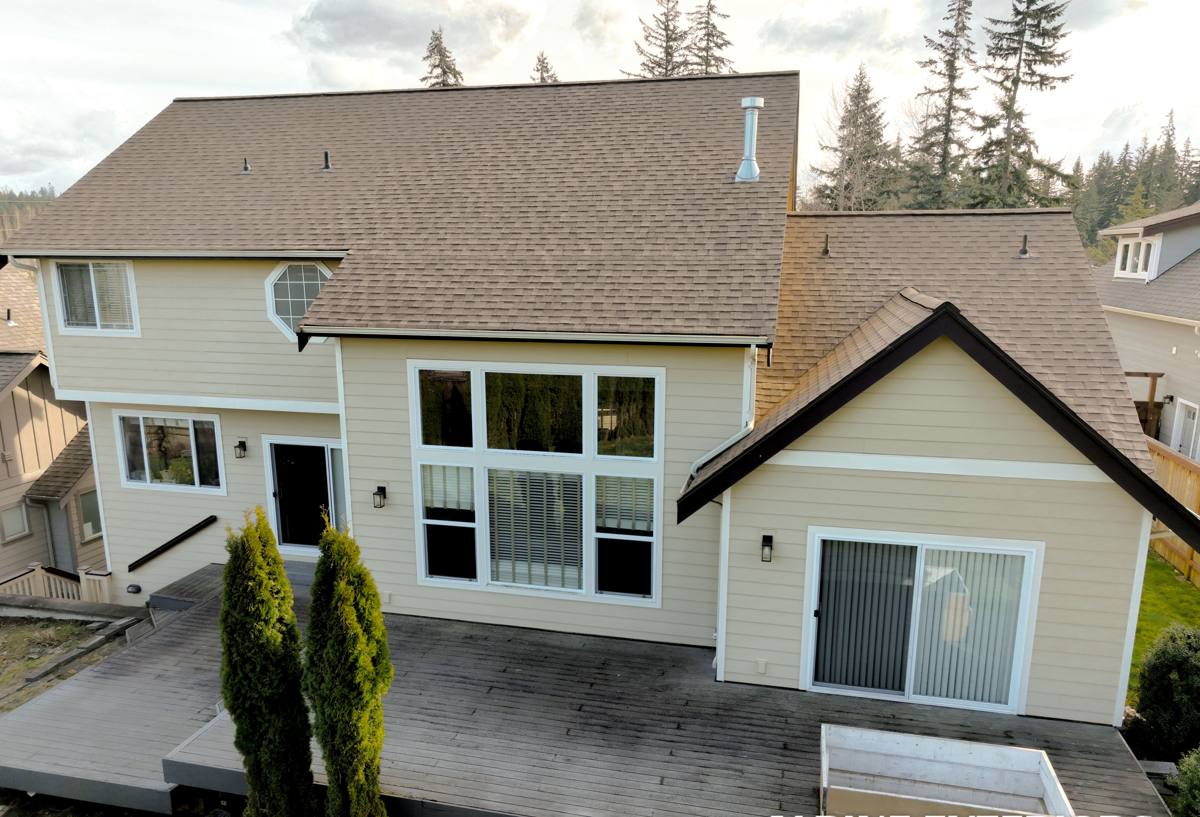
New-Construction vs. Replacement — Why the Approach Is Different
People sometimes assume "new-construction window" just means a window that happens to be new. It's actually a specific type of install tied to how the house is built. New-construction windows have a nailing flange (fin) around the perimeter that gets fastened directly to the sheathing and integrated with the weather-resistive barrier (WRB) before siding or trim goes over it. That's different from a pocket or "replacement" window, which fits inside an existing frame with the exterior trim left in place.
On a new build, we have full access to the rough opening, the sheathing, and the WRB — which is the whole advantage. It means we can build a proper flashing sequence in the correct shingle-lap order (pan flashing, then sides, then window, then head flashing, then WRB lapped over the top) instead of working around finished trim. Done right, water that reaches the opening is directed back out, not into the wall cavity. That sequence matters more here than in a drier climate, because Shaw Island openings see more wind-driven rain events per year than most of the state.
What a Correct New-Construction Install Includes
- Sloped sill pan flashing under every opening, so any water that gets past the window drains out, not into the framing
- Weather-resistive barrier integrated in proper shingle-lap order — never taped flat over a butted seam
- Head flashing or a drip cap above the window, lapped under the WRB above it
- Corrosion-resistant fasteners rated for coastal/marine exposure, not standard interior-grade hardware
- A continuous, compatible sealant bead at the nailing fin — no gaps, no incompatible caulk-to-tape combinations
- Shimming and squaring checked before fastening, so the sash operates smoothly for the life of the window
- Sealants and flashing tapes chosen to be compatible with the specific siding and trim going over them
- Photos of the flashing and WRB integration taken before siding closes the wall — so there's a record of what's actually behind it
Choosing a Window Frame That Holds Up to Salt Air
Frame material matters more on an island than it does a few miles inland. Salt air accelerates corrosion on unprotected metal components — hinges, cranks, screws — and it can dull or pit some finishes faster than a standard warranty anticipates. Here's how the common options actually perform in that environment, in plain terms:
| Frame Material | Salt Air / Moisture Behavior | Maintenance | Fit for New Construction Here |
|---|---|---|---|
| Vinyl | Does not corrode; UV and coastal-grade formulations resist fading better than standard grades | Low — occasional cleaning | Strong value option, wide availability |
| Fiberglass | Excellent — dimensionally stable, doesn't corrode or rot, handles temperature swings well | Low | Best long-term durability for exposed elevations |
| Wood / Wood-clad | Attractive but needs a sound exterior cladding and finish; end grain and joints are vulnerable if detailing is off | Higher — finish upkeep, especially on weather-facing sides | Works with disciplined maintenance and good overhangs |
| Aluminum | Conducts cold and can corrode without a marine-grade finish; hardware needs corrosion-resistant coating | Moderate | Usually reserved for specific architectural applications, not general use |
We don't push one brand or material on every job — the right call depends on the elevation, the architectural style of the house, and the owner's tolerance for upkeep. What we do insist on is corrosion-resistant hardware and fasteners regardless of frame material, because that's the part that actually fails first in salt air.
Orientation and Glazing — Not Every Wall Faces the Same Weather
On a new build we can plan window performance by elevation instead of treating the whole house the same. The side facing open water or prevailing wind takes the brunt of driving rain and salt spray; a sheltered, tree-shaded elevation takes more sustained dampness and is where moss and mildew take hold first. That difference should influence glazing selection and detailing:
- Low-E, argon-filled glazing is standard on most new builds now for energy performance, and it also helps reduce condensation on cooler, damp days
- Tempered glass is required by code in specific locations — near doors, low sills, and certain wet areas — and we flag those during the design/framing stage, not after the windows are ordered
- Weather-facing elevations benefit from tighter attention to sealant detail and, where the design allows, generous roof overhangs that keep driving rain off the face of the window
- Shaded, damp elevations benefit from finishes and frame materials that won't hold moisture against the surface, since that's where moss and mildew establish fastest
Timing With the Build Schedule
New-construction windows go in at a specific point — after the house is framed and sheathed, WRB is on, but before siding starts. Ordering too late stalls the whole exterior crew; ordering too early without final rough-opening dimensions confirmed risks a mis-sized unit. We coordinate directly with the general contractor or builder on timing so windows show up when the wall is actually ready for them, not sitting in a garage taking up space or holding up the schedule.
Our Process on a Shaw Island New-Construction Job
- Plan review and site visit. We walk the framed structure, confirm rough openings against the window schedule, and flag any elevation that needs extra attention for wind or exposure.
- Material and logistics planning. Windows, flashing tape, and fasteners are ordered and staged with enough lead time to account for ferry schedules — getting materials to the island isn't instant, so we plan around it rather than around it going wrong.
- Flashing and WRB integration. Sill pans, side flashing, the window itself, and head flashing go in in the correct order, fully integrated with the weather barrier.
- Fastening and sealing. Corrosion-resistant fasteners, continuous sealant beads, and a squareness/operation check on every unit.
- Documentation. Photos of the flashing detail before siding covers it, so there's a record for the homeowner and the builder.
- Final walkthrough. We check operation, weatherstripping contact, and trim readiness before handing the wall off to the siding crew.
What Drives the Cost on a New-Construction Window Package
| Factor | Why It Moves the Price |
|---|---|
| Number and size of openings | More glass and larger units mean more material and labor per opening |
| Frame material | Fiberglass and premium wood-clad units cost more up front than standard vinyl |
| Glazing package | Upgraded Low-E coatings, gas fills, and tempered glass where required add cost |
| Architectural complexity | Bays, custom shapes, and non-standard sizes take more flashing detail and labor time |
| Site access and logistics | Ferry-dependent delivery and staging on a smaller island adds scheduling and freight considerations most mainland jobs don't have |
We won't quote a per-window number without seeing the plans, but we're upfront that island jobs carry real logistics costs that a mainland estimate wouldn't include — and we build that into the estimate rather than surprising anyone mid-project.
Why It Matters That We Already Work Shaw Island
Shaw Island is small, ferry-served, and doesn't have the density of on-island trades or suppliers that you'd find on the mainland or even on Orcas or San Juan Island. A crew that hasn't worked out here before is learning the logistics on your project's schedule — ferry timing, limited on-island staging space, and coordinating deliveries around sailing schedules instead of just driving a truck to the site. We've built that coordination into how we plan and price jobs out here, so materials and crew show up when they're supposed to, not stranded on a dock waiting for the next sailing.
We're also familiar with San Juan County's permitting and inspection process for new construction, which keeps the paperwork side of the job from becoming its own delay. And because we've seen how salt air, wind-driven rain, and moss actually behave on homes out here over multiple seasons, our window and flashing choices aren't theoretical — they're based on what holds up in this specific environment.
Living With New Windows in This Climate
A correctly installed window on a new build should need very little from you for years — but a few habits extend that further, especially given the salt air and moss season:
- Rinse salt residue off exterior frames and hardware periodically, especially on water-facing elevations
- Keep gutters and nearby drainage clear so runoff isn't sheeting down across window heads
- Check and clear moss or debris buildup on sills and sashes on shaded elevations before it holds moisture against the frame
- Have sealant joints inspected every few years — sealant is a wear item, and catching a failed bead early is a five-minute fix instead of a wall problem
If you're planning a new build or an addition on Shaw Island and want windows installed by a crew that already understands the exposure, the logistics, and the flashing detail this climate demands, we're glad to walk the plans with you. Reach out for a free, no-pressure estimate using the form below.