 Orcas Island
 Roof Repair Built for San Juan Island's Marine Climate
Homes on San Juan Island and throughout the Orcas Island area deal with a roofing environment that's tougher than most mainland contractors realize. You've got salt-laden air coming off the water, long stretches of driving rain in the fall and winter, and a moss season that can run eight months out of the year under the tree cover so many island properties sit under. A roof repair here isn't just patching a leak — it's addressing whatever combination of moisture, organic growth, and metal corrosion actually caused the problem, so it doesn't come back next winter.
We work on roofs across San Juan County, and the failure patterns we see on San Juan Island and Orcas Island are consistent enough that we can usually spot the root cause before we're even off the ladder. That local pattern recognition is worth something — it's the difference between a repair that lasts and one that's a temporary fix for a symptom.
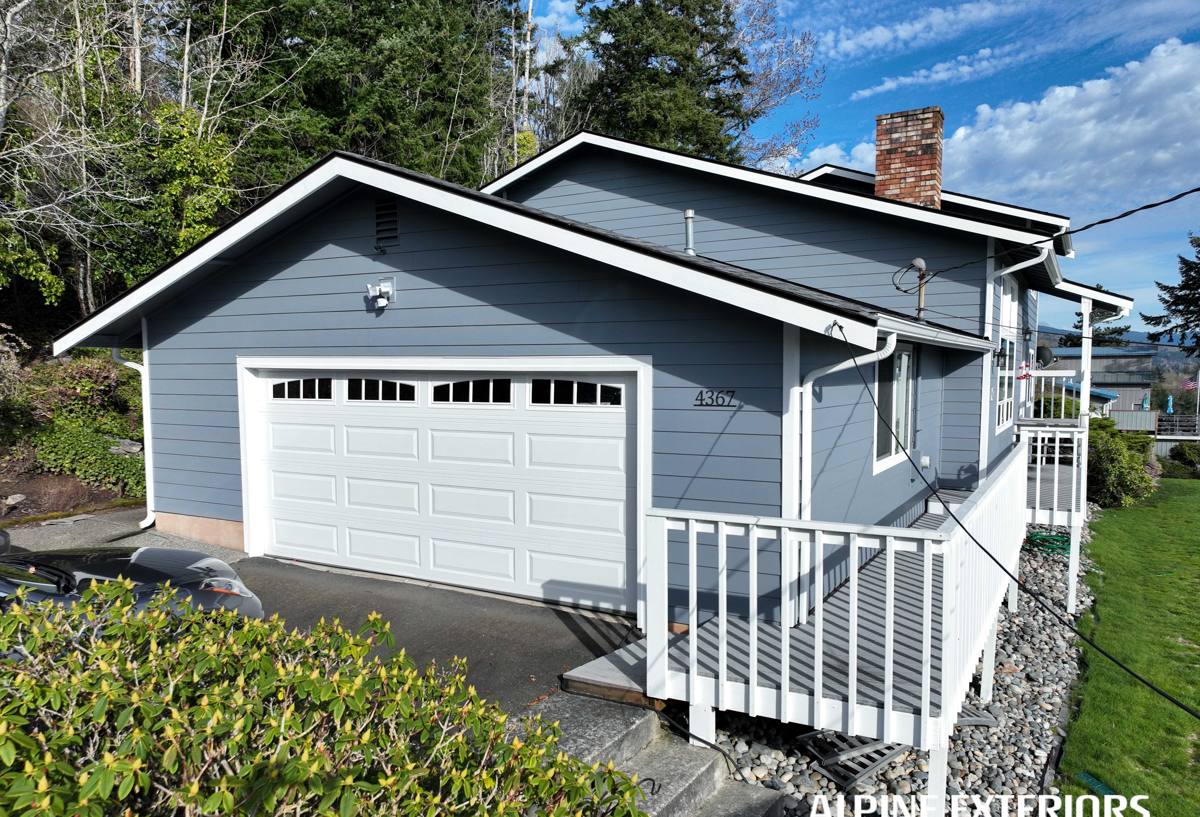
Why San Juan County Roofs Fail Differently
Salt Air and Metal Fatigue
Flashing, fasteners, and gutter systems corrode faster this close to saltwater. Galvanized fasteners that would last two decades inland can start rusting through in under ten years out here, and once a fastener head corrodes and loosens, water finds its way underneath the roofing material. We see this most often around chimneys, skylights, and valley flashing — the metal-to-metal and metal-to-shingle transitions where a repair has to actually seal, not just cover.
Moss, Shade, and Trapped Moisture
San Juan Island's tree canopy is part of what makes the island beautiful, and it's also what keeps a lot of roofs shaded and damp for most of the year. Moss doesn't just look bad — its root structure lifts shingle edges and holds water against the roofing surface long after a storm has passed. Left unchecked, that moisture works its way under the shingle mat, into the underlayment, and eventually into the decking itself. By the time you see a stain on an interior ceiling, the moisture has usually been active for a while.
Driving Rain and Wind-Driven Water
Storms coming off the Strait of Juan de Fuca and the Salish Sea don't just drop rain straight down — wind pushes it sideways, under shingle tabs, around poorly sealed penetrations, and into any gap in the flashing. A repair that would hold up fine in a calm-weather climate can fail here simply because it wasn't detailed for wind-driven water.
What a Correct Roof Repair Actually Involves
A lot of "roof repair" on the islands amounts to smearing sealant over a visible crack and calling it done. That buys a season, maybe two, before the same spot fails again. We approach it differently:
- Find the real entry point — water often travels along the decking before it drips through, so the stain inside rarely marks the actual leak location outside.
- Assess the decking — if moisture has been sitting long enough to soften the plywood or sheathing, patching the surface without addressing the deck just delays a bigger repair.
- Replace, don't just reseal, damaged flashing — sealant is a backup, not a primary water barrier; corroded or bent flashing needs to be replaced with material rated for coastal exposure.
- Match materials correctly — mismatched shingle types, colors, or ages in a repair area age differently and can create new leak points at the seams.
- Clear and treat moss before closing up the repair — sealing a repair over active moss growth just traps the moisture problem under new material.
Typical Roof Repair Scope by Issue
| Issue | What It Usually Involves | Rough Cost Factor |
|---|---|---|
| Isolated shingle damage | Remove and replace damaged shingles, inspect underlayment beneath | Lower — small material scope |
| Flashing failure (chimney, valley, skylight) | Remove old flashing, inspect decking, install new corrosion-resistant flashing | Moderate — labor-intensive, precise detail work |
| Moss-related lifting and granule loss | Soft-wash treatment, shingle assessment, spot replacement | Moderate — depends on extent of moss damage |
| Soft or rotted decking under a leak | Cut out and replace decking sections, then re-roof that area | Higher — structural repair, not surface-level |
| Fastener corrosion / widespread nail pops | Re-fasten or replace affected sections with upgraded hardware | Moderate to higher — depends on roof age and access |
These are broad categories, not quotes — every roof and every leak is different, and the only way to give an honest number is to actually get on the roof and look.
Repair vs. Replacement: How We Help You Decide
Not every roof problem on San Juan Island needs a full replacement, but not every leak should be chased with repairs indefinitely either. We look at a few honest factors before recommending either direction:
- Age of the roofing material relative to its expected service life in a marine climate (which tends to run shorter here than manufacturer ratings assume for milder inland climates)
- How many separate repair areas exist and whether they're isolated or spread across the whole roof
- Condition of the decking underneath — widespread soft spots usually tip the scale toward replacement
- Whether the roofing material itself is still available or compatible for a clean patch
If a targeted repair genuinely solves the problem, that's what we'll recommend — we're not in the business of selling a full roof to a homeowner who needs a $400 flashing fix.
Our Roof Repair Process
1. Inspection
We start on the roof, not just under it. We're checking flashing, fastener condition, moss coverage, granule loss, and the general age and wear pattern of the roofing material, cross-referenced against where the interior symptoms are showing up.
2. Diagnosis and Written Scope
You get a clear explanation of what's actually causing the leak or damage, what we recommend to fix it, and why — not a vague line item. If decking replacement is needed, we'll tell you before we start, not after we've already opened up the roof.
3. The Repair Itself
We remove and replace only what's damaged, using materials suited to coastal exposure — corrosion-resistant fasteners and flashing, and shingle or roofing material matched as closely as possible to what's already on the roof. Moss and organic debris get cleared from the work area before we close anything up.
4. Cleanup and Walkthrough
We clear debris, check gutters and downspouts near the repair area for moss and granule buildup, and walk the work with you so you know exactly what was done and what to watch for going forward.
Preventing the Next Leak
A repair fixes what's already failed. A little seasonal attention keeps the next leak from starting. For San Juan Island and Orcas Island homes specifically, we tell clients to watch for:
- Moss buildup along shaded roof sections, north-facing slopes, and anywhere tree limbs overhang the roofline
- Granule accumulation in gutters, which signals accelerated shingle wear
- Rust streaking below flashing or fasteners — an early sign of metal corrosion before it becomes a leak
- Soft or spongy spots when walking the roof (or visible sagging from the ground)
- Gaps or lifted edges around chimneys, skylights, and vent pipes after a hard windstorm
Catching these early, especially before the wet season sets in, is almost always cheaper than waiting for an active leak.
Why It Matters That We Already Work San Juan Island
Getting a crew and materials to San Juan Island isn't as simple as driving across town — it involves ferry scheduling, weather windows, and logistics that a mainland-based contractor either underestimates or passes along to you as delay and added cost. Because we already work throughout San Juan County, we're not treating your repair as a one-off special trip. We know which failure patterns show up on which parts of the island, we know what materials actually hold up against the salt air here, and we're not learning the local climate at your expense.
We also understand that island homeowners can't always get a second or third contractor out easily to double-check a diagnosis. That's exactly why we're straightforward about what we find, what it will take to fix, and what it won't — no upsell, no scare tactics, just an honest read on your roof.
Materials We Recommend for This Climate
We lean toward roofing and flashing materials with a track record in marine, high-moisture environments — corrosion-resistant metal flashing over standard galvanized where budget allows, quality architectural shingles rated for wind and moisture exposure, and proper ventilation details that reduce the trapped condensation which feeds moss and mildew growth. We're glad to walk through the trade-offs of any material with you, including maintenance burden and how each option actually performs once it's been through a few island winters, not just what the spec sheet promises.
If you've got a leak, a soft spot, or just want an honest read on how much life your San Juan Island or Orcas Island roof has left, we're happy to take a look. Fill out the form below for a free, no-pressure estimate.