 Orcas Island
 Why Olga's Marine Climate Is Hard on Ordinary Siding
Olga sits on the water in San Juan County, and that location cuts both ways. The view is part of why people live there, but the same marine exposure that makes the setting beautiful is steadily working against whatever cladding is on the house. Salt-laden air moves off the surrounding water and settles on exterior surfaces year-round. Driving rain off Puget Sound and the Strait of Georgia hits homes at an angle, not just straight down, which pushes water into seams and laps that a calmer climate would never test. And the tree cover that gives island properties their privacy also keeps siding shaded and damp for long stretches, which is exactly what moss needs to take hold.
None of this is exotic weather. It's steady, low-grade exposure that adds up over years. Siding that would perform fine in a drier inland town in Washington can start showing problems on Orcas Island in half the time, especially on the sides of a house that face open water or stay shaded most of the day. That's the backdrop for every siding decision we make on an Olga project, and it's why we install one product system rather than offering a menu of options that aren't built for this exposure.
What Salt Air, Rain, and Moss Actually Do to a House
Salt Air and Surface Breakdown
Airborne salt is mildly corrosive and mildly abrasive at the same time. On metal fasteners and trim it accelerates rust. On painted or coated surfaces it breaks down finishes faster than inland UV exposure alone would. Over several seasons, a coating that isn't formulated to resist it starts chalking, fading unevenly, and losing adhesion at the edges first — which is usually where water gets in.
Driving Rain and Wind-Driven Moisture
Rain that comes in sideways doesn't behave like rain that falls straight down. It finds horizontal laps, butt joints, and any gap around trim and works its way behind the cladding rather than running off the face of it. If the siding, the flashing, and the water-resistive barrier behind it aren't all doing their job together, moisture gets trapped in the wall assembly where you can't see it until there's already damage.
Moss and Trapped Moisture
Moss doesn't just look bad — it holds water against the surface it's growing on. On shaded, north-facing, or tree-covered walls in Olga, moss and algae can establish within a couple of seasons on a surface that stays damp. That constant moisture film is what shortens the life of paint, primer, and in some cases the substrate underneath.
Why We Install Only James Hardie Fiber Cement
We standardized on James Hardie for the entire company, and jobs like Olga are a big part of why. Fiber cement doesn't rot, it doesn't feed moss the way wood fiber can, and it's non-combustible. More specifically, Hardie's HZ5 product line is engineered for climates with sustained moisture exposure and freeze-thaw cycling — which describes the San Juan Islands better than most of the country. The ColorPlus factory finish is baked on under controlled conditions rather than applied on-site, which gives it more consistent adhesion and UV resistance than field-applied paint, and it comes with its own finish warranty separate from the product warranty on the siding itself.
We're not going to tell you every other siding product is worthless — that's not honest and it's not our call to make about products we don't install. What we will say is that after years of doing exterior work in this climate, the maintenance burden, moisture behavior, and long-term appearance of fiber cement built for wet marine conditions made the decision straightforward for us. We'd rather install one product system correctly, every time, than offer several and hope each one holds up.
Choosing the Right Hardie Product for an Olga Home
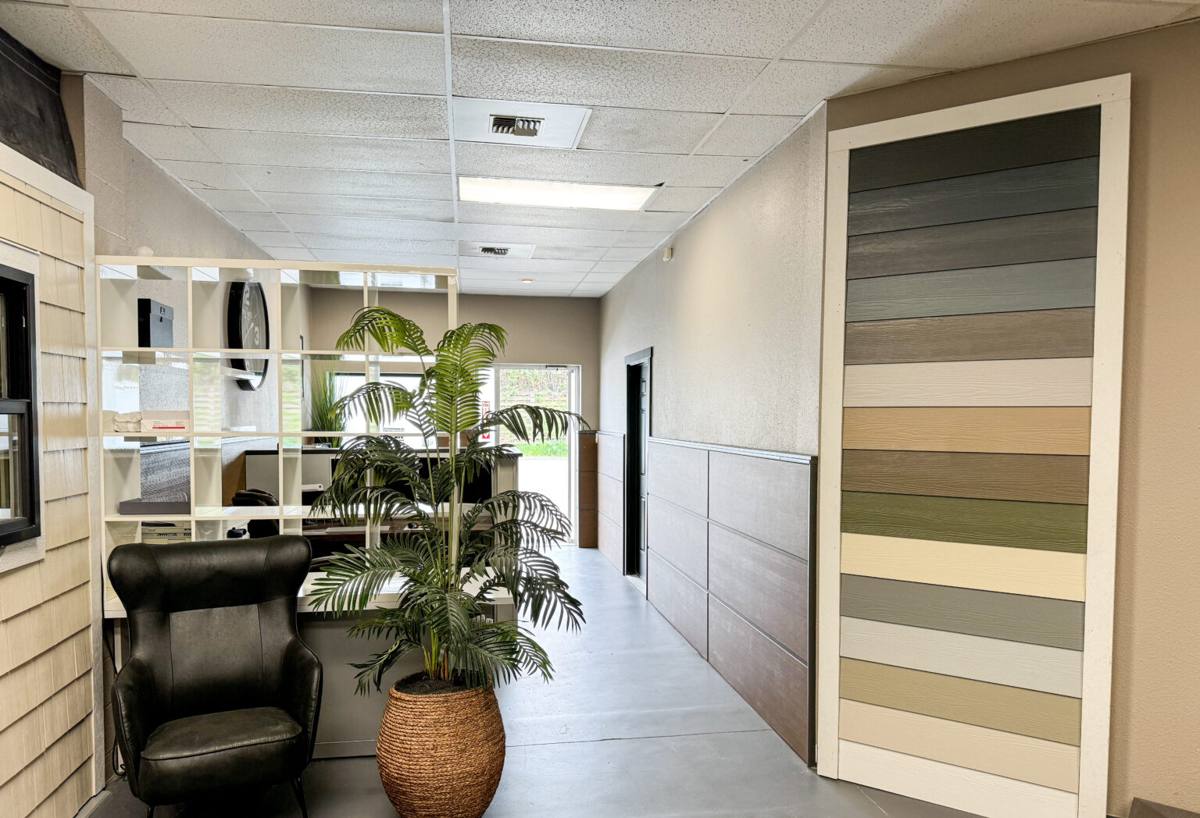
James Hardie makes several product lines, and the right one depends on the style of the house and which elevations take the worst weather. Most Olga projects end up using a combination rather than a single product across the whole exterior.
| Product | Typical Use | Why It Fits This Climate |
|---|---|---|
| HardiePlank lap siding | Primary field siding on most elevations | Clean horizontal lines, wide color range, handles wind-driven rain well when lapped and fastened correctly |
| HardieShingle | Accent gables, dormers, or a full shingle-style home | Reads like traditional cedar shingle without the moisture uptake or moss-friendly surface of real wood |
| HardiePanel | Modern vertical siding, board-and-batten looks | Fewer horizontal laps for water to catch on, popular on contemporary island builds |
| HardieTrim | Corners, window and door casing, fascia | Matches the siding's moisture resistance so trim doesn't become the weak point |
For water-facing or heavily shaded walls specifically, we default to HZ5-rated material and pay closer attention to caulk joints and flashing details than we would on a more sheltered elevation.
What a Correct Installation Actually Involves
Fiber cement is only as good as the installation behind it. Hardie's own warranty is conditioned on following their installation instructions, and in a climate like Olga's, cutting corners here is where problems start. A correct job includes:
- Proper clearance between the bottom of the siding and grade, decks, and roof lines so water can't wick up into the boards
- A continuous, correctly lapped weather-resistive barrier behind the siding, with flashing integrated at every window, door, and penetration
- Fastener placement and spacing that matches Hardie's spec for the exposure zone, not a generic pattern
- Factory-cut and field-cut edges sealed per Hardie's instructions before installation, not painted over afterward
- Caulking used only where Hardie specifies it — not as a substitute for proper flashing and lapping
- Butt joints and seams treated with the correct sealant and technique so they don't become entry points for driving rain
- Touch-up done with Hardie's matched ColorPlus touch-up product, not a generic exterior paint that won't age the same way
Any one of these done wrong won't necessarily show up right away. It shows up two or three winters later as a stain, a soft spot, or a seam that's opened up — usually on the wall that takes the worst weather, which on an Olga property is often the side facing open water.
Our Process From Estimate to Finished Job
We start with an on-site walk of the house, not a phone estimate, because the condition of the wall behind the existing siding matters as much as what's visible from the driveway. If there's old siding coming off, we check the sheathing and framing underneath for rot or moisture damage before anything new goes up — replacing siding over a damaged wall just locks the problem in. From there we plan material and color, account for the elevations that take the worst rain and sun, and schedule the work around a weather window that gives us dry conditions for the install.
Material logistics for Orcas Island jobs take more planning than a mainland project — deliveries have to be coordinated around ferry schedules, and we account for that in the timeline we give you upfront rather than letting it become a surprise delay mid-project. Once the crew is on-site, the job runs in the same sequence every time: tear-off and inspection, moisture barrier and flashing, siding installation elevation by elevation, trim, caulking, and a final walk-through before we call it done.
What Drives Cost on an Olga Siding Project
Every house is different, but the same handful of factors move the price up or down on most projects we quote in this area.
| Factor | Why It Matters |
|---|---|
| Tear-off and disposal of existing siding | Adds labor and disposal cost, and can reveal wall damage that needs repair before new siding goes on |
| Sheathing or framing repair | Moisture damage found during tear-off has to be fixed before installation — this is common on older, water-facing homes |
| Home size and elevation count | More square footage and more complex rooflines mean more cuts, more flashing detail, and more labor |
| Product mix | A single lap-siding elevation costs less than a house combining lap, shingle accents, and panel siding |
| Color and finish | Standard ColorPlus colors versus premium or custom-matched finishes affect material cost |
| Site access and logistics | Waterfront or steep-lot access, plus ferry-dependent delivery, can add time to a project |
We give a written estimate that breaks these out so you can see what you're actually paying for, rather than a single lump number.
Why a Crew That Already Works Orcas Island Matters
Siding work on the islands isn't the same logistical exercise as siding work in a mainland subdivision. A contractor who hasn't worked here before has to learn the ferry schedule, figure out material staging, and guess at how the local moisture and shade patterns will affect a given wall — usually on your project, on your timeline. A crew that already works San Juan County has that figured out before your estimate is even written. We know how to plan deliveries around the ferry, how to sequence a job around the weather this area actually gets, and which elevations on an island home typically need the closest attention to flashing and drainage.
Many properties on Orcas Island also fall under shoreline or environmentally sensitive area rules through San Juan County's permitting process. We're not going to pretend to be land-use attorneys, but knowing that these considerations exist, and building them into project planning early, is part of what "local" actually means for a contractor here — it's not just about being nearby.
Caring for Hardie Siding After Installation
Correctly installed Hardie siding is low-maintenance, not zero-maintenance, especially in this climate. A yearly rinse with a garden hose or low-pressure wash removes the salt film and discourages the moss and algae growth that shaded, damp walls are prone to here. It's worth walking the exterior once a year to check caulk joints for cracking and to make sure trim and vegetation aren't holding moisture against the siding — trimming back branches and shrubs that shade a wall constantly goes a long way toward keeping that side of the house dry enough to stay clean.
If you're planning a siding project in Olga or elsewhere on Orcas Island, we're happy to walk the house with you, look at what's there now, and give you a straightforward, no-pressure estimate for what a Hardie installation would involve for your specific property.