 Orcas Island
 Why Siding Fails Faster in Deer Harbor
Deer Harbor sits on the west side of Orcas Island, close enough to the water that salt-laden air reaches most homes in the area year-round, whether they're right on the shoreline or set back in the trees. Add in San Juan County's long, wet winters and the deep tree cover that keeps many Deer Harbor lots shaded and damp for months at a time, and you've got three separate forces working against your siding at once: salt, water, and moss. None of them cause dramatic, obvious damage overnight. They work slowly, at seams, laps, and fastener points, until a homeowner notices a soft spot, a stain, or a section that just looks tired next to the rest of the house.
That slow-failure pattern is exactly why siding repair in this area is a different job than siding repair somewhere dry and inland. The damage is rarely isolated to the spot you can see. If we're called out for a repair on a Deer Harbor home, we're checking the surrounding field for the same conditions that caused the original problem, because salt air and moss don't stop at the edge of one board.
The Three Things Working Against Your Siding
Salt Air
Airborne salt accelerates corrosion on anything metal — nails, flashing, trim fasteners — and it's abrasive to painted and coated surfaces over time. On a waterfront or near-waterfront property, that means fastener corrosion and finish breakdown show up years earlier than they would on an inland home in the same county.
Driving Rain
Storms off the water don't just fall straight down — wind-driven rain gets pushed sideways into laps, corner boards, and anywhere caulk or flashing has started to fail. Water that gets behind siding and can't dry out is the single biggest cause of rot and hidden damage we find on repair calls.
Moss and Shade
Tree-covered lots hold moisture against the wall longer after every rain. Moss and algae take hold in shaded, damp areas, and beyond looking bad, a moss mat holds water against the siding surface continuously — which is worse for the material underneath than an occasional soaking.
Signs Your Deer Harbor Home Needs a Siding Repair
- Soft, spongy, or crumbling siding when you press on it, especially near the bottom edge or around windows
- Visible cracking, splitting, or buckled panels
- Dark staining or streaking that doesn't wash off, particularly under eaves or in shaded corners
- Moss or algae buildup that keeps returning even after cleaning
- Paint or finish that's peeling, chalking, or bubbling in specific spots rather than evenly across the wall
- Gaps opening up at seams, corner boards, or trim where caulk has failed
- Rusty streaks below fastener heads
- Soft trim or window casings adjacent to the siding
Any one of these on its own might be minor. Several showing up in the same area, or the same symptom repeating in more than one spot, usually means water has been getting behind the siding for a while and the visible damage is only part of the story.
What a Correct Repair Actually Involves
A lot of "siding repair" in this region amounts to caulking a crack and painting over a stain. That buys a season, maybe two, but it doesn't address why the damage happened, and on a Deer Harbor property exposed to salt air and driving rain, the same spot usually fails again — often worse the second time because water has continued working behind the surface the whole time.
A repair done right starts with finding out what's actually happening behind the siding, not just what's visible on the surface. That means:
- Pulling the damaged section to inspect the house wrap, flashing, and sheathing underneath — not just patching over what's visible
- Checking whether the damage is isolated or part of a wider moisture pattern along that wall
- Confirming flashing and water-shedding details are correct before new siding goes back on — a repair over bad flashing just fails again
- Replacing damaged fasteners rather than driving new ones into corroded holes
- Matching the replacement material and finish so the repair doesn't stand out as a patch
- Re-sealing and re-flashing to current best practice, not just recreating what was there before
Skipping the inspection step is the most common shortcut in siding repair, and it's the one that costs homeowners the most in the long run — because the rot or moisture source that caused the visible damage is still there, just covered up again.
Common Repair Scenarios We See in the Deer Harbor Area
| Symptom | Likely Cause | What the Fix Requires |
|---|---|---|
| Soft or rotted siding near the bottom of a wall | Splash-back, poor grade slope, or failed caulk letting water track down | Remove and inspect sheathing, correct drainage path, replace affected boards |
| Cracking around window and door trim | Failed sealant joints, wood movement, or original installation gaps | Re-flash openings, replace trim as needed, reseal with proper materials |
| Persistent moss on north-facing or shaded walls | Limited sun exposure and slow drying after rain | Clean surface, address any material breakdown underneath, treat ongoing moisture exposure |
| Rust streaking below fasteners | Salt-air corrosion of original fastener material | Replace with corrosion-resistant fasteners rated for coastal exposure |
| Buckled or warped panels | Trapped moisture behind the siding with no way to dry out | Remove panel, verify house wrap and ventilation, replace with correctly installed material |
Our Repair Process
- On-site assessment. We look at the damaged area and the surrounding field, checking for signs the problem extends beyond what's visible.
- Explain what we find, in plain terms. You'll know whether it's a contained repair or something that points to a bigger moisture issue, before any work starts.
- Open it up. We remove the damaged section to inspect flashing, house wrap, and framing underneath — this is the step that gets skipped in a quick patch job, and it's the one that matters most.
- Correct the root cause. Bad flashing, missing kick-out details, or failed sealant gets fixed as part of the repair, not left in place under new siding.
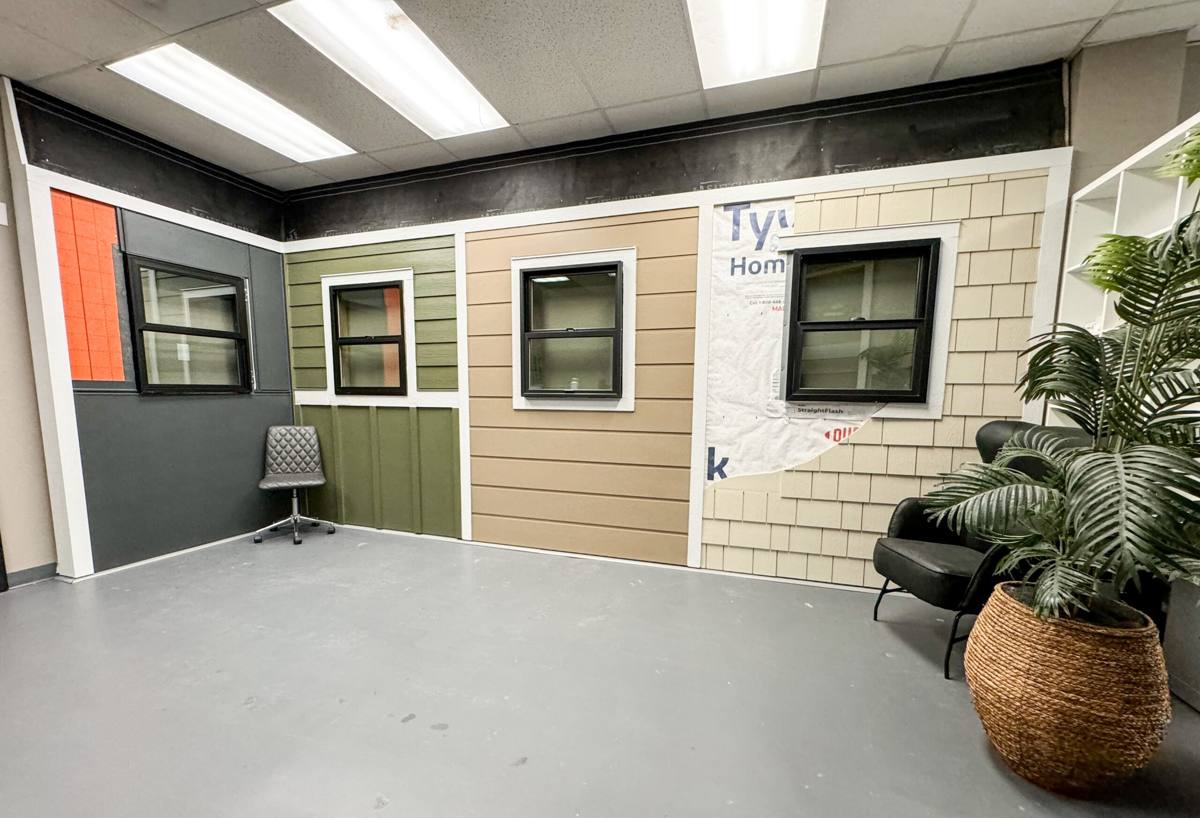
- Match materials and finish. We use Hardie fiber cement product and factory-matched ColorPlus finish so the repair blends into the existing wall rather than reading as a patch.
- Final seal and cleanup. Proper caulking, fastener placement, and a clean job site when we're done.
Repair or Replace? What Actually Drives That Decision
Not every damaged section needs a full re-side, and not every repair is worth doing instead of replacement. The honest answer depends on how widespread the damage is and what's causing it.
| Factor | Favors Repair | Favors Full Replacement |
|---|---|---|
| Extent of damage | Isolated to one wall or a few sections | Recurring across multiple walls or elevations |
| Underlying material | Original siding still sound elsewhere, good remaining life | Siding is at or past its expected service life |
| Cause | A specific, fixable source (one bad flashing detail, one impact) | Systemic exposure issue (long-term moisture, widespread moss, old cedar or engineered wood nearing end of life) |
| Material match | Current siding is a product we can still match closely | Discontinued color, product, or a material we don't work with |
| Cost over time | Lower upfront cost, addresses the immediate problem | Better long-term value when damage is widespread |
We'll tell you honestly which side of that table your house falls on. A lot of Deer Harbor homes we look at genuinely only need a targeted repair — we're not in the business of recommending a full re-side when it isn't warranted.
Why We Repair With James Hardie Fiber Cement — and Nothing Else
We only install James Hardie fiber cement siding, and that includes repair work. It's not a matter of preference on our part — it's about what holds up to the conditions this part of San Juan County throws at a house. Fiber cement doesn't rot, and it isn't a food source for the moss and algae that thrive in the shaded, damp spots common around Deer Harbor. It handles salt air and driving rain without the ongoing maintenance burden that wood siding or primed products carry in this climate.
There's also a practical reason it matters specifically for repairs: color and texture match. Hardie's ColorPlus factory finish is consistent and traceable, which means a repaired section can be matched to the surrounding wall far more closely than a field-painted patch on a different material ever will. We're not going to repair a Hardie wall with a different product, and we're not going to install a patch material we wouldn't stand behind as a full installation — a repair is still our work on your house, and it gets the same standard.
Why Hiring a Crew That Already Works Deer Harbor Matters
Access on Orcas Island isn't the same as access on the mainland. Ferry schedules, narrow roads, and property layouts around Deer Harbor's wooded and waterfront lots all affect how a repair job gets scheduled and staged. A crew that already works this area knows how to plan around that instead of losing a day to logistics that a mainland contractor wouldn't anticipate.
More importantly, a crew that's repaired siding across San Juan County has already seen how salt air, moss, and driving rain actually damage a house here — not in general, but in this specific climate. That's the difference between a repair that's guessing and a repair that's diagnosing.
Get an Estimate
If you're seeing soft spots, staining, cracking, or persistent moss on your Deer Harbor home's siding, we're glad to take a look. We'll give you a straight answer on whether it's a contained repair or something bigger, with no pressure either way — request a free estimate using the form below.