 Orcas Island
 Rosario sits on the water side of Orcas Island, and that location shapes everything about how windows perform there. Homes here take a steady diet of salt-laden air, wind-driven rain off the strait, and long stretches of shaded, damp weather that keeps moss and algae established on north- and west-facing surfaces most of the year. Windows are one of the first things to show that wear — through failed seals, swollen sashes, corroded hardware, and finishes that chalk out years ahead of schedule. Custom window work in Rosario has to account for that from the start, not patch around it later.
Why Rosario's Exposure Is Different
San Juan County's marine climate is mild in temperature but unforgiving in moisture. Rosario's position near the water adds a salt component that inland Orcas properties don't deal with as much — airborne salt accelerates corrosion on metal hardware, cladding fasteners, and lower-grade window frames. Combine that with driving rain that comes in sideways during fall and winter storms, and you get water intrusion problems that show up not at the glass but at the transitions: sill pans, flashing laps, and the joint between the window frame and the wall assembly.
Tree cover around many Rosario properties adds another layer. Shade and moisture together mean moss and algae get a long growing season on window trim, sills, and anything with a horizontal surface for spores to settle on. None of this makes windows impossible to keep in good shape — it just means the products, the installation detail, and the maintenance rhythm all need to be chosen with this specific exposure in mind, not a generic Pacific Northwest average.
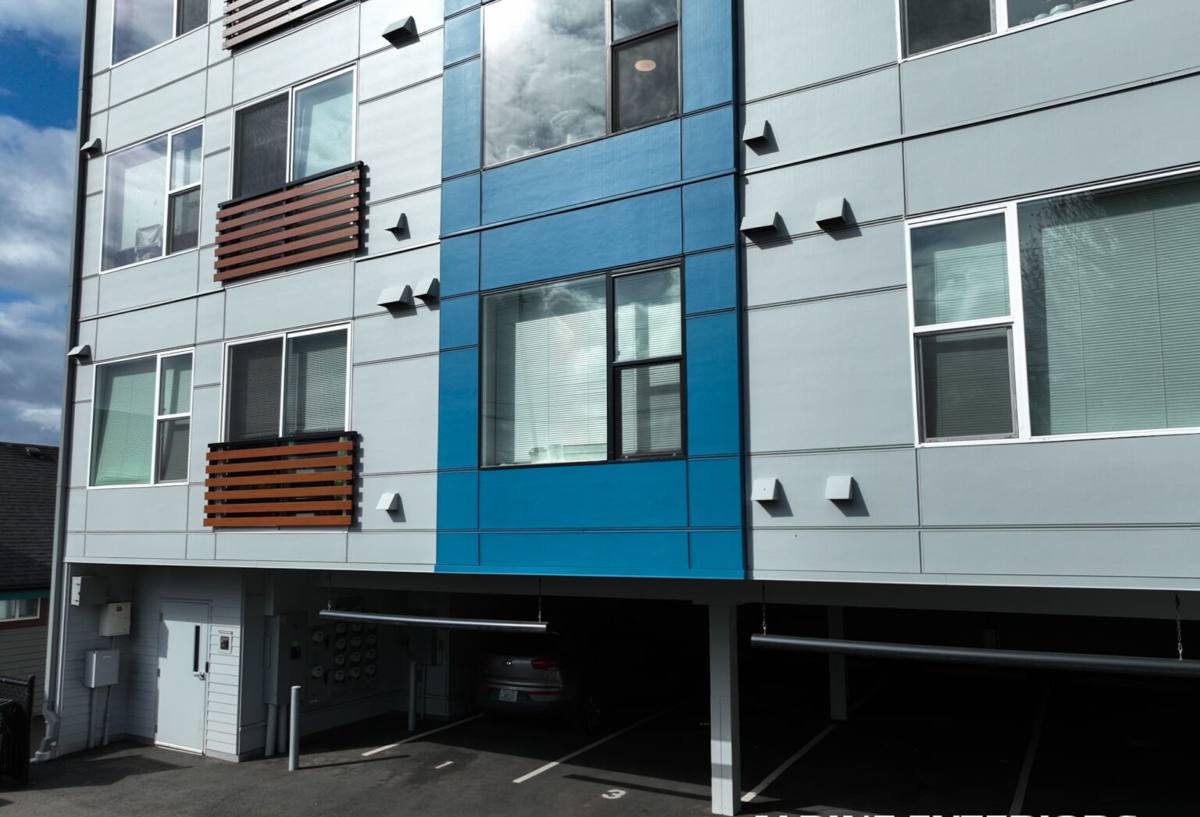
What a Correct Custom Window Job Actually Involves
"Custom" windows means the unit is built to the exact rough opening, style, and performance spec of the house rather than pulled off a shelf in a standard size. On older Orcas Island homes — and Rosario has plenty of them — openings are rarely perfectly square or a stock dimension, so custom sizing is often the only way to get a window that actually seals correctly without cutting into the structure.
A correct installation is at least as important as the window itself. We see failures on this island that trace back to the same handful of shortcuts:
- No sill pan or sloped sill flashing, so any water that gets past the window sits against wood framing instead of draining out
- Housewrap or building paper lapped the wrong direction over the flashing, feeding water behind the wall instead of shedding it
- Backer rod and sealant skipped or under-filled at the exterior trim joint, leaving a gap for wind-driven rain to find
- Shims left uninsulated, creating a cold spot that condenses moisture inside the wall cavity
- Hardware and fasteners that aren't rated for coastal exposure, so they start rusting within a couple seasons
Every one of those is avoidable with the right sequence and the right materials. None of them show up as a problem on day one — they show up two, five, or ten winters later as rot, stains, or a window that won't latch anymore.
Choosing a Frame Material for Rosario's Conditions
There's no single "best" window material — the right choice depends on how exposed the opening is, how much maintenance the homeowner wants to do, and the look of the house. Here's how the common options hold up specifically against salt air, driving rain, and moss-prone shade:
| Frame Material | Salt Air Resistance | Moisture Behavior | Maintenance |
|---|---|---|---|
| Vinyl | Good — won't corrode | Handles moisture well; won't rot | Low; occasional cleaning to keep moss/algae off sills |
| Fiberglass | Very good — stable and non-corroding | Excellent dimensional stability in wet, swinging humidity | Low; holds paint or finish well over time |
| Aluminum-clad wood | Depends on cladding quality; exterior is protected, wood core is not | Good if seals stay intact; risk is at joints and corners | Moderate; watch clad seams and interior wood finish |
| Solid wood | Poor without diligent upkeep near salt air | Prone to swelling, checking, and rot if finish fails | High; needs regular refinishing, especially in shaded, damp spots |
On exposed Rosario sites facing open water or prevailing storm direction, we lean toward vinyl or fiberglass for the sash and frame, since they don't give salt air and standing moisture anything to corrode or rot. On more sheltered lots, or where the homeowner wants a wood interior look, clad or wood windows can still work — they just need tighter installation detailing and a realistic maintenance plan going in.
Glass and Weatherstripping
Double-pane glazing with a quality low-E coating is the practical standard here — it manages heat loss through the long, cool Orcas Island shoulder seasons and cuts glare off the water without needing anything exotic. Weatherstripping matters more than people expect on a windy point like Rosario; a compression seal that's held its shape is the difference between a window that stays quiet and dry in a January storm and one that whistles and weeps at the corners.
Our Process for Custom Window Projects in Rosario
We treat every window opening on the water side of the island as its own problem to solve, not a repeat of the last job. The process looks like this:
- On-site assessment — we check the existing opening, framing condition, current flashing (or lack of it), and how exposed that specific wall is to wind-driven rain and salt spray.
- Accurate measurement and ordering — custom units are built to the real opening, not a rounded-off stock size, which matters on older Rosario homes with settled or slightly out-of-square framing.
- Removal and inspection — once the old window is out, we look at the sill and rough opening for hidden rot or past water damage before anything new goes in. This is often where problems that caused the original failure get found.
- Flashing and drainage detail — sloped sill pan, correctly lapped housewrap, and flashing tape sequenced so water always has a path out, never in.
- Installation and air-seal — window set plumb and square, shims insulated, backer rod and sealant at the exterior trim joint sized for the gap, not just smeared over it.
- Final check — operation, latch, and seal tested before we call it done.
Signs a Rosario Home Needs Window Work
Homeowners on this side of the island usually notice one of these before anything else:
- Sashes that stick, drag, or won't latch fully — often from swelling, warping, or corroded hardware
- Visible staining or soft wood at the interior sill or exterior trim
- Persistent fogging between panes, meaning the seal has failed and the insulating gas has escaped
- Moss or algae building up on the sill or lower sash faster than it can be cleaned off
- A draft or cold spot near the window even when it's fully closed and latched
- Paint or finish failing on the frame well before it should, especially on north- or west-facing units
Any one of these is worth a look before it turns into a framing repair. Water problems at a window almost always get more expensive the longer they sit, since the damage is happening inside the wall where it isn't visible yet.
Living With Salt Air and Moss Season
Even a well-installed, well-chosen window benefits from a little seasonal attention in this climate. A rinse of salt residue off frames and glass a few times a year keeps it from etching into finishes or accelerating corrosion on hardware. Keeping sills and trim clear of moss and organic buildup — rather than letting it sit and hold moisture against the surface — goes a long way toward protecting paint, caulk joints, and wood trim through Orcas Island's wet months. None of this is heavy maintenance, but skipping it entirely is how a ten-year window turns into a five-year window.
What Affects the Cost of a Custom Window Project
| Factor | Why It Matters in Rosario |
|---|---|
| Frame material | Vinyl and fiberglass generally cost less upfront and less to maintain than clad or solid wood in salt-air exposure |
| Opening condition | Rot or damage found at removal adds framing repair before the new window can go in correctly |
| Number and size of openings | Larger view windows facing the water often cost more per unit and take more care to flash properly |
| Access and site conditions | Some Rosario properties have limited equipment access, which affects labor time |
| Glazing package | Upgraded low-E coatings or tempered glass where code requires it add cost but improve comfort and durability |
We give a broad range up front based on a walkthrough, then a firm number once we know the actual condition of each opening — surprises at removal are the main reason estimates move, and we'd rather flag that possibility early than low-ball a number that changes later.
Why Hiring a Crew That Knows Rosario Matters
A window installer who mostly works drier, inland sites can do a technically fine job and still get the flashing detail wrong for a property that takes direct wind-driven rain off the water. The failure modes we see most on Rosario homes — corroded hardware, rot at the sill, seals that let go early — trace back to installation choices that don't account for salt air and sustained moisture. Working across San Juan County day to day means we're not guessing at how a given wall or exposure behaves; we've seen how it plays out over years, not just at the walk-through.
If you're weighing a repair against a replacement, or just want an honest read on what your current windows are doing, we're happy to take a look. Reach out for a free, no-pressure estimate — the form below gets you started.