 Orcas Island
 Why Orcas Island Decks Wear Differently
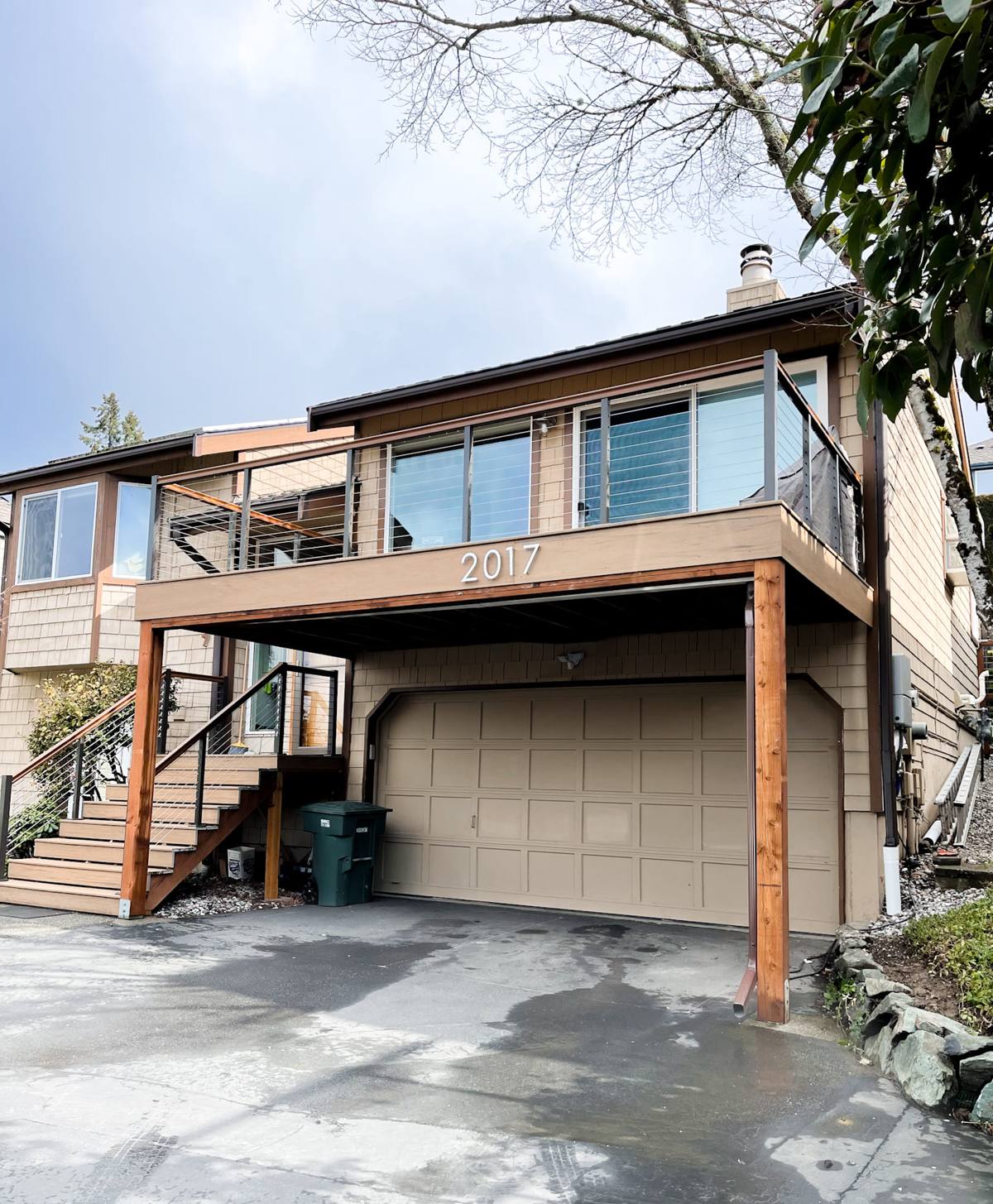
A deck on Orcas Island doesn't age the way a deck in a dry inland climate does. Between the marine air coming off the water, the long stretch of wet months San Juan County sees every fall through spring, and the shade cover that a lot of island lots have from evergreens, decks here are under near-constant moisture pressure for a good chunk of the year. Add salt-laden air into the mix and you get a faster corrosion rate on fasteners and hardware than most manufacturers' warranty language assumes. None of this means a deck on Orcas Island is doomed — it means the repair and maintenance approach has to account for conditions that a generic mainland playbook doesn't cover.
We work on decks around Orcas Island regularly, and the patterns repeat: ledger boards that trapped moisture against the house, fastener corrosion before the wood itself was ready to fail, moss and algae buildup that held water against boards long after a storm passed, and railings or stair stringers that loosened because the connection hardware gave out first. Understanding those patterns is most of what separates a repair that lasts from one that reopens the same problem in two years.
What the Climate Actually Does to a Deck
Salt Air and Metal Fasteners
Airborne salt accelerates oxidation on any exposed metal — nails, screws, joist hangers, bolts, and railing brackets. On a lot of older decks, the fasteners were never rated for coastal exposure to begin with, so what looks like a solid deck on the surface can have compromised connections underneath. Corroded fasteners don't just look bad; they lose holding strength, which is a structural issue, not a cosmetic one.
Driving Rain and Water Intrusion
Wind-driven rain finds its way into places vertical rain never would — under flashing, behind ledger boards, into end grain on cut boards, and through gaps where railings meet the deck surface. Once water gets past the surface, it doesn't dry out quickly in a marine climate, and that sustained dampness is what actually rots wood, not a single storm.
Moss, Algae, and the Long Wet Season
San Juan County's wet season runs long, and shaded or north-facing decks can stay damp for weeks at a stretch. Moss and algae hold moisture directly against the board surface, which softens wood fibers over time and makes the deck surface slicker and more slip-prone. A deck that looks merely dirty is often further along in moisture damage than it appears.
Signs Your Deck Needs Repair, Not Just Cleaning
- Boards that feel spongy, springy, or noticeably softer underfoot in specific spots
- Visible gaps, cracking, or splintering concentrated around fastener locations
- Rust streaks bleeding out from screws, nails, or brackets
- Railings or posts that wiggle, shift, or feel less rigid than they used to
- Persistent dark staining or moss that comes back quickly after cleaning
- A ledger board area (where the deck meets the house) that looks discolored or swollen
- Stair stringers or treads that flex or feel uneven when you walk them
Any one of these on its own might be minor. Several at once, especially around the ledger or structural framing, usually means it's time for an actual inspection rather than a pressure wash and a coat of stain.
What a Correct Deck Repair Actually Involves
Assessment Before Anything Else
We start by checking the structural connections first — ledger board attachment, joist hangers, post bases, and railing anchoring — because those are the parts that matter most for safety and are also the parts homeowners can't easily inspect themselves. Surface wear gets addressed too, but it's secondary to confirming the frame underneath is sound.
Fastener and Hardware Upgrades
Where we find corroded or undersized fasteners, we replace them with hardware rated for coastal, high-moisture exposure. This is one of the most overlooked parts of deck repair — putting new boards on old, corroded hardware just resets the clock on the same failure.
Board Replacement Done Right
Rotted or split boards get replaced individually where possible, matched to the surrounding material, with attention to proper spacing for drainage and airflow. Tight, no-gap board spacing looks clean on day one but traps water on a deck that sees this much rain — it's a common mistake we correct when we find it.
Ledger Board and Flashing Repair
If the ledger connection to the house shows water damage, we address the flashing and waterproofing there directly rather than just patching the visible wood. This is the single most common source of hidden rot we find on Orcas Island decks, because it's the one place water is guaranteed to run toward the house.
Railing and Stair Structural Checks
Railings and stairs take more repeated stress than most of the deck surface, and they're a safety item, not a cosmetic one. We check post attachment, baluster spacing, and stringer condition as part of any repair scope, even when the original concern was a different part of the deck.
Repair vs. Replacement: How We Help You Decide
| Factor | Leans Toward Repair | Leans Toward Replacement |
|---|---|---|
| Structural frame condition | Joists and ledger sound | Widespread rot in framing |
| Extent of damage | Isolated boards or sections | Damage spread across most of the deck |
| Age of the deck | Within expected service life | At or past typical lifespan for the material |
| Fastener condition | Correctable with hardware swap | Corrosion affecting most connections |
| Budget goals | Extend usable life cost-effectively | Want a longer-term reset |
Most of the time, repair is the right call if the structural frame is sound — that's usually the majority of a deck's cost and lifespan tied up in lumber that's still doing its job. We'll tell you plainly if we think replacement makes more sense instead of stretching a repair further than it should go.
Our Process for Orcas Island Deck Repairs
1. On-Site Inspection
We walk the full deck, check the structure from underneath where accessible, and identify every problem area, not just the one that prompted the call. A soft board is often a symptom, and we want to find the cause.
2. Clear, Honest Scope
You get a straightforward explanation of what's actually wrong, what needs to be fixed now, and what can reasonably wait. We don't pad a repair scope with work that isn't needed, and we don't downplay work that is.
3. Material and Hardware Matched to the Site
We select lumber, fasteners, and hardware based on the deck's actual exposure — how much sun, shade, wind, and salt air it takes on — rather than a one-size-fits-all spec.
4. The Repair Itself
Structural connections get addressed first, then board replacement, then railing and stair work as needed. We keep the site clean and try to minimize disruption to the rest of the property while we work.
5. Final Check and Maintenance Guidance
Before we consider the job done, we walk the deck again to confirm everything is solid — no soft spots, no loose railings, no gaps that will trap water. We'll also give you practical guidance on cleaning and moss prevention specific to your deck's sun exposure, since that's the single biggest factor in how long a repair lasts here.
Simple Maintenance That Extends the Life of a Repair
- Sweep debris and needles off the deck regularly, especially in shaded areas where they hold moisture
- Clean moss and algae before it spreads, rather than after it's established
- Keep gutters and downspouts clear so runoff isn't landing directly on or near the deck
- Check railings and stair connections for looseness once or twice a year
- Reapply sealant or stain on the schedule appropriate for your specific product — coastal exposure often shortens the interval manufacturers list
- Trim back vegetation that's keeping sections of the deck shaded and damp longer than necessary
None of this is complicated, but it's the difference between a repair that holds up for many years and one that's undone by the next wet season.
Why Hire a Crew That Already Works Orcas Island
Deck repair isn't just carpentry — it's carpentry informed by what actually happens to wood and hardware in this specific climate. A crew that mostly works drier, inland conditions can do a technically fine repair that still fails early here, because they're not used to accounting for salt air corrosion or a wet season that stretches on longer than what their usual playbook assumes. Working around San Juan County regularly means we've already seen how ledger boards, fasteners, and shaded board sections behave over multiple seasons, and we build repairs accordingly instead of learning that lesson on your deck.
There's also a practical side to hiring local: scheduling around ferry logistics, understanding typical lot conditions on the island, and being available if a repair needs a follow-up visit. It's not a dramatic difference, but it adds up to fewer surprises and a repair that's actually built for where it lives.
Getting Started
If your deck has soft spots, loose railings, rust staining, or persistent moss that keeps coming back, it's worth having someone take an honest look before those issues turn into a bigger structural repair. We offer free, no-pressure estimates for deck repair on Orcas Island — fill out the form below and we'll get back to you to schedule a time to take a look.