 Orcas Island
 Why Eastsound Siding Wears Out Faster Than Homeowners Expect
Eastsound sits close to the water, and that proximity shapes everything about how exterior materials age here. Salt-laden air moves through the area constantly, and it doesn't take a direct ocean view for a home to feel its effects. Salt is hygroscopic — it pulls moisture out of the air and holds it against whatever surface it lands on, including your siding. Over years, that constant low-grade dampness accelerates paint failure, corrodes fasteners, and softens materials that aren't built to handle it.
Add San Juan County's driving rain, which comes in sideways during winter storms and finds every gap in a wall assembly that wasn't detailed correctly, and you have a climate that punishes shortcuts. Then there's moss. The long, cool, damp season here gives moss and algae months to establish themselves on north-facing walls, shaded elevations, and anywhere siding stays wet longer than it should. Moss doesn't just look bad — it holds moisture against the wall surface and, on materials with any wood content, can contribute to rot underneath.
None of this means Eastsound homes need exotic materials or unusual construction. It means the materials and installation details have to be right for a marine, high-moisture climate — not just adequate for a drier inland town.
Signs a Home Needs Replacement, Not Just Repair
Not every siding problem calls for a full tear-off. But on Orcas Island, we see homeowners patch and repaint siding for years past the point where replacement would have saved money and stopped ongoing damage to the wall behind it. Here's what tells us a home is past the repair stage:
- Paint that fails again within a year or two of repainting, even with quality product and prep
- Soft, spongy, or crumbling siding when pressed near the bottom edges or around windows
- Visible cupping, warping, or delamination across multiple boards, not just one or two
- Persistent moss or algae growth that returns within months of cleaning
- Gaps opening at seams, corners, or trim where caulk keeps failing
- Any sign of moisture staining or discoloration on interior walls that back up to exterior siding
- Siding that's simply reached the end of its expected service life and is costing more in upkeep than it's worth
If you're seeing one or two of these, a repair might buy time. If you're seeing several, or if the damage traces back to the wall assembly itself rather than just the surface material, replacement is usually the more honest recommendation.
Why Patching Often Fails on Island Homes Specifically
Patch repairs on a home exposed to salt air and driving rain have a shorter shelf life than the same patch would have inland. The surrounding material is already compromised by years of moisture exposure, so a new patch is tying into old, saturated wood or failing substrate. It looks fine for a season, then the same problem reappears nearby. This is one of the main reasons full replacement, done correctly once, tends to be the better long-term value for homes in this part of San Juan County.
What a Correct Siding Replacement Actually Involves
Siding replacement isn't just removing old boards and nailing up new ones. On a home exposed to Eastsound's weather, the work that happens underneath the visible siding matters as much as the siding itself.
Tear-Off and Substrate Inspection
Once the old siding comes off, we inspect the sheathing and framing underneath for rot, moisture damage, or compromised areas — problems that are often invisible until the wall is opened up. Any damaged sheathing or framing gets addressed before anything new goes back up. Installing new siding over a wet or rotted substrate just hides the problem for a few more years.
Weather-Resistive Barrier and Drainage Plane
A correctly detailed weather-resistive barrier (WRB) behind the siding is what actually keeps wind-driven rain from reaching your wall framing. In a climate where rain regularly comes in at an angle, the WRB needs to be installed with proper overlaps, sealed penetrations, and a functioning drainage plane so any water that does get past the siding has somewhere to go — down and out, not trapped against the sheathing.
Flashing at Every Vulnerable Point
Windows, doors, deck ledgers, roof-to-wall transitions, and any penetration through the siding are where water intrusion actually starts. Correct flashing at these points — installed in the right sequence with the WRB, not just caulked over afterward — is non-negotiable on a home that gets this much driving rain.
Fastening and Clearances
Fastener spacing, type, and depth affect how well siding holds up over decades, not just years. We also maintain proper clearance between the bottom edge of the siding and grade, decks, and roof lines, since these are common spots where moss and moisture linger longest on Orcas Island homes.
Why We Only Install James Hardie Fiber Cement
We made a decision early on to install James Hardie fiber cement siding exclusively, and we don't deviate from that on Eastsound projects. Fiber cement is non-combustible and dimensionally stable, meaning it doesn't expand, contract, warp, or rot the way wood-based products can when they're exposed to sustained moisture and salt air year after year. James Hardie's factory-applied ColorPlus finish is baked on under controlled conditions, which gives it better adhesion and fade resistance than field-applied paint — a real advantage in a climate where repainting is expensive and inconvenient to schedule around ferry access and weather windows.
James Hardie also engineers specific product lines (their HZ5 line, for example) for harsher climate zones, accounting for exactly the kind of moisture exposure and temperature swings this region sees. Combined with a strong transferable warranty, it's the product we're willing to put our name behind on homes that face this much weather. We won't install vinyl, LP SmartSide, primed spruce, cedar, or other fiber cement alternatives — not because every one of those products is without merit elsewhere, but because we've standardized on what performs most consistently for this specific climate and stand behind our own installation work.
Choosing the Right Hardie Product for an Eastsound Home
James Hardie makes several siding profiles, and the right one depends on your home's architecture, exposure, and your own preferences. Here's how the main options compare for island homes:
| Product | Look | Best For |
|---|---|---|
| HardiePlank Lap Siding | Traditional horizontal lap, multiple textures | Most Eastsound homes; the standard choice for classic or Craftsman-style exteriors |
| HardieShingle | Staggered or straight-edge shingle look | Accent areas, gables, or homes going for a coastal cottage aesthetic |
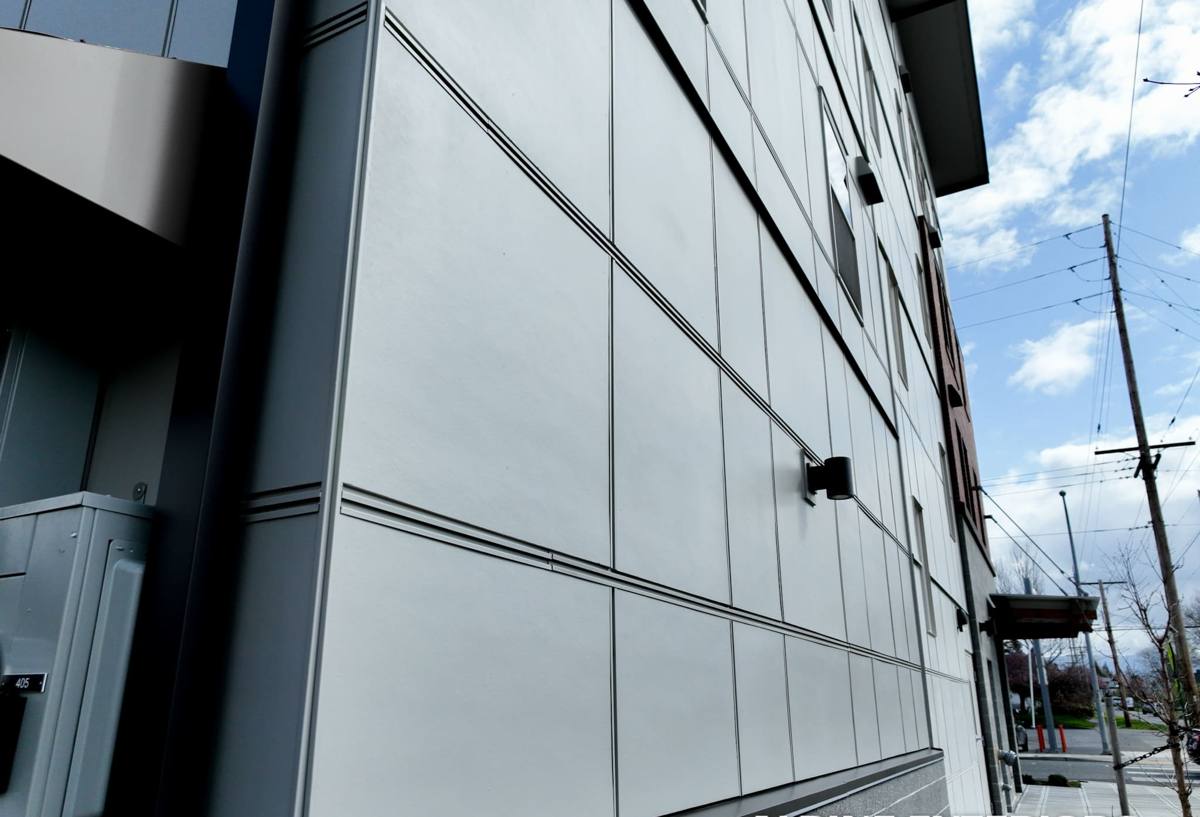
| HardiePanel | Vertical panel with battens | Modern designs or mixed-material exteriors combining panel and lap |
| HardieTrim | Trim boards for corners, fascia, window/door surrounds | Paired with any of the above for a complete, consistent system |
For homes with heavier salt exposure or more direct weather, we also talk through Hardie's ColorPlus finish options versus field-applied paint — ColorPlus is generally the better long-term choice for reducing maintenance in this climate.
Cost Factors for Siding Replacement
Every home is different, but the same handful of factors drive most of the cost variation we see on Orcas Island projects:
| Factor | Why It Matters |
|---|---|
| Substrate condition | Rot or moisture damage found during tear-off adds repair scope before new siding goes up |
| Home size and complexity | More corners, gables, and trim detail mean more labor and material cuts |
| Product selection | Lap, shingle, and panel profiles, plus trim choices, vary in material cost |
| Access and logistics | Material delivery and site access on the island can affect scheduling and cost |
| Existing WRB and flashing needs | Full replacement of the weather barrier system versus reusing sound existing components |
We give straightforward, itemized estimates so you know what's driving the number, rather than a vague lump sum.
Our Process, Start to Finish
We walk every project through the same sequence, adjusted for the specifics of your home:
- On-site assessment of existing siding, substrate condition, and problem areas
- Written estimate covering product selection, scope, and a realistic cost range
- Scheduling that accounts for weather windows — we don't rush installation during active rain
- Tear-off and substrate inspection, with any necessary repairs reviewed with you before covering them up
- WRB, flashing, and drainage plane installation
- James Hardie siding installation to manufacturer specifications
- Final walkthrough so you can see the completed work and ask questions before we consider the job done
Why It Matters to Hire a Crew That Already Works on Orcas Island
Island logistics are different from mainland jobs. Material orders need to account for ferry schedules, and weather windows for installation are narrower and less predictable during the wetter months. A crew that regularly works Eastsound and the surrounding San Juan County area already has that logistics figured out — material lead times, realistic scheduling around fall and winter storms, and a working knowledge of how local homes are typically built and where they tend to have problems. That experience shows up in fewer surprises and fewer delays once your project is underway.
It also matters for accountability. A contractor with an ongoing presence on the island has a reason to stand behind the work for years, not just for the length of the project.
If your Eastsound home's siding is showing signs of wear, salt exposure, or moisture damage, we're happy to take a look and give you a straightforward, no-pressure estimate for James Hardie siding replacement. There's no obligation — just an honest read on what your home actually needs.