 Orcas Island
 Board & Batten on Orcas Island: A Look That Fits the Place
Board and batten shows up everywhere on Orcas Island, and it's not just because it looks good against the trees and water. The vertical lines read as clean and unfussy on both a modern build and an old island farmhouse, and it plays well with the mix of cedar-shingle neighbors, painted cottages, and newer construction you'll find scattered across San Juan County. It's a look that suits the island's character without shouting for attention.
But board and batten is also one of the least forgiving siding profiles when it's installed on a home that sits in a marine climate. The vertical battens create dozens of extra seams and fastening points compared to horizontal lap siding, and every one of those seams is a potential path for water. On Orcas Island, where wind-driven rain comes off the water and salt air works on everything metal and painted, those seams matter more than they would somewhere inland.
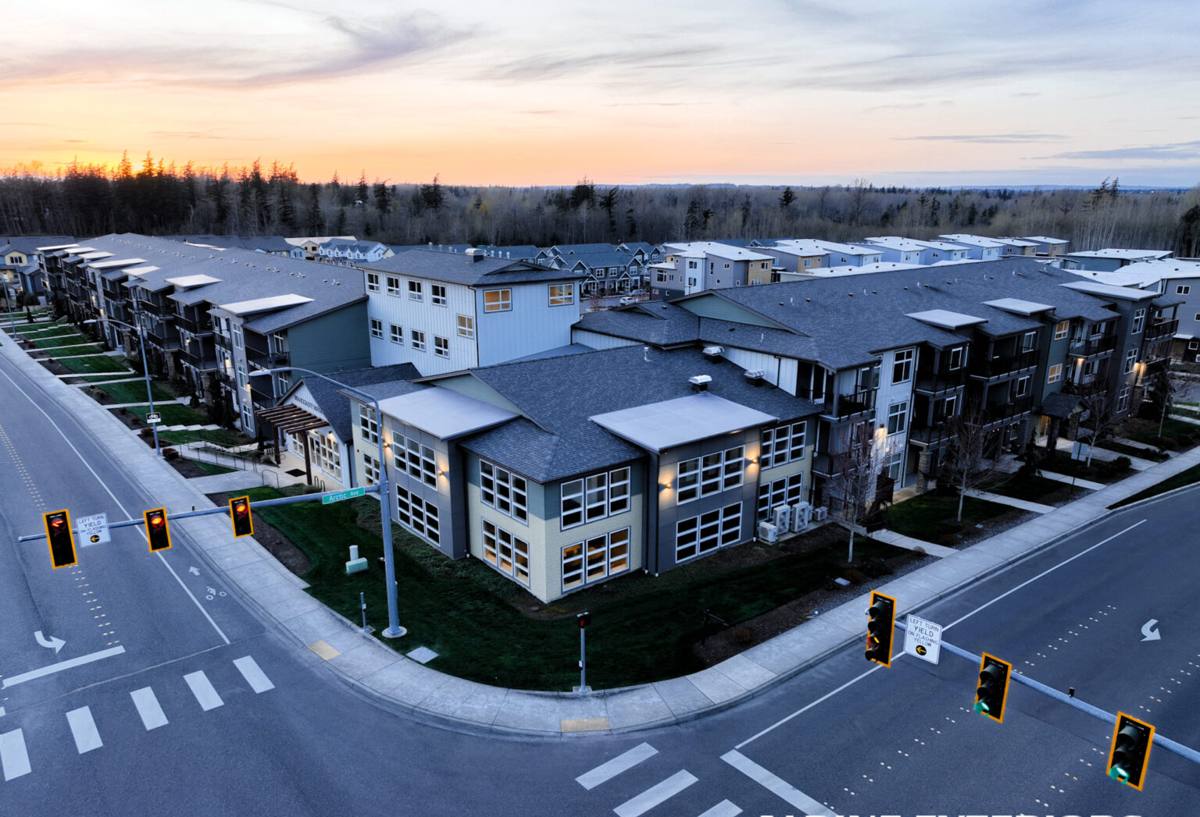
What Salt Air, Driving Rain, and Moss Season Do to Vertical Siding
San Juan County's climate is milder than most of the Pacific Northwest in terms of raw rainfall totals, but it makes up for that with persistence and exposure. A few conditions specific to Orcas Island put real stress on board and batten siding:
Salt Air
Homes closer to the water take a steady, low-grade dose of salt-laden air. Over years, that air degrades unprotected fasteners, accelerates corrosion on any exposed metal flashing or trim, and can dull or chalk paint finishes that weren't formulated to resist it.
Driving Rain
Wind off the water doesn't just drop rain straight down — it pushes it sideways, into every vertical seam and batten joint. Board and batten siding has more vertical joints per square foot than almost any other siding style, so a home exposed to prevailing wind and rain needs those joints detailed correctly the first time.
Moss Season
The island's long wet season, shaded lots, and tree cover mean moss and algae growth is a near-constant battle on north-facing walls and anywhere siding stays damp longer than it should. Moss holds moisture against the surface, and on a material that isn't moisture-stable, that's a slow path to swelling, cracking, or rot.
Where Board & Batten Installations Go Wrong
Most board and batten failures we get called out to inspect on Orcas Island aren't really about the siding material itself — they're about installation shortcuts that don't show up until years later. The usual culprits:
- Battens face-nailed directly over boards with no rainscreen gap, trapping moisture against the wall assembly
- Missing or undersized flashing at window and door heads, letting wind-driven rain track behind the siding
- Butt joints and corners caulked instead of properly flashed or overlapped
- Fasteners driven too close to board edges, causing splitting or pull-through in wind
- No ventilation gap at the bottom of the wall, so any moisture that does get behind the siding has nowhere to drain or dry out
None of these mistakes are visible on installation day. They show up three, five, or ten years later as staining, soft spots, or paint failure — usually on the wall that takes the worst of the weather.
What a Correct Board & Batten Installation Involves
Done right, board and batten siding is a system, not just boards nailed to a wall. On an Orcas Island home, that system needs to account for the specific exposure the house gets — waterfront and open lots need more attention to wind-driven rain than a sheltered, wooded lot does, but every home benefits from the same fundamentals:
- A drainage plane and rainscreen gap behind the siding so any moisture that gets past the surface has a path to drain and air to dry
- Correct flashing at every window, door, and roof intersection, lapped so water sheds outward and down, never inward
- Proper batten spacing and fastening into structural framing, not just sheathing, following the manufacturer's engineered fastener pattern
- Factory-finished material where possible, so the color and sealant layer isn't dependent on field paint quality or weather conditions on install day
- Sealed, back-primed cuts at every field cut, since a raw cut edge is the fastest way moisture gets into any siding material
Skipping any one of these doesn't usually cause an immediate problem — which is exactly why it's tempting to skip them. The cost shows up later, in the form of a callback nobody wants to make.
Why We Only Install James Hardie for Board & Batten
We install James Hardie fiber cement exclusively — we don't do board and batten in cedar, primed spruce, LP SmartSide, or vinyl. That's a deliberate standard, not a limitation of what we're capable of installing.
Wood board and batten looks great on day one, but it's an organic material in a climate that gives it every reason to move, swell, and eventually rot — especially in the shaded, moss-prone conditions common on Orcas Island. Engineered wood products close some of those gaps but are still sensitive to how well end cuts and edges are sealed in the field. Vinyl board and batten is low-maintenance in dry climates, but it isn't dimensionally stable enough to hold crisp panel lines in strong island wind and temperature swings, and it doesn't stand up well to direct impact or long-term UV without fading.
James Hardie's fiber cement is non-combustible, dimensionally stable in wet-to-dry cycling, and available in vertical siding and batten profiles engineered specifically for this climate — the HZ10 product line is formulated for wetter, harsher weather regions, which includes the San Juan Islands. Its ColorPlus factory finish is baked on and warranted separately from the substrate, which means the paint layer isn't riding on whatever the weather was doing the week it got installed. That combination — a stable substrate, engineered moisture resistance, and a factory finish backed by a real transferable warranty — is why it's the only board and batten product we put our name behind.
Our Process, Start to Finish
Every board and batten job we take on Orcas Island follows the same sequence, whether it's a full re-side or a single wall repair:
- On-site assessment — we look at the existing wall assembly, moisture history, and exposure (waterfront, wooded, open field) before recommending anything
- Removal and inspection — old siding comes off so we can check sheathing and framing for hidden rot or moisture damage before it's covered up again
- Weather barrier and drainage plane — a correctly lapped water-resistive barrier and rainscreen system go on before a single board
- Flashing — windows, doors, and roof-to-wall transitions get flashed to shed water outward, not caulked and hoped for
- Installation — Hardie panels and battens go up to manufacturer fastening specs, with sealed field cuts and correct spacing
- Final walkthrough — we check every seam, corner, and penetration before calling the job done
What Affects the Cost of Board & Batten Siding Here
| Factor | Why It Matters on Orcas Island |
|---|---|
| Existing wall condition | Hidden rot or moisture damage found during removal adds repair scope before new siding can go on |
| Exposure | Waterfront or open, wind-exposed walls need more attention to flashing and fastening detail than sheltered walls |
| Home size and stories | More wall area and height affects both material and labor, plus access equipment on multi-story homes |
| Trim and detail complexity | Dormers, multiple gables, and window count all add cutting, flashing, and finish time |
| Access and logistics | Ferry-dependent material delivery and job scheduling factor into project timelines on the islands |
| Color and finish | Factory ColorPlus finishes cost more upfront than field paint but remove a major long-term maintenance variable |
Keeping Board & Batten Siding Healthy in This Climate
Even correctly installed fiber cement board and batten benefits from a little regular attention on Orcas Island, mostly because of the moss and salt exposure. A simple annual check covers most of it:
- Look at north-facing and shaded walls for early moss or algae growth and clean it gently before it builds up
- Check caulking at trim boards, corners, and penetrations for cracking or separation
- Rinse salt residue off siding near the waterfront a couple of times a year
- Watch gutters and downspouts for clogs that can dump extra water directly onto a wall section
- Note any soft spots, staining, or paint changes and have them looked at before they spread
Why an Orcas Island Crew Matters for This Job
Board and batten siding done right is detail-dependent, and those details change based on where a house sits and what it's exposed to. A crew that works Orcas Island regularly already understands the difference between a sheltered lot and a wind-exposed waterfront wall, knows how the island's moss season behaves on different aspects of a house, and has already worked out the logistics of getting material and equipment onto the island on the ferry schedule without turning that into the homeowner's problem. That local familiarity shows up in fewer surprises during the job and fewer callbacks after it.
If you're weighing board and batten siding for a home on Orcas Island, we're happy to take a look and walk through what your specific site and exposure call for. Reach out for a free, no-pressure estimate using the form below.