 Orcas Island
 Roofing in Obstruction Pass: A Different Set of Demands
Obstruction Pass sits close enough to open water that salt air is a constant factor, not an occasional one. Combine that with San Juan County's long wet season, heavy driving rain off the water, and shaded tree cover that keeps roofs damp for days after a storm passes, and you get a climate that is genuinely harder on a roof than most inland Washington locations. A roof system that would hold up fine in Spokane or even Bellingham can fail early here if it wasn't specified and installed with this exact environment in mind.
When we install a new roof in Obstruction Pass, we're not just swapping old shingles for new ones. We're building a system — decking, underlayment, flashing, ventilation, and the finish material — that's matched to salt exposure, sustained moisture, and moss pressure. That's the difference between a roof that needs attention again in eight years and one that goes the full distance of its warranty.
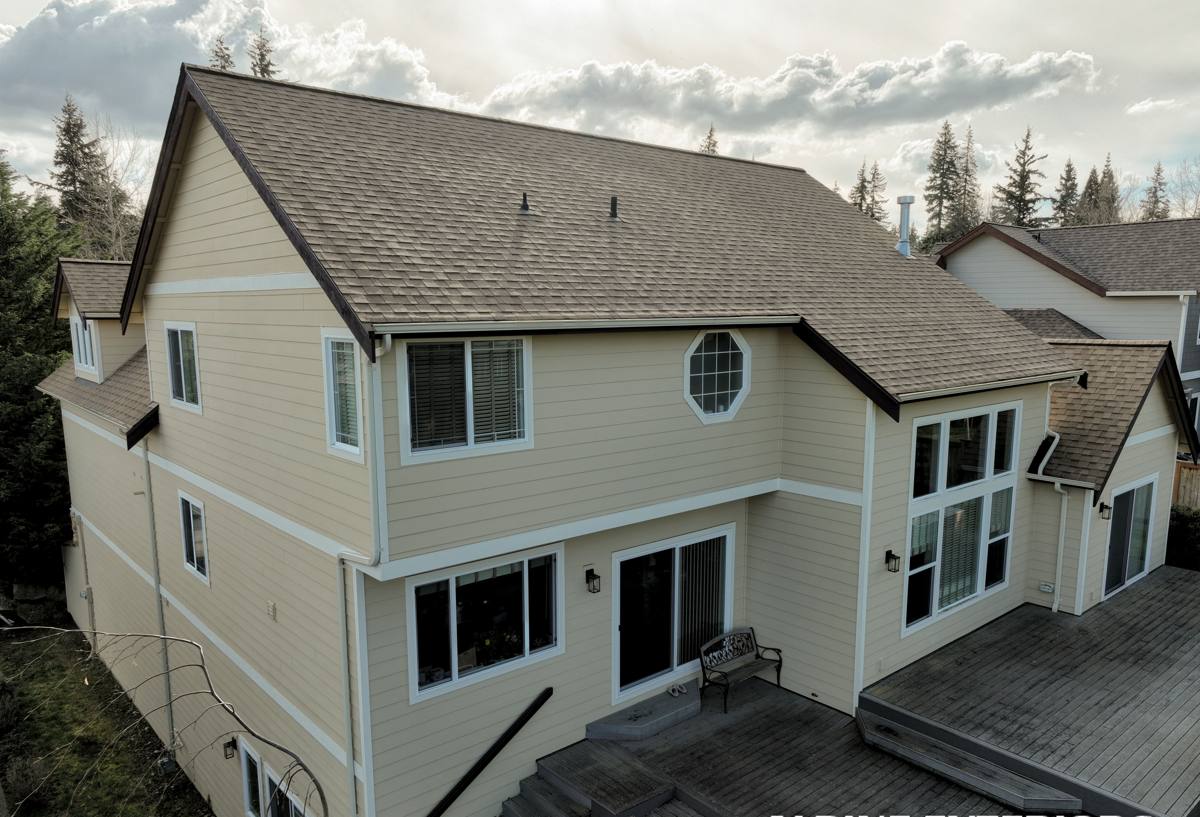
What Salt Air, Rain, and Moss Actually Do to a Roof
Salt Air
Airborne salt accelerates corrosion on any exposed metal — fasteners, flashing, vent boots, and gutter hardware. Standard galvanized fasteners can start showing rust streaks and weakening well ahead of schedule this close to the water. It's not dramatic, it's gradual, and it's the kind of thing that shows up as a leak years later with no obvious cause unless you know to look for it.
Driving Rain
Wind-driven rain off the water doesn't just fall on a roof — it gets pushed sideways and upward under shingle edges, around vents, and into any gap in flashing that a calmer climate could get away with. Roofs here need tighter, more deliberate flashing details at every penetration and transition, not the minimum spec.
Moss and Prolonged Dampness
Shaded, moisture-retentive roof surfaces on Orcas Island support moss growth for a large part of the year. Moss holds water against the roofing material, works its way under shingle tabs as it grows, and can lift edges enough to let water in. Left unaddressed over several seasons, moss does more damage to a roof than almost anything else in this climate short of a genuine storm event.
Signs an Obstruction Pass Roof Needs Full Replacement, Not a Repair
- Granule loss heavy enough that you can see bare asphalt on multiple slopes, not just one worn spot
- Moss established at the shingle edges in several areas rather than a single patch
- Soft or spongy decking felt underfoot when walking the roof, indicating water has already reached the wood
- Repeated leaks in different locations each winter, rather than the same spot every time
- Shingles curling, cupping, or cracking across the field of the roof, not just at one age-worn section
- Roof is at or past the manufacturer's expected service life for this climate, even if it "looks okay" from the ground
One or two of these on their own might mean a repair is enough. Several at once, especially combined with a roof's age, usually means repair costs start approaching replacement costs without actually solving the underlying problem.
What a Correct New Roof Installation Includes
A proper tear-off and replacement isn't just laying new shingles over the old deck. In a climate like this, skipping steps is exactly how a "new" roof ends up with problems in year three instead of year twenty.
Full Tear-Off and Deck Inspection
We remove existing roofing down to the decking so it can actually be inspected, not guessed at. Any decking that's delaminated, soft, or water-stained gets replaced before anything new goes down. Installing new roofing over compromised decking just hides a problem that will resurface as a leak.
Underlayment Built for Wet Climates
Synthetic underlayment rated for high-moisture exposure goes down across the full roof, with self-adhering ice-and-water shield at the eaves, valleys, and any low-slope transitions where wind-driven rain is most likely to find a way in.
Flashing at Every Penetration
Chimneys, vent stacks, skylights, and wall transitions all get new step flashing, counter-flashing, or pipe boots sized and sealed correctly — not just reused from the old roof. This is where most roof leaks actually originate, and it's the detail most likely to get shortcut on a rushed job.
Corrosion-Resistant Fasteners and Hardware
Given the salt air here, we use fasteners and metal components rated for coastal exposure rather than standard-grade hardware that corrodes faster this close to the water.
Ventilation
Balanced intake and exhaust ventilation keeps the attic and roof deck drying out between rain events instead of staying damp, which directly reduces moss growth and extends the life of the decking and roofing material alike.
Roofing Material Options for This Climate
There's no single "best" roofing material for every home — it depends on budget, roof pitch, and how much long-term maintenance you want to take on. Here's how the common options actually perform in a salt-air, high-moisture, moss-prone environment like Obstruction Pass.
| Material | Salt Air Performance | Moss Resistance | Typical Lifespan Here |
|---|---|---|---|
| Architectural asphalt shingle | Good with coastal-rated fasteners/flashing | Moderate — benefits from periodic cleaning | 20–30 years |
| Standing seam metal | Very good with proper coating/finish | High — sheds moss more easily than shingle | 40+ years |
| Cedar shake | Fair — needs regular maintenance near salt air | Low without diligent upkeep | 20–25 years with maintenance |
| 3-tab asphalt shingle | Fair — lighter-duty than architectural | Moderate | 15–20 years |
We don't push one material on every homeowner. What we do is walk through the real maintenance commitment each option carries in this specific climate, so the choice matches what you actually want to deal with over the next twenty years — not just the sticker price today.
Our Installation Process
- On-site inspection and honest assessment of whether repair or replacement is the right call
- Written estimate covering material options, scope, and a realistic timeline that accounts for weather windows
- Scheduling around the drier stretches of the season where possible to protect the open roof deck during tear-off
- Full tear-off, deck inspection, and any necessary decking repair or replacement
- Installation of underlayment, ice-and-water shield, flashing, ventilation components, and the finish roofing material
- Final walkthrough with the homeowner covering what was done and what to watch for going forward
Ventilation and Moss: Prevention Built Into the Install
Given how long moss season runs here, we treat moss prevention as part of the installation, not an afterthought. Proper attic and roof ventilation reduces the sustained dampness that lets moss establish in the first place. On shingle roofs, we can also discuss zinc or copper control strips at the ridge, which release trace amounts of metal ions in the rain that discourage moss growth over the roof's life. It's a small addition at install time that reduces how often a roof needs manual moss removal down the road.
What Affects the Cost of a New Roof in Obstruction Pass
| Factor | Why It Matters |
|---|---|
| Roof size and pitch | More surface area and steeper pitches take more material and labor time |
| Number of existing layers | Tearing off multiple old layers adds disposal and labor cost |
| Decking condition | Rotted or soft decking sections need replacement before new roofing goes down |
| Material choice | Metal and cedar cost more upfront than asphalt but differ in long-term maintenance |
| Roof complexity | Valleys, dormers, skylights, and chimneys all add flashing detail and time |
| Site access and logistics | Island delivery scheduling and site access can affect timeline more than mainland jobs |
We give straightforward written estimates before any work starts, broken down so you can see what you're actually paying for rather than a single lump number.
Why a Crew That Already Works Obstruction Pass Matters
Roofing on Orcas Island comes with logistics that off-island crews often underestimate: coordinating material deliveries and ferry schedules, planning around weather windows that close faster here than on the mainland, and understanding San Juan County's permitting expectations before a project starts rather than mid-job. A crew that regularly works this area already has those pieces figured out, which keeps your project moving instead of stalling on avoidable delays.
Just as important, we've seen firsthand what salt air, driving rain, and moss do to roofs in this specific area over time. That's not something you can fully learn from a manual — it comes from doing the work here, season after season, and adjusting the details that matter for this coastline.
After Installation: Keeping a New Roof Performing
- Have gutters cleaned at least twice a year to prevent water backing up under the roof edge
- Trim back overhanging branches to reduce shade and debris buildup that feeds moss growth
- Do a visual check after major storms for any lifted shingles or damaged flashing
- Address minor moss growth early with gentle, roof-safe cleaning rather than letting it establish
- Keep an eye on attic ventilation — blocked vents undo a lot of the moisture protection built into the install
A well-installed roof in this climate still needs basic upkeep. The system is designed to handle Obstruction Pass weather, but a little routine attention keeps it performing at its best for the full length of its service life.
If your roof is showing its age or you just want an honest read on whether repair or replacement makes more sense for your home, we're happy to take a look. Fill out the form below for a free, no-pressure estimate.