 Orcas Island
 Custom Windows Built for Obstruction Pass, Not a Generic Job
Obstruction Pass sits on the quieter, more exposed southeast side of Orcas Island, where homes back up to trees, water, and open air in almost equal measure. That mix is beautiful and it's also hard on a house. Windows here take a beating that a standard product line, tested for a mild inland suburb, was never really built for. Salt-laden wind, long stretches of driving rain, and a moss season that can run half the year all work on glass, frames, and trim in ways homeowners on the mainland rarely deal with.
"Custom" doesn't just mean a fancy shape or a bigger price tag. On this end of Orcas Island it usually means matching an opening that isn't a standard size, choosing a frame material that won't corrode or rot in salt air, and detailing the installation so wind-driven rain has nowhere to get in. That's the job we're actually solving for on every Obstruction Pass project — not just hanging a window, but making sure it survives the climate it's going into.
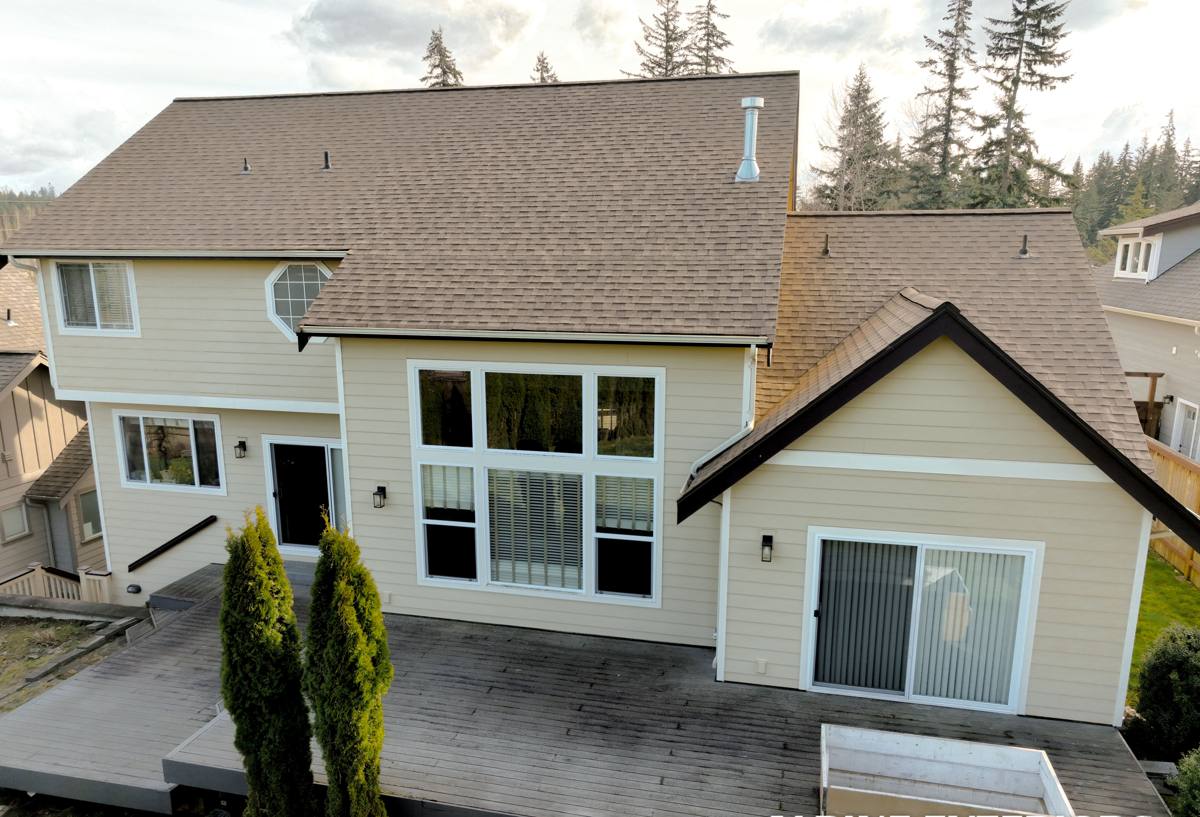
What This Climate Actually Does to Windows
San Juan County's marine climate is milder in temperature than most of Washington, but it's tougher on building materials in almost every other way. Three things matter most for windows specifically.
Salt Air and Hardware
Airborne salt off the water accelerates corrosion on fasteners, hinges, and cheap cladding far faster than inland exposure. We see it most on lower-grade aluminum components and unprotected steel screws — pitting and white corrosion show up in a few seasons where an inland home would show none for a decade. It's not that these products are defective; they're simply not rated for this kind of exposure, and choosing hardware and finishes that are rated for it is part of doing the job right the first time.
Wind-Driven Rain and Flashing
Rain here doesn't always fall straight down. Storms crossing open water push rain sideways into wall assemblies, which means a window that would stay dry in a calm rainfall can leak under wind pressure if the flashing, sill pan, and weep path aren't detailed correctly. Most window leaks we're called to fix aren't a bad window — they're a flashing detail that was fine for a mild rain event and failed the first time wind pushed water sideways into the opening.
Moss, Shade, and Slow-Drying Wood
Tree cover and short winter daylight mean north- and east-facing walls can stay damp for days after a storm. That's exactly the condition moss and mildew need, and it's hard on any exposed wood trim, sill, or casing that can't shed water and dry quickly. Homes tucked into the trees around Obstruction Pass see this more than homes in open, sunnier parts of the island.
Why "Custom" Matters More Here Than Elsewhere
Older and Irregular Openings
A lot of homes in this part of Orcas Island were built or added onto in stages, sometimes owner-built or built to fit the site rather than a standard framing plan. That means openings are often slightly out of square, non-standard sizes, or framed for windows that haven't been manufactured in years. Stock replacement units frequently don't fit cleanly, which leads to shimming, gap-filling, and trim work that looks fine for a season and then telegraphs problems once the wood moves with the weather.
Window Placement for View and Wind Exposure
Waterfront and near-waterfront lots on this side of the island are often oriented for a view, which puts glass on the elevation that also takes the worst of the wind and rain. Custom sizing and shape let a window follow the view without oversizing the exposed opening or compromising the wall's ability to shed water. That's a balance a stock-size, big-box approach doesn't really account for.
Frame Material Comparison for Salt Air and Rain Exposure
There's no single "best" window material for every home — it depends on exposure, budget, and how much maintenance you want to take on. Here's how the common options actually perform in this specific climate.
| Frame Material | Salt Air Resistance | Moisture/Rot Risk | Maintenance Load |
|---|---|---|---|
| Vinyl | Good — won't corrode | Low | Low, but limited repairability if seals fail |
| Fiberglass | Very good | Very low | Low; holds paint and finish well over time |
| Wood (unclad) | Poor without diligent upkeep | High in shaded, damp locations | High — regular painting/sealing required |
| Wood, clad exterior | Good on the clad face | Moderate — depends on cladding detail at joints | Moderate |
| Aluminum (standard) | Poor unless marine-rated | Low rot risk, but condensation-prone | Moderate — watch for pitting near water |
For most homes near Obstruction Pass, fiberglass or a well-clad wood frame is the trade-off we recommend most often — they hold up to salt air and rain without demanding constant upkeep. Vinyl is a reasonable, budget-conscious option on less-exposed elevations. Unclad wood and standard aluminum aren't off the table, but we're upfront that they come with a real maintenance commitment in this climate, and we'd rather tell you that before install than have you find out the hard way.
What a Correct Custom Window Install Involves
The window itself is only part of the job. Performance in this climate comes down to the details around it just as much as the unit itself.
- Accurate field measurement of the actual opening, including any out-of-square or settled framing
- A sloped sill pan that drains water outward instead of letting it sit against the frame
- Proper flashing sequencing — water-resistive barrier lapped correctly over the flashing, not under it
- Corrosion-resistant fasteners and hardware rated for coastal/salt-air exposure
- Sealant and backer rod sized and placed to allow for expansion, not just caulked over gaps
- Weep paths kept clear so any incidental water can exit the frame
- Trim and cladding integration that ties into the existing siding without creating a moisture trap
- A final water test or visual inspection of flashing lines before trim is closed up
Skip any one of these steps and the window can still look fine for a year or two before a leak or rot shows up — usually right where wind-driven rain hits hardest.
Our Process for Obstruction Pass Projects
Working on this end of Orcas Island means planning around the site and the ferry schedule, not just the calendar.
- Site visit and assessment — we look at the existing openings, framing condition, exposure direction, and any rot or past leak evidence before recommending anything.
- Measuring and material selection — custom units are built to the actual opening, with frame material chosen for that wall's exposure rather than a one-size-fits-all spec.
- Ordering and lead time — custom windows aren't a shelf item, and island delivery adds time on top of standard manufacturing lead times. We build that into the schedule up front so there are no surprises.
- Installation — flashing, sill pan, fastening, and trim integration done to the standard above, with weather windows planned around forecasted rain where possible.
- Final walkthrough — we check operation, seals, and trim before calling the job done.
Why Hire a Crew That Already Works This Area
Obstruction Pass isn't a drive-up job for most contractors — getting a crew, tools, and materials out here takes planning, and that cost shows up somewhere if the contractor doesn't already have a routine for it. A crew that regularly works Orcas Island and San Juan County isn't pricing in a one-off trip every time, and isn't guessing at how this climate treats window installations — we've already seen which details hold up and which ones fail early. That also matters for permitting: work near the shoreline or in critical areas on Orcas Island can fall under San Juan County's shoreline and critical area regulations, and knowing when that applies (and when it doesn't) saves you from a costly surprise mid-project.
It also matters after the install. If a seal needs attention or a punch-list item comes up, a local crew can get back out without another full mobilization — which matters more here than almost anywhere else in the county given the ferry logistics involved.
Keeping Custom Windows Performing After Install
A correct install buys you a long service life, but this climate still asks for some upkeep.
- Rinse salt residue off frames and glass periodically, especially on wind-exposed elevations
- Keep gutters and nearby drainage clear so water isn't sheeting down onto window heads
- Check and refresh exterior caulking every few years, sooner on sun- and wind-exposed sides
- Knock back moss and organic buildup on sills and trim before it holds moisture against the frame
- Trim back vegetation that keeps a wall shaded and slow to dry after rain
None of this is heavy maintenance, but skipping it in a climate like this shortens the life of even a well-installed window.
If you're planning custom windows for a home in Obstruction Pass or anywhere else on Orcas Island, we're happy to take a look and give you a straight, no-pressure estimate — just fill out the form below.