 Orcas Island
 Why North Beach Asks More of a Wall Than Most Houses Ever See
Homes on the north side of Orcas Island sit in a different weather pattern than a house tucked into an inland valley elsewhere in San Juan County. North Beach faces open water, which means wind-driven rain arrives sideways more often than straight down, salt spray rides in on the wind even on days that look calm, and the tree cover that shades so many island lots keeps siding damp long after a storm has passed. None of that is a reason to avoid living there. It is a reason to be honest about what the exterior of the house has to survive, year after year, and to choose a siding system and an installation method built for that reality instead of one that merely looks fine on the day it goes up.
This page covers fiber cement siding specifically for North Beach conditions: what the salt, rain, and moss actually do to a wall over time, what a correct installation has to account for, how our process handles it, and why the crew doing the work matters as much as the material itself.
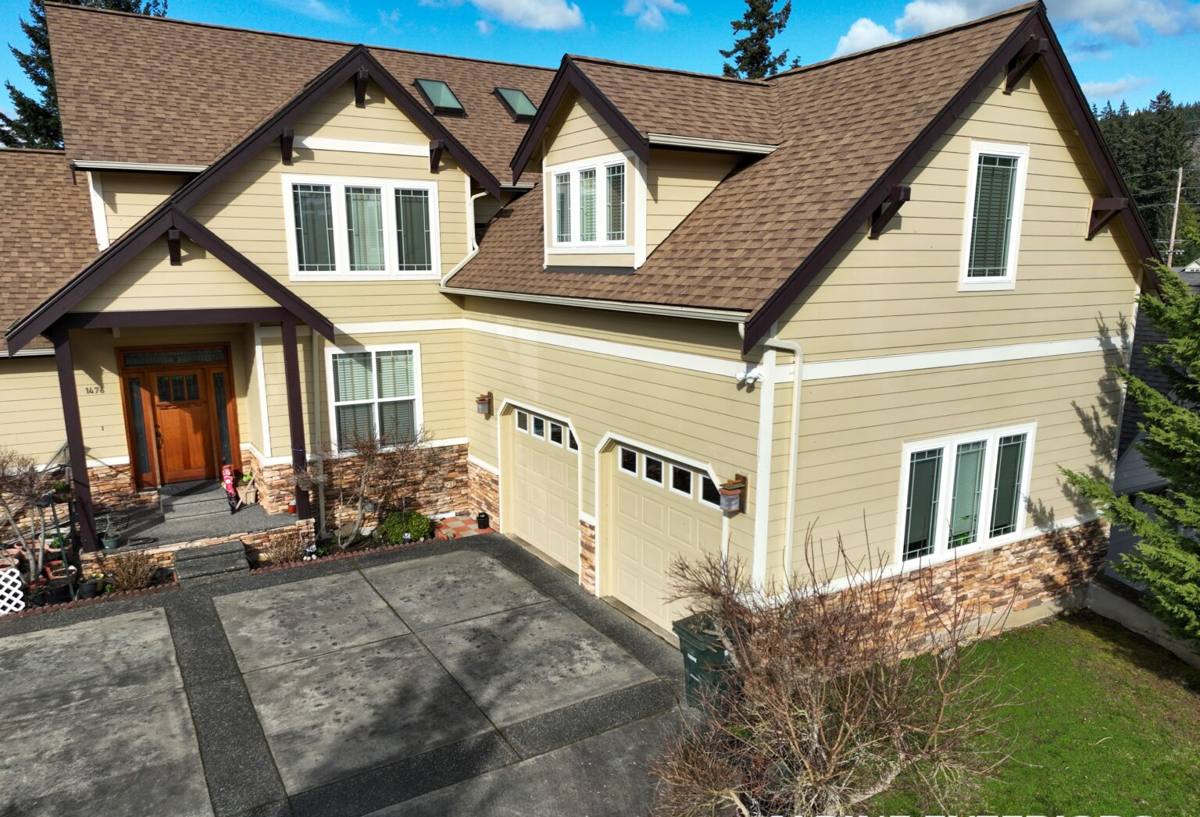
What Salt Air, Driving Rain, and Moss Actually Do to Siding
Salt Air and Slow Corrosion
Airborne salt doesn't just affect houses standing right on the water. It travels on the wind and settles on siding, trim, and especially fasteners and flashing across a much wider stretch of North Beach than people expect. Left alone, it accelerates corrosion in anything metal and it slowly breaks down finishes that weren't built to shed it. A siding product with a weak factory finish, or an installer using the wrong fastener, will show that wear years before it should.
Driving Rain and Wind-Driven Moisture
Rain that comes in at an angle finds every gap a straight-down rain never would. It works into unsealed joints, up under poorly lapped boards, and behind trim that wasn't flashed correctly. Over time this is what causes rot in wood-based siding and swelling or delamination in products that aren't dimensionally stable when wet. The siding material matters here, but so does the drainage plane behind it — a wall assembly that can't shed water it inevitably absorbs is a bigger risk than the cladding alone.
The Long Moss and Shade Season
Between the marine humidity and the tree cover common around North Beach, siding here stays damp longer after each rain than siding on a more exposed, sun-baked lot. That extended damp period is exactly what moss and mildew need to establish themselves on north-facing and shaded walls. Wood siding gives moss something to root into; some engineered products can absorb enough moisture in that environment to soften at the edges. Siding that resists moisture absorption and has a hard, factory-cured surface gives moss far less to hold onto and makes it much easier to knock off with a routine wash instead of a repair.
Why Fiber Cement Is the Right Material Category for This Climate
Fiber cement is a mix of cement, sand, and cellulose fibers, cured into a rigid board. It doesn't absorb water the way wood does, it won't warp or delaminate the way some engineered wood products can when a seam takes on moisture, and it doesn't burn, which matters on an island where fire response times are longer than in a dense city. For a North Beach wall dealing with salt, rain, and shade all at once, those baseline properties are exactly what's needed before you even get to brand or finish.
That said, fiber cement is only as good as the specific product and the installation. A cheaper fiber cement board with a thin field-applied paint job will still absorb water at cut edges and fade unevenly in a few years. That's the gap between "fiber cement" as a category and the specific product line we actually put on North Beach homes.
Why We Install James Hardie and Nothing Else
HZ5 Engineering for Marine Climates
James Hardie makes climate-specific product lines, and their HZ5 formulation is engineered for wetter, harsher coastal and marine climates like this one. It's a different mix than the version sold in dry inland regions, built to hold up to prolonged moisture exposure rather than just tolerate it. For a North Beach install, that's not a marketing detail — it's the difference between a product designed for this weather and one that merely gets shipped here.
ColorPlus Factory Finish vs. Field Painting
Every board is finished at the factory under controlled conditions, then baked on in multiple coats. That finish resists fading, chipping, and the kind of chalky wear salt air causes to a field-applied paint job over time. Field-painted siding depends on weather conditions on install day and on how evenly a crew can apply and cure a coating outdoors — in a marine climate, that's a harder job to get right and an easier one to get wrong. A factory finish removes that variable entirely.
The Warranty Actually Means Something
James Hardie backs its siding with a long, transferable product warranty and a separate finish warranty on ColorPlus products. Warranties are only as good as the company standing behind them and the installation underneath them — but a manufacturer with a genuine track record and a fully engineered product line gives homeowners something real to point to if a problem ever does show up.
We don't install LP SmartSide, vinyl, Cemplank, Allura, or unfinished wood siding. Not because those products have no legitimate use anywhere, but because for the specific conditions North Beach homes face — and the standard we hold our own work to — Hardie's engineered lines and factory finish are what we're willing to put our name behind.
What a Correct Fiber Cement Installation Requires Here
Fiber cement siding fails prematurely almost exclusively because of installation mistakes, not because the material itself gave out. In a marine climate those mistakes show up faster and cost more to fix. A correct install accounts for the following:
- A drainage gap (rainscreen) behind the siding so any moisture that does get past the cladding can actually dry out instead of sitting against the sheathing
- Stainless or hot-dip galvanized fasteners rated for coastal exposure, not standard fasteners that will corrode and stain the face of the siding
- Correct flashing at every window, door, and horizontal trim transition — the single most common source of hidden water damage behind any siding type
- Proper board overlap and gapping per manufacturer spec, with all cut edges back-primed or sealed before installation
- Caulking only at the joints Hardie's specifications actually call for, using a sealant rated for the movement and moisture this climate produces
- Attention to grade and drainage at the base of the wall, since standing water at the bottom course is a common failure point on lots with limited slope
Skip any one of those steps and you can end up with siding that looks correct for a year or two before problems start showing at the seams — exactly the kind of failure that gets blamed on the material when the real cause was the installation.
How Fiber Cement Compares for a North Beach Home
| Factor | James Hardie Fiber Cement | Vinyl | Untreated Wood / Cedar | LP SmartSide |
|---|---|---|---|---|
| Salt air resistance | Strong — factory finish, non-corrosive core | Moderate — can chalk and become brittle over time | Weak — absorbs salt-laden moisture | Moderate — engineered wood still moisture-sensitive at cut edges |
| Moisture / rot resistance | Does not rot; dimensionally stable when wet | Doesn't rot but can warp in heat and flex in wind | Prone to rot without diligent upkeep | Resists rot if edges stay sealed; vulnerable if seals fail |
| Moss and mildew resistance | Hard surface, little for moss to grip | Fair, but seams trap grime | Poor — porous surface moss can root into | Fair, similar concerns at damaged edges |
| Fire resistance | Non-combustible | Melts/deforms under heat | Combustible | Combustible (engineered wood) |
| Finish longevity | Factory-baked finish, long warranty | Color molded in but fades and chalks | Requires repainting/staining on a recurring cycle | Field or factory paint, shorter finish warranty typically |
Our Process for a North Beach Siding Project
- On-site assessment. We look at wall exposure, existing moisture damage, current siding condition, and how sun, shade, and prevailing wind hit each side of the house.
- Tear-off and sheathing check. Once the old siding is off, we inspect the sheathing and framing underneath for hidden rot or moisture damage — common on north-facing, shaded walls — and address it before anything new goes up.
- Weather-resistive barrier and drainage plane. We install or verify the house wrap and set up a proper rainscreen gap so the wall can actually dry.
- Flashing details. Every window, door, and horizontal trim line gets flashed correctly before siding installation begins — this is where most long-term failures originate if skipped.
- Hardie installation to spec. Boards, fasteners, gaps, and caulking are installed per James Hardie's published specifications for this climate zone, not shortcut for speed.
- Trim, touch-up, and cleanup. Finish carpentry, any factory-finish touch-up paint at cut edges, and full site cleanup before we call the job done.
Living With Fiber Cement Siding in This Climate
Correctly installed Hardie siding is genuinely low-maintenance, but "low-maintenance" doesn't mean "no maintenance" in a place with this much moss pressure and salt air. A rinse with a garden hose once or twice a year clears the grime and salt residue that build up faster here than inland. Keeping gutters clear and trimming back vegetation that shades a wall reduces the damp conditions moss needs to take hold. If a colored caulk joint or a touched-up cut edge ever looks off, it's worth having it looked at — catching a small sealant failure early is a five-minute fix, while ignoring it for a season is how water finds its way behind the wall.
Why the Crew Matters as Much as the Material
A crew that already works North Beach regularly knows which walls take the worst of the wind-driven rain, understands how ferry schedules and island logistics affect material delivery and project timing, and has already seen how this specific microclimate treats a siding job a year or two after installation — not just on the day it's finished. That experience shows up in the small decisions: where to add extra flashing, which walls need a closer look at the sheathing before closing them up, and how to sequence a project around island weather windows instead of fighting them. Fiber cement siding done correctly the first time is far cheaper than fiber cement siding redone after a bad installation starts leaking.
Get a Straight Answer for Your Home
Every North Beach lot handles wind, rain, and shade a little differently, and the right approach depends on what your walls are dealing with, not a generic answer. If you're weighing a siding project on Orcas Island, we're happy to take a look, walk you through what we see, and give you a straightforward, no-pressure estimate using the estimate form below.