 Orcas Island
 Windows Built for a Different Kind of Wear
Mountain Lake sits up and back from the shoreline, tucked into the forested interior of Orcas Island near Moran State Park. That changes what your windows deal with day to day compared to a house right on the water. You get less direct salt spray, but you trade it for heavier shade, thicker moss and lichen growth, slower drying times after rain, and long stretches of damp, still air under the tree canopy. Add in San Juan County's driving winter rain and the short window replacement season everyone up here works around, and you end up with a specific set of problems: swollen sashes that won't latch, condensation between panes, soft trim at the corners, and frames that look fine from the driveway but are quietly rotting where you can't see them.
A window replacement job in this part of Orcas Island isn't the same job as one in a dry inland climate. It has to account for slower evaporation, more organic growth pressure from the forest, and the reality that a lot of homes here are only reachable by ferry, which means every mistake costs more time and money to fix. This page covers what that actually means for a Mountain Lake home, what a correct installation looks like, and how we run the job from estimate to final walkthrough.
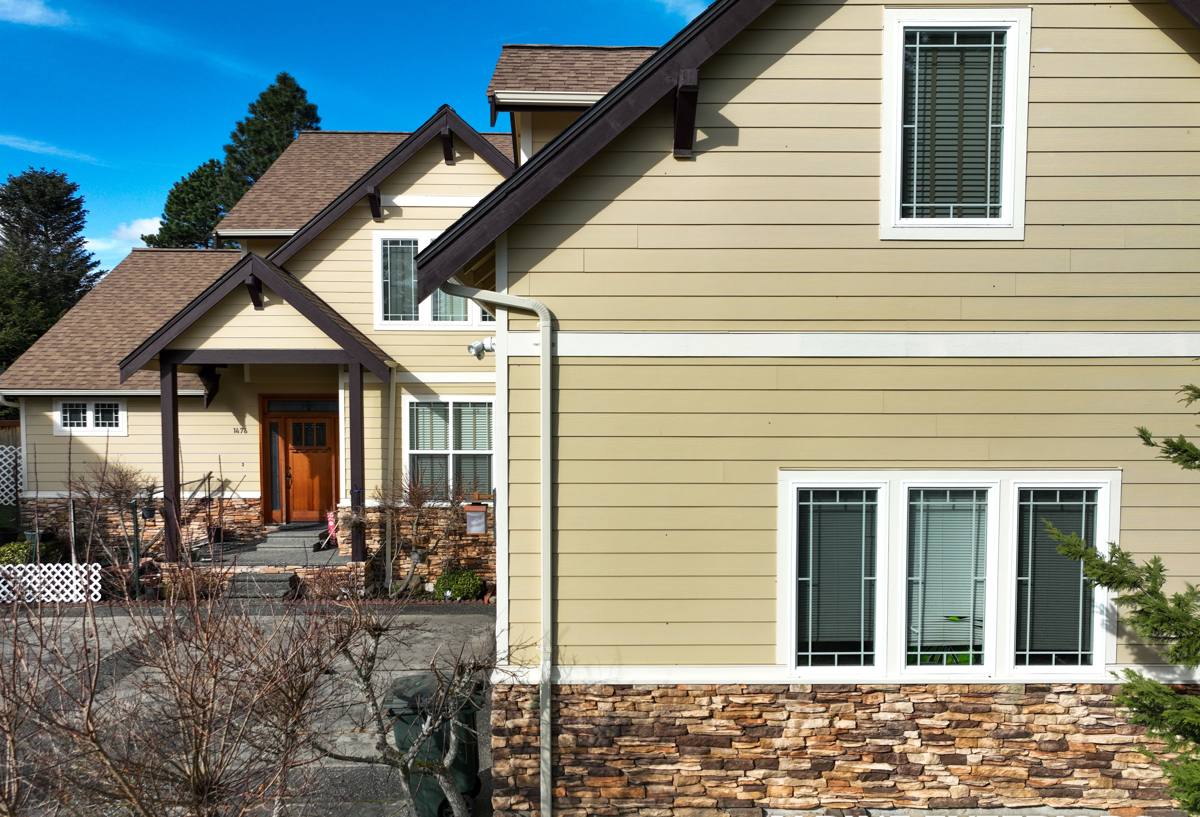
How the Local Climate Wears Down Windows
Moss and Shade
The tree cover around Mountain Lake keeps things cooler and shadier than open shoreline lots, which sounds nice until you realize it also means surfaces stay damp longer after every rain. Wood sills, vinyl tracks, and old aluminum frames all collect moss, algae, and lichen faster in shaded spots. That growth holds moisture against the frame and finish, which accelerates rot in wood components and can work its way into seals that were never designed to stay wet for days at a time.
Driving Rain and Wind-Driven Moisture
San Juan County gets plenty of wind-driven rain, especially through fall and winter storms. Rain that comes in sideways finds any weak point in a window's flashing or seal, not just the glass. Older installations that relied on caulk alone, without proper flashing and a drainage path, are the ones we see failing first — water gets behind the trim and sits there, out of sight, until the wood underneath is soft.
Temperature Swings and Condensation
Cooler, shaded interior lots like Mountain Lake can see bigger day-to-night temperature swings inside the glass unit than sunnier spots. If a window's seal has failed, you'll see fogging or moisture trapped between panes — a sign the insulated glass unit is done, even if the frame still looks okay.
Signs a Mountain Lake Home Needs Window Replacement
- Sashes that stick, drag, or won't stay latched, especially after rain
- Visible moss, algae, or black staining building up on sills or frame corners
- Soft or spongy wood when you press on the sill or lower frame
- Fogging or moisture trapped between panes of double-pane glass
- Noticeable draft or cold spot near the frame even with the window closed
- Paint or finish that keeps failing in the same spot no matter how often it's touched up
- Daylight visible around the frame edge from inside
Any one of these on its own might just need a repair. Several together, especially on a window that's original to an older home, usually means the frame or seal is past the point where patching makes sense.
What a Correct Installation Actually Involves
Swapping glass into an old frame, or dropping a new window into a rough opening without addressing the flashing, is where most window problems on this island start. A correct job goes in this order:
- Remove the old unit and inspect the opening. This is where hidden rot or past water intrusion shows up. We don't cover over soft framing — it gets cut back and repaired before anything new goes in.
- Rebuild the drainage path. Proper flashing at the sill and sides, lapped correctly with the weather-resistive barrier, so any water that gets past the window sheds outward instead of pooling behind the trim.
- Set the new window plumb, level, and square. A window that's slightly racked in the opening won't seal or operate correctly no matter how good the unit is.
- Insulate and air-seal the gap between the frame and rough opening without over-packing it, which can bow the frame.
- Finish the exterior with proper trim, sealant only where it belongs — not as a substitute for flashing — and a paint or finish system suited to a shaded, damp exposure.
Skipping steps here is exactly how you end up replacing the same window twice in ten years.
Choosing the Right Window for This Location
Frame material matters more in a shaded, damp microclimate than it does on a dry, sunny lot. Here's how the common options hold up under Mountain Lake conditions:
| Frame Material | How It Handles Shade and Moisture | Maintenance |
|---|---|---|
| Vinyl | Won't rot; handles damp shade well; can flex slightly in temperature swings | Low — occasional cleaning to keep moss/algae from staining tracks |
| Fiberglass | Very stable, resists moisture and moss buildup, holds paint well if you want a custom color | Low |
| Wood (clad exterior, wood interior) | Good look, but exterior wood is the most vulnerable to rot in shaded, damp spots unless well clad | Higher — finish and caulk lines need regular checking |
| Aluminum | Durable but conducts cold and can condensate more in a cool, shaded interior lot | Low, but condensation issues can persist regardless of upkeep |
We don't push one brand or material on every job — the right call depends on your home's style, budget, and how much upkeep you actually want to do. Where we do draw a line is on installation quality: whatever frame you choose, it has to be flashed and sealed correctly for this climate, or the material choice won't matter.
Glass Package
For a shaded, damp lot like Mountain Lake, a good low-E, argon-filled double-pane unit is usually the sensible baseline — it cuts heat loss and helps reduce interior condensation on cold, still nights. Triple-pane can make sense on north-facing walls that get the least sun, but it's a cost-and-benefit conversation we're happy to walk through honestly rather than upsell by default.
Our Process, Start to Finish
- Free on-site estimate. We look at each window individually — not every window on a house is in the same condition, and we'll tell you plainly which ones need replacing now versus which can wait.
- Written scope and pricing. No vague allowances. You'll know what's included before we order anything.
- Material ordering and scheduling. Because everything for Orcas Island jobs comes over by ferry, we build realistic lead times into the schedule rather than promising dates we can't hit.
- Installation. Full removal, opening inspection and repair as needed, proper flashing, and correct setting of each new window.
- Cleanup and walkthrough. We operate every window with you before we leave and answer questions about care and warranty.
What Affects the Cost
| Factor | Why It Matters |
|---|---|
| Number and size of windows | Larger units and full-house replacements have different labor and material needs than a single problem window |
| Condition of the existing opening | Rot repair or reframing adds time beyond a straightforward swap |
| Frame material and glass package | Vinyl, fiberglass, and wood-clad options carry different material costs |
| Access and site conditions | Upper-story windows, tight forest access, or difficult staging affect labor time |
| Trim and finish work | Matching existing exterior trim or repainting affects the finishing scope |
We give real numbers during the on-site estimate, not a phone quote — every home and every window is different, and we'd rather look at it than guess.
Why It Matters to Hire a Crew That Already Works This Area
Working on Orcas Island means planning around the ferry schedule, ordering materials with enough lead time, and understanding how a shaded, forested lot like Mountain Lake behaves differently than an open shoreline property just a few miles away. A crew that hasn't worked San Juan County before can underestimate how much moisture management matters here, or show up without the right materials because they didn't account for the ferry. We live and work in this county — our scheduling, our material ordering, and our installation approach are built around the realities of getting it right the first time on an island job, where a callback isn't a quick trip across town.
Keeping New Windows Performing in This Climate
- Rinse pollen, moss spores, and debris off tracks and sills a couple times a year, more often under heavy tree cover
- Keep gutters and nearby branches clear so runoff doesn't drain directly onto window heads
- Check exterior caulk lines once a year for cracking or separation, especially after a hard winter
- Operate every window a few times a season, even ones you rarely open, to keep hardware and seals working properly
- Watch for early moss growth on sills and clean it off before it holds moisture against the frame
Good windows and a correct install go a long way, but a little seasonal attention is what keeps them performing for the long haul in a damp, shaded spot like this.
If your windows are sticking, staining, or just feel past their prime, we're glad to come take an honest look. The estimate is free, there's no pressure, and you'll get a straight answer about what actually needs replacing versus what can wait — just fill out the form below to get started.