 Orcas Island
 Why Mountain Lake Is Harder on Siding Than a Typical Orcas Island Lot
Mountain Lake sits up in the forested, higher-elevation terrain around Moran State Park, and that setting changes how siding ages compared to a home closer to town or right on open water. The tree canopy holds shade and moisture against north- and west-facing walls long after a storm has passed. Add the marine air that drifts up from the surrounding San Juan waters and you get walls that rarely get a full, fast dry-out between rain events. That combination — shade, standing moisture, and salt-laden air — is exactly what moss, algae, and mildew need to take hold, and it's why siding on a shaded lake-area lot can show wear years before an identical product would on a sunnier, more exposed site.
Driving rain is the other piece. San Juan County gets long stretches of wind-driven weather through fall and winter, and wind doesn't just wet a wall — it pushes water sideways and upward into seams, laps, and trim joints that would otherwise stay dry. On a sheltered lot that's a minor nuisance. On a home tucked into the trees near Mountain Lake, where humidity is already elevated and drying time is already slow, that same driven rain finds every gap in an installation and exploits it over time.
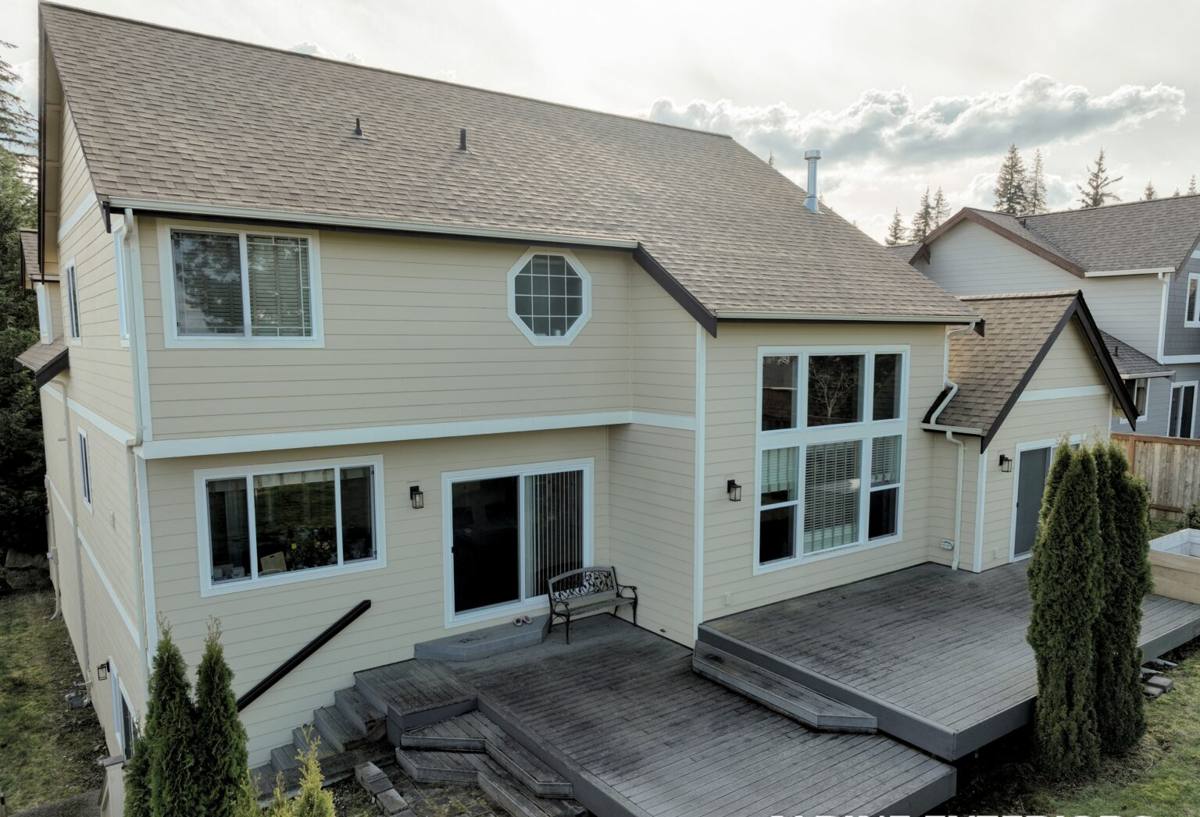
What a Correct Siding Installation Has to Account For Here
Siding is a system, not just a board on a wall. In a climate like this, the parts of that system that are easy to shortcut are exactly the parts that matter most.
Drainage Plane and Rain Screen
Behind the siding, a home needs a continuous weather-resistive barrier and, in shaded or moisture-prone areas, a rain screen gap (typically furring strips) that lets any water that does get behind the cladding drain and lets air circulate to dry the wall assembly. On a lot with limited sun exposure, that back-ventilation is what keeps sheathing from staying damp for weeks at a time.
Flashing at Every Transition
Window and door heads, deck ledgers, roof-to-wall intersections, and any place two planes meet need proper flashing — not just caulk. Caulk is a maintenance item that will eventually fail; flashing is the permanent line of defense. Kick-out flashing where a roofline meets a sidewall is one of the most commonly skipped details, and it's one of the most common sources of hidden rot in wooded, high-moisture settings.
Fastening and Clearances
Fastener spacing and type have to match the manufacturer's specification for the exposure — coastal and high-moisture zones often call for corrosion-resistant fasteners and specific nailing patterns. Clearance from grade, roofing, and decks also matters more here: siding installed too close to soil, mulch beds, or a roof surface stays wet longer and gives moss and rot a head start.
Why We Install James Hardie Fiber Cement — and Nothing Else
We get asked why we don't offer vinyl, LP SmartSide, or cedar as options, and it's a fair question. Each of those products has real strengths. Vinyl is inexpensive and low-maintenance in dry climates. LP SmartSide is lighter and easier to handle than fiber cement. Cedar has a natural look a lot of homeowners love. But we install exterior siding for a living on Orcas Island, and we've made a professional call to standardize on one product because of how the rest perform specifically in this climate over time.
Vinyl expands and contracts with temperature swings and can warp or become brittle with age; it also traps moisture behind it if the installation isn't ventilated correctly, which is a real risk in a shaded, damp setting like this one. Engineered wood products like LP SmartSide use wood strand cores that, once moisture gets past the surface treatment — through a caulk failure, a missed flashing detail, or just years of driving rain — can swell and delaminate, and by the time it shows on the surface the damage is often already done underneath. Untreated cedar looks great when it's new but requires ongoing staining or sealing to hold up against salt air and moss, and skipping a maintenance cycle or two shortens its life fast.
James Hardie fiber cement doesn't share those failure modes. It's non-combustible, doesn't swell or rot from moisture the way wood-based products can, and holds its factory-applied ColorPlus finish for years without repainting. Hardie also engineers specific product lines — including its HZ5 formulation — for higher-moisture, more variable climates, which is exactly the profile of a shaded lake-area lot in San Juan County. It's a harder material to install correctly, which is part of why we only offer it: we'd rather do one product right, on every job, than offer four products and cut corners on some of them.
Our Process for a Mountain Lake Siding Installation
- Site and moisture assessment — we check existing siding, trim, and sheathing for hidden moisture and rot before quoting anything, since a shaded, forested lot is more likely to be hiding damage than an open one.
- Tear-off and substrate inspection — old siding comes off and we inspect the sheathing underneath; any soft, rotted, or water-stained sections get repaired before anything new goes up.
- Weather-resistive barrier and rain screen — a continuous drainage plane goes on first, with a ventilated air gap in areas that stay shaded or damp longer.
- Flashing — every window, door, roofline, and penetration gets flashed before siding installation begins, not patched with sealant afterward.
- Hardie panel or lap installation — installed to manufacturer fastening and clearance specifications for this exposure, with correct joint and seam treatment.
- Trim, caulking, and finish detail — corners, trim boards, and transitions are finished and sealed correctly the first time.
- Final walk-through — we go over the finished exterior with the homeowner before calling the job done.
Comparing Siding Materials for a Shaded, Moisture-Heavy Lot
| Material | Moisture/Moss Resistance | Salt Air Durability | Ongoing Maintenance |
|---|---|---|---|
| James Hardie Fiber Cement | High — doesn't rot or swell | Strong; factory finish holds up | Low — occasional rinse |
| Vinyl | Moderate; can trap moisture behind it | Can become brittle over time | Low, but limited repair options |
| LP SmartSide (engineered wood) | Vulnerable if moisture gets past surface | Moderate | Moderate — needs monitoring at joints |
| Untreated Cedar | Absorbs moisture; feeds moss growth | Weathers faster near salt air | High — regular staining/sealing |
What Drives Cost on a Mountain Lake Project
| Factor | Why It Matters |
|---|---|
| Substrate condition | Hidden rot found during tear-off adds repair scope before new siding can go on |
| Access and delivery | Material has to reach the island and then the site; tighter or more remote lots take longer to stage |
| Home height and complexity | Multiple stories, dormers, and roof-wall intersections all add flashing and labor time |
| Trim and color selection | Custom trim packages and certain ColorPlus finishes affect material cost |
| Tear-off vs. install over existing | Full tear-off costs more up front but is usually the right call once a wall has moisture history |
Maintenance After Installation
James Hardie siding is low-maintenance, not no-maintenance. In a setting like Mountain Lake, an occasional gentle rinse to knock moss spores and organic buildup off the surface — especially on shaded walls — goes a long way toward keeping the factory finish looking new. It's also worth checking caulked joints every year or two, since caulk is the one component of the system that does wear out and need periodic renewal, and keeping gutters clear matters more here than on an open lot, since overhanging trees drop needles and debris that hold moisture against the wall if they're allowed to pile up.
Signs a Mountain Lake Home Needs Siding Attention
- Moss or dark staining that returns quickly after cleaning, especially on shaded walls
- Paint or finish bubbling, peeling, or looking chalky in patches
- Soft spots when you press on siding near the bottom courses or under windows
- Visible gaps or separation at trim boards and corners
- Swelling, bubbling, or a spongy feel — a strong sign of moisture intrusion in wood-based siding
- A musty smell in rooms along an exterior wall
Why a Crew That Already Works Orcas Island Matters
Getting siding materials to Orcas Island takes planning that a mainland contractor doesn't have to think about — ferry schedules, delivery windows, and staging materials so a job isn't held up waiting on a truck. Weather windows matter too; knowing when a wall can actually be opened up and closed back in without a driving-rain system moving through is a local judgment call, not a generic scheduling exercise. A crew that already works this island also knows how homes around Mountain Lake and the rest of San Juan County are typically built and where they tend to develop problems first, which means less guesswork and fewer surprises once tear-off starts.
If you're weighing a full replacement or just want an honest read on what your current siding is telling you, we're happy to take a look. Reach out for a free, no-pressure estimate using the form below.