 Orcas Island
 Why Mountain Lake Decks Wear Out Faster Than You'd Expect
Decks in the Mountain Lake area take a different kind of punishment than decks in a dry inland climate. San Juan County sits in a marine environment, and even at elevation and under tree cover, homes here deal with salt-laden air moving off the Sound, long stretches of driving rain in fall and winter, and a shoulder season where everything stays damp for weeks at a time. Add the shade from mature evergreens common around the lake and you get slower drying times after every storm — which is exactly the condition wood, fasteners, and finishes struggle with most.
Moss is the visible symptom, but it's not the real problem. Moss holds moisture against decking boards and framing long after the surface looks dry, which accelerates rot in ways that aren't obvious until you're standing on soft wood. We see this pattern constantly on Orcas Island: a deck that looks fine from a few feet away but has real structural decay underneath, concentrated wherever water collects and can't escape.
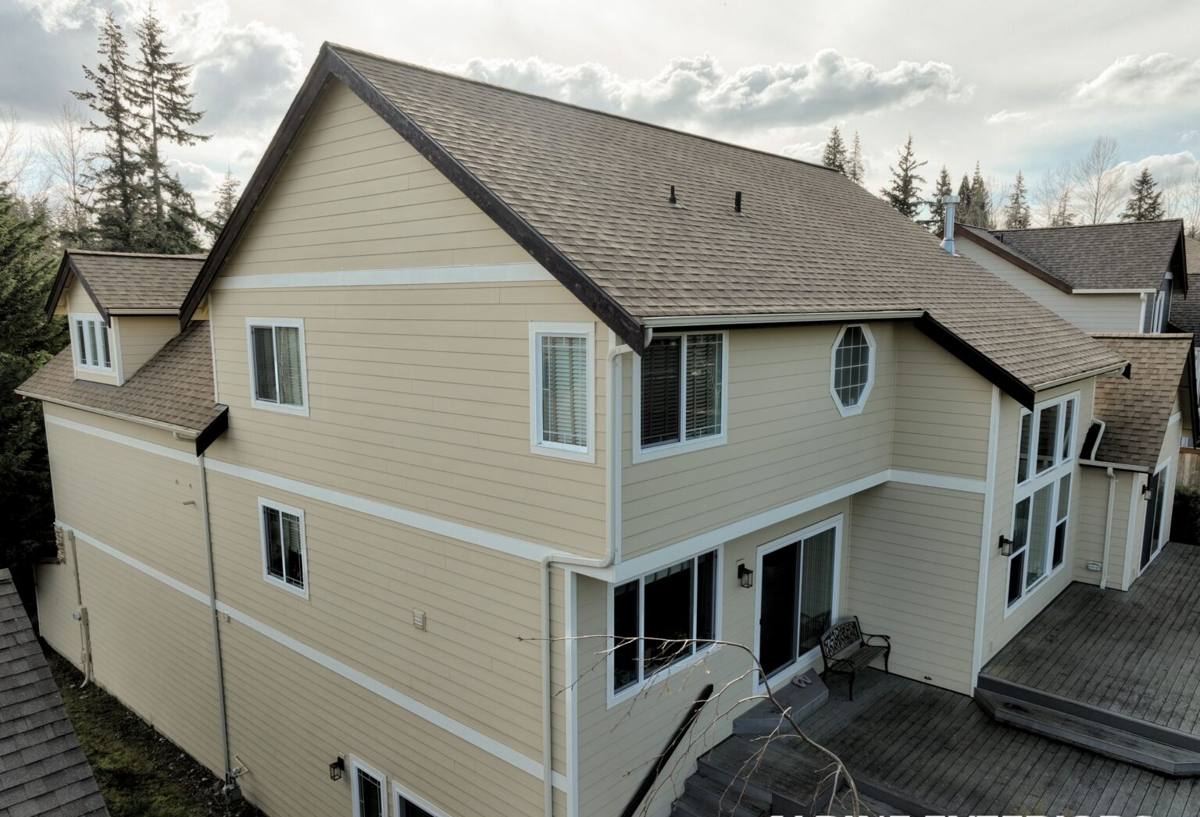
What "Deck Repair" Actually Covers
Deck repair isn't one job — it's a category that ranges from a handful of board replacements to rebuilding the ledger connection to the house. A proper repair starts with figuring out which category you're actually in, because treating a structural problem as a cosmetic one just delays the real fix and costs more later.
Cosmetic and Surface-Level Repairs
This includes replacing individual cupped, splintering, or moss-stained boards, resetting popped fasteners, sanding and refinishing weathered surfaces, and addressing minor railing wobble. These jobs don't touch the structure — they restore the walking surface and appearance.
Structural Repairs
This is framing, joists, beams, posts, and the ledger board — the connection point where the deck attaches to the house. Ledger issues are the ones we take most seriously, because a compromised ledger connection is a safety issue, not a cosmetic one, and it's often hidden behind flashing or siding until you go looking for it.
Substructure and Footing Issues
Posts settling, footings heaving from freeze-thaw cycles, or undersized original framing that's flexing under normal loads. These repairs take longer to diagnose because the damage usually isn't visible from the top of the deck.
Signs a Mountain Lake Deck Needs Attention
- Boards that feel spongy, springy, or noticeably softer underfoot in one area versus another
- Persistent moss or algae growth that returns within weeks of cleaning
- Gaps opening up between decking boards or around the ledger board where it meets the house
- Railings or posts that move more than a slight amount when pushed
- Rust streaks running down from fasteners or metal connectors
- A musty smell coming from underneath the deck, especially after rain
- Visible daylight or water staining where the ledger meets the siding
- Stairs that feel uneven or have developed a noticeable bounce
Any one of these on its own might be minor. Several together, especially involving the ledger or framing, usually means it's time for an actual inspection rather than another round of surface cleaning.
How We Approach a Deck Repair Here
1. Inspection From the Ground Up
We don't just look at the walking surface. We check the ledger flashing, probe framing members for soft spots, look at post bases and footings, and check how water is actually draining off and away from the structure — because in this climate, drainage is usually at the root of the problem.
2. An Honest Repair-vs-Replace Assessment
Not every deck with damage needs to come down. We separate what's actually failing from what's just weathered, and we tell you plainly when a repair makes sense versus when you're better off putting that money toward a rebuild instead of patching a structure that's going to keep giving you trouble.
3. Fixing the Cause, Not Just the Symptom
If a section is rotting because water is pooling against the house or moss is trapping moisture in a shaded corner, we address that condition as part of the repair — better flashing, improved drainage gaps, or fastener upgrades — rather than replacing boards that will fail again the same way in a few years.
4. Matching Materials and Finish
Replacement boards and hardware are matched to what's already there where it makes sense, and we use fasteners and connectors rated for the moisture and salt exposure typical around the lake — standard interior-grade hardware corrodes faster here than most homeowners expect.
Repair Materials: What We Use and Why
| Material | Typical Use | Trade-Offs in This Climate |
|---|---|---|
| Pressure-treated framing lumber | Joists, beams, posts, ledger repairs | Reliable and cost-effective for structure; needs proper flashing and fasteners rated for treated wood to avoid accelerated corrosion |
| Cedar decking boards | Spot repairs on cedar decks | Ages naturally and matches existing cedar well; requires periodic cleaning and finish maintenance to resist moss in shaded areas |
| Composite decking | Full board replacement sections | Resists rot and moss buildup better than wood; matching an older composite color/profile exactly can be difficult, and it doesn't accept stain if you want to change the look later |
| Stainless or hot-dip galvanized fasteners | All structural connections | Higher upfront cost than standard fasteners, but far more resistant to the corrosion we see from salt air and constant dampness |
We'll walk through which option fits a given repair based on what's already on the deck, your budget, and how much longer you want the deck to last before a bigger project.
What Drives the Cost of a Deck Repair
| Factor | Why It Matters |
|---|---|
| Extent of structural damage | Framing and ledger repairs require more labor and often mean opening up areas hidden by decking or siding |
| Accessibility | Decks over slopes, water, or with limited crawl space underneath take longer to work on safely |
| Material match | Matching an existing wood species or composite line can cost more than a straightforward like-for-like board swap |
| Drainage or flashing corrections | Fixing the underlying moisture problem, not just the damaged wood, adds scope but prevents repeat failures |
| Code or permit requirements | Structural work, especially on ledgers and stairs, may require permitting through San Juan County depending on scope |
We give straightforward, itemized estimates so you know what you're paying for — surface repairs and structural repairs are priced very differently, and we'll tell you upfront which category your deck falls into.
Keeping a Repaired Deck in Good Shape
- Sweep debris and standing leaves off the deck regularly, especially in fall when tree cover around the lake drops the most material
- Rinse or treat for moss at the first sign of green growth rather than waiting until it's established
- Check the gap between boards periodically to make sure drainage hasn't become blocked by buildup
- Inspect the ledger flashing and railing connections once a year, ideally before the wet season starts
- Re-seal or refinish wood decking on the schedule appropriate to the product — waiting too long lets moisture back into the wood
- Keep gutters and downspouts near the deck clear so runoff isn't draining directly onto or under it
A repair done correctly buys you years, but no deck in this climate is truly maintenance-free. A little attention each season is what keeps a repaired deck from becoming a repeat job.
Why It Matters to Hire a Crew That Already Works This Area
Deck problems around Mountain Lake follow patterns that are specific to this environment — shaded, damp microclimates, salt exposure carried on the wind, and the freeze-thaw cycles that show up at elevation on Orcas Island. A crew that hasn't worked this terrain before is more likely to underestimate how much moisture has gotten into hidden framing, or to spec fasteners and finishes that aren't built for the exposure here. We've done repair work across San Juan County long enough to know where water actually goes on a deck built into a slope near the lake, and what tends to fail first as a result.
That local experience also means less guesswork on your end. We can usually tell from the inspection alone what's driving a specific failure pattern, because we've seen it before on other decks in similar conditions nearby.
Get a Straight Answer About Your Deck
If your deck has soft spots, recurring moss, or just feels like it's past its best years, we'll come take a look and give you an honest read on what it actually needs — repair, partial rebuild, or just routine maintenance. Reach out for a free, no-pressure estimate and we'll walk the deck with you before recommending anything.