 Orcas Island
 Windows in Lopez Village Face a Different Set of Problems
Lopez Village sits close to the water, and that changes what a window has to survive day to day. Salt-laden air works on aluminum hardware, vinyl gaskets, and exposed fasteners in ways that inland homes never deal with. Wind-driven rain off the Sound doesn't just hit the glass — it gets pushed sideways into any gap around the frame, which is why so many older windows out here fail at the corners and sill first, not in the middle of the sash. Add San Juan County's long, damp moss season, when north- and west-facing walls stay wet for weeks at a stretch, and you've got a climate that punishes anything installed a little bit wrong.
None of this means windows here need to be exotic. It means the install has to respect water, every time, with no shortcuts on flashing or sealant. That's the whole difference between a window that looks fine for two years and one that performs for twenty.
What "Custom" Really Means for a Lopez Village Window Job
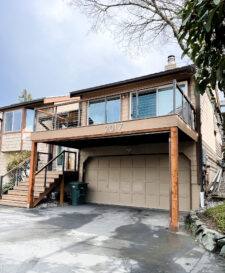
"Custom" doesn't have to mean expensive or unusual — it means the window is built and installed to match the actual opening and the actual house, instead of forcing a stock size to fit. A lot of homes in and around Lopez Village are older cottages, converted cabins, or additions built in stages, and their rough openings are rarely standard. Custom sizing avoids the shim-and-caulk patch jobs that create weak points in the weather barrier.
Matching the Home, Not Just the Opening
Trim profile, sash pattern, and even sightlines matter on a lot of these properties, especially where the window sits next to original siding or trim that isn't being replaced. A custom order lets us match sash width and grid pattern so a new window doesn't stick out on a home that otherwise reads as original or well-kept.
Custom Doesn't Mean Custom-Built From Scratch
In most cases "custom" refers to size and configuration, ordered to spec from a manufacturer, not a one-off shop-built sash. That keeps cost reasonable and keeps you inside a normal manufacturer warranty, while still getting a window that actually fits your opening.
Signs Your Current Windows Are Losing the Battle
Marine climate damage is gradual, so most homeowners notice it late. Look for these before it turns into framing damage:
- Soft or discolored wood at the sill or bottom corners of the frame
- Condensation forming between panes (a sign the seal has failed on a double- or triple-pane unit)
- Visible moss or black staining on the trim directly above or beside the window
- Hardware — locks, cranks, hinges — that's stiff, corroded, or won't latch fully
- Drafts you can feel at the frame edge even when the sash is fully closed
- Paint or finish that's bubbling or peeling specifically around the window, not the wider wall
Any one of these on its own might just need maintenance. Two or more together usually means water has already gotten past the sealant and into the framing, which is a bigger job than a window swap.
What a Correct Custom Window Installation Involves
Flashing and Water Management
This is the part that actually determines whether a window lasts on this coastline. Every opening needs proper flashing tape or pan flashing at the sill, integrated with the house wrap so water is directed out and down, never trapped behind the siding. This step is invisible once the trim goes back on, which is exactly why it's the step that gets skipped on rushed jobs — and exactly why we don't skip it.
Frame Material Choices
There's no single "best" material for every home here; it depends on exposure, budget, and how the house is used.
| Frame Material | How It Handles Salt Air & Rain | Maintenance |
|---|---|---|
| Vinyl | Good resistance to salt corrosion; no paint to fail | Low — occasional cleaning |
| Fiberglass | Very stable in wet, temperature-swinging conditions; strong moisture resistance | Low |
| Wood-clad (vinyl/aluminum exterior, wood interior) | Good if cladding is intact; failure point is any exposed or scratched cladding | Moderate — watch cladding seams |
| Aluminum | Prone to corrosion and condensation in marine air unless thermally broken | Higher — hardware and finish need attention |
| Solid wood | Best appearance for historic-style homes; least tolerant of driving rain without upkeep | Highest — refinishing on a regular cycle |
For most Lopez Village homes exposed directly to weather off the water, we lean toward fiberglass or vinyl for the performance-to-maintenance ratio. Wood and wood-clad still make sense where matching an original look matters more than minimizing upkeep — that's a homeowner call, not a right-or-wrong answer, and we'll walk through the trade-off honestly rather than push whatever's easiest to install.
Sealing and Insulation
Low-expansion foam or backer rod and sealant around the frame perimeter, correctly sized to the gap, does most of the work of keeping wind-driven rain and drafts out. Over-filling a gap with the wrong foam can actually bow the frame and cause the sash to bind, which is a common cause of "new windows that don't close right."
Our Process, Start to Finish
Site Visit and Measurement
We measure every opening individually rather than assuming they match, since that's rarely true in older or additions-built homes. We also look at the current flashing and sill condition, because that tells us whether this is a straightforward swap or whether there's hidden water damage to address first.
Ordering and Lead Times
Custom-sized windows are ordered to spec, which means longer lead times than a stock window off a shelf. We build that into the schedule up front so there are no surprises, and we account for the fact that materials and crews serving Lopez Village depend on ferry schedules — that's part of realistic scheduling here, not an excuse we reach for after the fact.
Installation Day
Old sash and frame come out, the opening gets inspected and repaired if there's any soft wood or compromised sheathing, flashing goes in correctly, the new unit gets set, shimmed level and plumb, sealed, and insulated, and trim is reinstalled or replaced to match.
Final Check
We test operation — opening, closing, locking — and check the exterior seal line before calling the job done. A window that operates smoothly and seals tight on day one is the only real proof the install was done correctly.
Cost Factors for a Custom Window Project
Pricing swings more on these factors than on the brand name printed on the window:
| Factor | Why It Moves the Price |
|---|---|
| Non-standard size or shape | Custom manufacturing costs more than stock sizing |
| Frame material | Fiberglass and wood-clad generally cost more than vinyl |
| Number of windows done at once | Per-unit labor cost drops when several openings are done in one visit |
| Existing damage found at the opening | Rotted framing or sheathing adds repair work beyond the window itself |
| Trim and siding tie-in | Matching existing trim profiles takes more time than a plain reinstall |
We give a written estimate after the site visit, not a phone quote, because the condition behind the trim is what actually drives cost — and we won't know that until we look.
Why a Crew That Already Works Lopez Village Matters
Working on the islands isn't the same as working on the mainland with a truck full of parts. Getting materials and crews to Lopez Village means planning around ferry schedules, which affects everything from how fast a warranty issue gets addressed to how a multi-window job gets sequenced to minimize open-wall time in the rain. A contractor who already routes work through San Juan County has that built into their planning instead of learning it on your job.
There's also a materials-knowledge piece: we've seen which frame finishes actually hold up to a season or two of salt spray out here and which ones start pitting or clouding early. That's the kind of thing you only learn by doing the work in this specific environment, not by reading a manufacturer spec sheet.
Keeping Custom Windows Performing Year After Year
A correct install buys you a long runway, but a little upkeep protects it:
- Rinse salt film off frames and glass a few times a year, especially after storms
- Keep gutters and downspouts clear so runoff isn't sheeting directly down over window heads
- Clear moss and debris from sills and tracks before it holds moisture against the frame
- Operate hardware periodically through the wet season so locks and cranks don't seize
- Have caulking and sealant checked every few years — it's a lot cheaper to redo a bead of sealant than to repair water damage behind it
If you're weighing custom windows for a home in Lopez Village, we're glad to take a look and give you a straight, no-pressure estimate — just fill out the form below and we'll get back to you.